How to grow your fuel card program without investing in new infrastructure every time
Beyond operational efficiency and digitization: open-loop is your opportunity to build an entirely new economic growth engine.
TL;DR
- Closed-loop fleet programs face a hidden growth tax: every new station, merchant, geography, or customer segment requires a new integration project.
- Open-loop infrastructure eliminates that bottleneck: adding a new merchant, territory, or category is a settings change, not a deployment project.
- Fleet clients consolidate all business spend: fuel, tolls, EV, travel, employee expenses and more, onto one card and one platform.
- Retailers capture revenue across every spend category, not just fuel.
- Customer retention becomes structural, not a loyalty program and clients who consolidate onto your platform face a high cost of leaving.
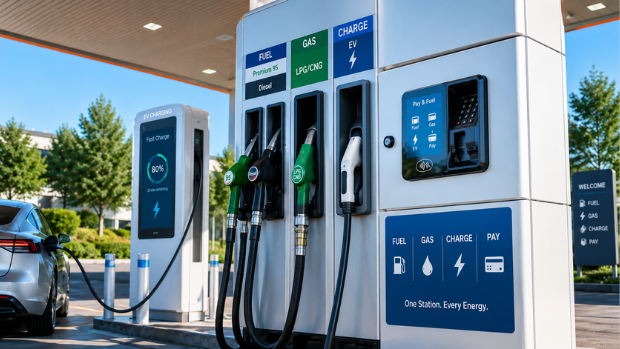
Most fuel retailers already understand why open-loop matters. What few have calculated is how much their current infrastructure is capping revenue growth, locking them out of new territories, product lines, and customer segments already captured by competitors who moved first.
In a closed-loop environment, every growth decision triggers an infrastructure project - a new station needs POS integration, a new merchant category needs a backend update, a new geography means a new acquiring relationship. By the time the infrastructure is ready, the opportunity is six to eighteen months late.
With open-loop, expansion stops being an infrastructure problem. A driver swipes a card, and the rules you've already configured take care of the rest.
Open-Loop vs Closed-Loop Fleet Cards: What's the real cost of waiting
Scenario 1: What happens to your fleet card program when your biggest client starts switching to electric vehicles?
Consider a typical use case: a corporate account with 400 vehicles, where a growing share is moving to electric. They want one card for fuel and public EV charging. In a closed-loop environment, you either build proprietary integrations with EV charging networks, which are expensive, slow, and fragmented, or tell the client you don't support EV yet and risk losing them. In an open-loop environment, EV terminals already accept scheme cards. You configure the permitted networks and spending limits. The driver uses the same card. You keep the client.
Scenario 2: How can fuel retailers expand into new countries and add new product categories without starting from scratch?
A fuel retail group wants to extend services to clients in new countries and add car washes and convenience store purchases to the card's accepted categories. In a closed-loop environment, these are two separate infrastructure projects. In an open-loop environment, both are configuration changes on the same platform. The card already works across borders. The car wash and convenience store already accept Visa or Mastercard. You define what's permitted, and it goes live.
Scenario 3: How can fuel retailers win small and mid-sized business clients who are looking for more than just a fuel card?
The fastest-growing segment in European fleet payments is the small and mid-sized business. This customer isn't looking for just a fuel card. They want a business expense management solution: one card covering fuel, tolls, parking, hotels, travel, and employee expenses, with per-driver rules, a clean monthly export, and no manual reconciliation.
That product exists - an open-loop fleet card with a digital AI spends management layer. If you're not offering it, they'll find it from a fintech or corporate card provider with less fleet expertise and no ability to capture Level 3 data at the pump. With open-loop, the product is already there the moment you turn it on. The cost of inaction is not one missed customer; it is an entire market segment going to providers who simply moved first.
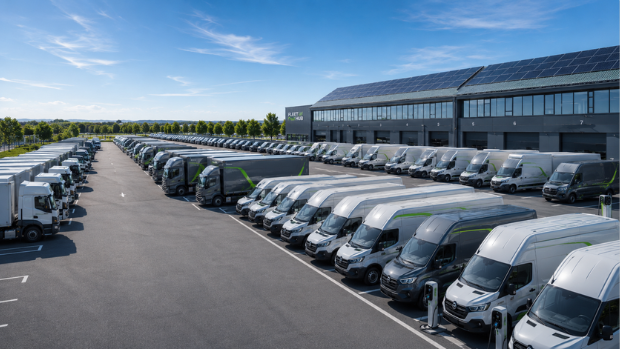
What does a fleet card program look like when it's built for growth, not just fuel?
Fuel margins are shrinking. Open-loop changes the equation: you manage a platform that earns revenue on every transaction - fuel, tolls, EV, travel, employee expenses - regardless of where it happens. Every new category is a new revenue stream, without a new integration project. The more of their business lives on your platform, the higher the cost of leaving.
What Does It Take to Launch an Open-Loop Fleet Card Program as a Fuel Retailer?
The answer is simpler than most retailers expect. Modern fleet card issuance platforms support closed-loop, open-loop, and hybrid programs on a single card - with no POS integration required for new merchants. If a terminal accepts Visa or Mastercard, the card works. Spend rules are configured in real time by category, driver, vehicle, or geography. AI invoice capture and automatic categorization handle corporate expense reconciliation. The infrastructure that runs a program today is the same infrastructure that scales it tomorrow.
What should you be asking at UNITI expo 2026?
Most operators treat expansion as an infrastructure decision. It isn't. It is a strategic one. Do you have a platform that lets you choose any growth direction - new territories, new products, new customer segments - and move on it immediately, without friction?
That is the conversation worth having this week in Stuttgart.
Written by Tal Ginat, Chief Business Officer at Reins. Reins is a fleet card issuance and management platform built for fuel retailers, supporting closed-loop, open-loop, and hybrid programs on a single card.