Cepsa, Begas to decarbonize heavy urban transport with bioautogas
Both companies will promote using biogas and other renewably-sourced fuels in buses, delivery vehicles, waste collection trucks, and other municipal services.
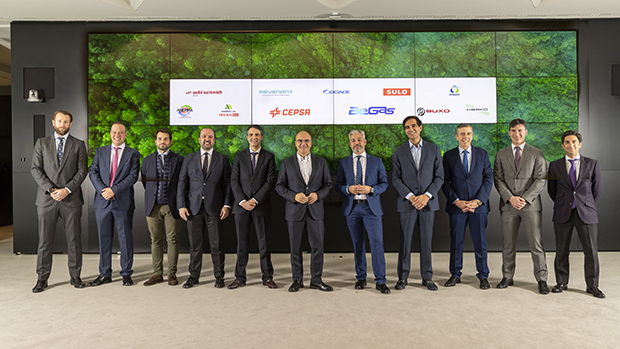
Cepsa and BeGas will promote the decarbonization of professional urban transport, such as buses, delivery vehicles, waste collection trucks, and other municipal services.
This partnership aims to integrate the entire value chain of this sector (engine manufacturers, vehicle manufacturers, energy producers and consumers) with the common goal of fighting climate change. Currently, heavy urban vehicles account for 10% of the fuel consumption of the total professional transport fleet.
So far, nine partners from the public and private sectors have already joined this integrative partnership: vehicle and machine manufacturers Mobility Bus, Herko, Buxo Trucks, Socage, Aebi Schmidt Ibérica, and Revenant, the companies Urbaser and Sulo, which have vehicles of this type in their fleets, and ANEPMA (National Association of Public Environmental Companies).
With this agreement, led by Cepsa and BeGas, both companies will promote manufacturing and using bioautogas or biopropane and other renewably-sourced products in professional urban transport, in addition to promoting the use of engines 100% powered by these energies.
Bioautogas is a gas of renewable origin that reduces CO2 emissions by up to 90% and reduces the emission of suspended particles and NOx, which cause urban pollution, by more than 90% compared to traditional fossil fuels, as well as reducing noise pollution. This CO2 reduction enables vehicles to meet the requirements of the 2050 agenda today.