Does every charge on your network add up? Here’s how to close the gaps in EV charging fraud
Ad
From manipulated charging data to fraudulent roaming claims, The ai Corporation explains how operators can detect hidden losses without disrupting legitimate drivers.
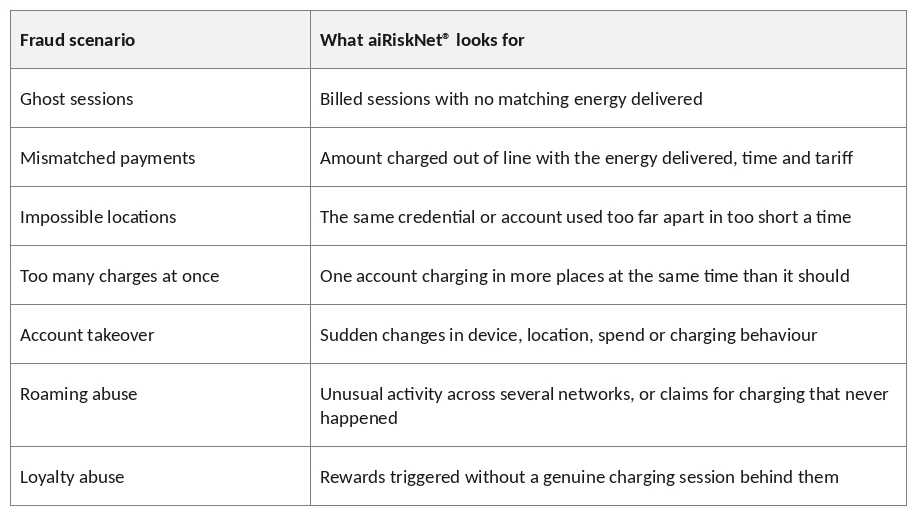
EV charging fraud is often discussed in terms of what drivers can see: fake QR codes, tampered chargers and skimmed cards. Some of the most costly risks sit out of sight, in the digital connections between charge points, management systems, apps and roaming partners. As charging networks grow and connect with each other, those connections multiply, and so do the opportunities for fraud.
Where EV charging fraud hides
Connected charging depends on many systems trusting each other. Each connection is useful, and each one can be abused if controls are weak.
- Charger to backend. Research has found weaknesses in the way some chargers talk to the systems that manage them. Where these exist, an attacker may be able to interfere with charging or alter transaction data.
- Charging apps. A counterfeit or compromised app can collect drivers' credentials and payment details, opening the door to account takeover.
- Roaming. One account that works across many networks is convenient for drivers, and for fraudsters. Stolen credentials can be used in another country, and false settlement claims can pass between partners and hubs.
- Backend session data. Inflated energy reports, unauthorised tariff changes and loyalty rewards earned without any real charging, all target the link between what was delivered and what was billed.
Better security standards and Plug and Charge help, but they confirm who is charging, not what they should pay. It all comes down to one question: does the bill match the charging that actually took place? Answering that every time a vehicle plugs in requires a platform that checks each charge against its payment, plus experts who know what to do when they don’t match.
How fraud management platforms check that every charge adds up:
Checking every charge against its payment sounds simple. In practice, the data sits in different places: payments with one provider, charging records in your management system, and roaming claims with your partners. A bill that doesn’t match the charging behind it can go unnoticed for weeks.
aiRiskNet®, The ai Corporation’s fraud and risk management platform, is built to close that gap, drawing on almost 30 years in fuel and mobility fraud. Here is what that means for your network.
- See the full picture. Payments, charging records, charger data and account details sit side by side. A charge that doesn’t match the energy delivered stands out straight away, rather than surfacing later as a dispute or a loss.
- Keep up as fraud changes. Fraudsters adapt quickly, so fixed rules soon go out of date. Rules catch the tricks you already know about. aiAutoPilot ML® spots new patterns on your network and suggests rules to stop them, and aiSmartScore® gives each transaction a risk score, so your team knows where to look first.
- Protect every way drivers pay. Plug and Charge provides strong evidence of who is charging, which counts in the driver’s favour. App, RFID, QR code and card payments still get the same checks, so no payment route becomes the easy target.
- Stop losses without stopping drivers. Suspicious charges and claims can be flagged, held or declined before losses build up, while genuine drivers keep charging without interruption.
How a Fraud Managed Service team helps:
Many charge point operators and eMSPs are scaling fast, and few have a dedicated fraud team. Hiring and training a fraud team takes time, and fraud doesn’t wait. The ai Corporation’s Fraud Managed Service team ensures that fraud and risk specialists manage your fraud end-to-end, applying proven strategies throughout.
- Alerts don’t pile up. Specialist analysts review flagged charges and transactions, so real problems are addressed quickly, and nothing sits unchecked in a queue.
- Fewer false alarms. Rules are refined as fraud patterns change, so genuine drivers aren’t blocked, and your customer service team isn’t fielding complaints.
- Cases followed through. Cases are investigated to resolution, with the evidence you need when a claim involves roaming partners, hubs or other countries.
- A clear view of your risk. Regular reporting shows what has been stopped, what it was worth and where new risks are appearing, so you can plan with confidence.
You get mature fraud controls without building a team from scratch, and your own people stay focused on growing the network.
Find out more
Whether you want a platform your own team can run, or a fraud team that runs it for you, the right support helps you protect revenue, partners and drivers as your network grows.
Speak to the team to find out how aiRiskNet® and the aiFraud Managed Service can work for you.