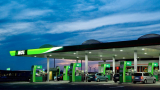
MOL Group begins biofuel production at Danube Refinery
Bio feedstock, like vegetable oils, used cooking oils and animal fats is co-processed with fossil components during fuel production to create more sustainable diesel.
Following several years of research and development MOL has stepped up the value chain and has become a biofuel producer, through the realization of an investment in the Danube Refinery.
Bio feedstock will be co-processed together with fossil materials increasing the renewable share of fuels and reducing up to 200,000 tons /year CO2 emission without negatively affecting fuel quality.
“MOL Group has been a biofuel user by purchasing more than 500.000 tons of biofuels (bioethanol and biodiesel) for blending. We have started to produce sustainable diesel for the first time within MOL Group and we became biofuel producers. In line with our recently updated strategy, “SHAPE TOMORROW” we are planning to produce 100.000+ tons of biofuel by 2030,” said Gabriel Szabó, Executive Vice President of MOL Group Downstream.
During co-processing at the Danube Refinery, bio-feedstock is processed together with the fossil material in the production of diesel fuel. Vegetable oils, used cooking oils and animal fats can also be used for this purpose. As a result, the produced gasoil is partly renewable, without any quality changes compared to diesel produced entirely from crude-oil. The main advantage of this innovative method is that the resultant biodiesel can be still blended with a maximum 7 percent of bio-feedstock based fuel, in line with diesel standards, allowing the bio-share of the gasoil to be higher.
One of the main goals of the European Union, and MOL Group, is to achieve net-zero CO2 emissions by 2050. The renewable share obligations of transportation fuel are continuously increasing, accordingly the biocomponent content expectations have also increased across MOL Group's fuel markets, which have so far been met mainly by blending bioethanol and biodiesel.
In the next five years, MOL will spend USD 1 billion on new, low-carbon and sustainable projects to become a key player in CEE in the circular economy and to get closer to its net-zero CO2 emitter goal by 2050.