What it takes to gamify loyalty in fuel and convenience
We dive into the fundamentals of gamification strategies with Frank Beard and Tyler Cameron from Rovertown, exploring challenges and opportunities for retailers to leverage tactics from the gaming industry.
Loyalty and rewards platforms have been a driving force in mobility retail for some years now, bringing digital energy to customer journeys while encouraging repeat visits and brand interaction. But with market saturation looming, as engagement declines amid growing expectations, retailers are rethinking how to create truly rewarding ecosystems.
Enter gamification: a growing trend that fosters interactions through game design mechanics like timely challenges, tiered progression, storytelling, and more. As these tactics offer a powerful way for brands to stand out, we explore how the fuel and convenience industry can leverage them to face today’s uncertainty, drawing inspiration from a global industry worth over $211 billion.
What defines gamification
First, it’s important to separate perception from reality, as gamification can be misunderstood as simply adding games to apps or turning loyalty programs into gaming platforms. “There’s a misconception that gamification means games. It’s really about using game-like elements to drive behavior, which can include streaks counters, time-based rewards, and more,” explains Tyler Cameron, Head of Strategy and Analytics at Rovertown.
The company recently partnered with Weigel’s to develop the Arcade & Coin Catalog, a platform that featured a selection of games designed to boost customer engagement. Users who play games on the Catalog can earn coins and redeem them for in-store promotions and rewards.
What began as a buzzword has evolved into an established strategy, with proven applications in sectors far removed from retail, including education and human resources. Still, Cameron cautions against using gamification without clear intent: “Sometimes people say they want a game, but they don’t align that tactic with a larger goal. At best, that fails to deliver results. At worst, it can be counterproductive.”
Engagement vs. transaction, a home-away game
Fun is often associated with games due to their ludic nature, but gamification is less about the outcome and more about the mechanics and logic that shape the experience. “The goal is to change behavior, and these tactics help influence things like purchase frequency or basket size,” adds Frank Beard, Head of Marketing at Rovertown.
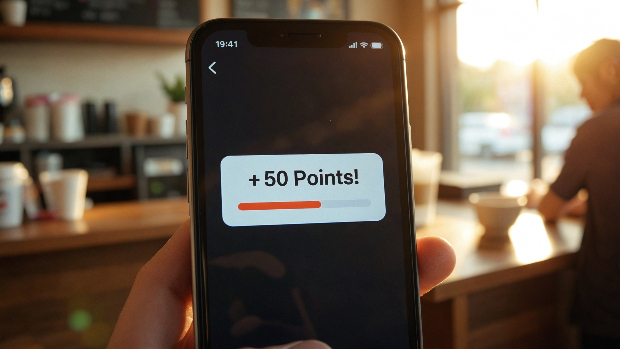
He describes this approach as a move beyond the transactional nature of retail, one that fosters deeper relationships by tapping into a different layer of commitment and sustained engagement. Daily challenges, for instance, can prompt more frequent log-ins or in-app purchases, while achievements can reward cross-channel behavior with added discounts or exclusive perks.
While such systems can positively stimulate users, these can also lead to frustration or boredom if poorly executed, a delicate balance that retailers must navigate carefully. “At the end of the day we all want them to make extra transactions. But this is a way for them to interact with your brand on a deeper level,” Beard points out.
The prize of attention
Games, by nature, are competitive, whether they are sports, board games, or video games. Similarly, every app competes for a share of the user’s attention, and gamifying loyalty is one way to claim a slice of that pie.
Elements like rewards or storytelling devices can be strategically implemented to drive specific behaviors and serve as engagement tools that resonate with a brand’s identity and audience. Even traditionally negative concepts, like friction, can become malleable. Rovertown, for instance, developed a unique approach by introducing “intentional friction.”
“We wanted people to log back into the app more frequently. And so, we required them to log in every four hours to earn more coins. It was friction with a purpose,” explains Cameron. With the right strategy, retailers can reinforce their strengths, address weaknesses, and even turn them into opportunities. The goal isn’t to steal time from other platforms, but to offer a compelling reason for users to return, by creating value that captures attention and builds habit.
Still, the games themselves can serve as a gateway to broader tactics, as the Arcade & Coin Catalog featured a selection of games designed to boost customer engagement. “We wanted to understand what makes certain games sticky so we could apply those learnings,” comments Beard.
Playing the long game
This is what gamification can offer the fuel and convenience sector at a conceptual level. But why aren’t more retailers joining the game? According to both experts, the main barrier isn’t hesitation or reluctance, it’s the sector’s inherent complexity, which makes broader adoption more difficult.
“You have thousands of different retailers out there, and everybody has their own unique tech stacks, geographies, and problems. Because of this fragmentation, it's really tough to bring in new technology,” explains Beard. This challenge is compounded by the industry’s transformation, with service-based models increasingly layered on top of traditional product-centric approaches.
Despite the complexity, even small, well-placed tactics can help create more engaging, habit-forming experiences that strengthen customer loyalty. Gamification isn’t a one-size-fits-all solution, it’s a versatile tool that can be adapted to specific goals, whether through subtle nudges or more immersive mechanics.
This approach helped Weigel’s Arcade & Coin Catalog reach 1 million plays in just three months, driving a 15% increase in overall app usage. And with the global gamification market projected to hit $92 billion by 2030, the question for retailers isn’t whether to get in the game, but how and where to start.
Written by Gonzalo Solanot