Yes, there’s an issue with EV charging payments. How can we fix it?
Europe’s EV charging market is growing fast, but payment, pricing and settlement remain fragmented. IFSF explores how common standards can simplify payments, improve transparency and strengthen operations across charging networks.

Europe’s EV charging landscape is expanding at record pace, yet—as highlighted in MobilityPlaza’s recent article—drivers continue to face fragmented payment options, inconsistent pricing, and a lack of transparency across networks. These issues undermine trust at precisely the moment mass adoption is accelerating.
IFSF’s two EV white papers, Using IFSF Payment Standards to Support Bank and Fuel Card Payments for EV Charging Stations and Managing Pricing and Reconciliation Using OCPP, OCPI and IFSF Standards—directly address many of the structural problems raised in the article. Together, they outline a practical, standards based path toward simpler payments, pricing transparency, and more reliable operations across Europe’s charging infrastructure.
1. Tackling Payment Fragmentation with Proven, Interoperable Standards
One of the clearest pain points in public charging today is simple: drivers still can’t pay the way they want. Despite strong consumer preference for direct card payments and Plug & Charge, many networks still rely on apps or proprietary RFID cards.
Merchants already operate secure, PCI‑compliant payment infrastructure—including bank cards, fuel cards, and loyalty—seamlessly alongside OCPI and OCPP. This approach enables direct bank card acceptance at the charger, consistent customer experience across fuels and EV charging and support for Pay in Store.
By enabling merchants to act as an eMSP for their own customers, the IFSF model reduces reliance on fragmented roaming chains—directly addressing the “broken commercial layer” described in the article.
2. Bringing Pricing Transparency and Consistency to the Forecourt
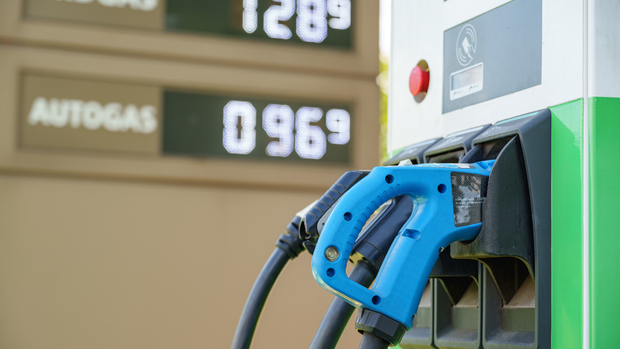
Price dispersion, sometimes reaching 70% between payment channels according to the article, remains one of the most damaging frictions in public charging. Drivers can still encounter different prices for the same session depending on whether they use an app, an RFID card, or a simple bank card tap, creating confusion and eroding confidence at the forecourt.
A standards aligned approach could provide consistent retail pricing across all customer touchpoints. Retail prices are pushed from the CSMS to both the site and the charging station ensuring price transparency. And a dedicated UpdatePrice command then enforces the required sequencing—“For a price increase… prices must be updated in the order Price Pole → Charging Station → POS.” The result is straightforward: the number on the pole, the display on the charger and the final receipt either match perfectly, or the driver automatically benefits from the lower price, restoring the trust between customer and CPO.
Merchants must maintain their own retail (Ad Hoc) prices independently of eMSP tariffs, ensuring customers paying on site are not subject to roaming mark ups. The separation between retail and roaming prices must be clear.
3. Fixing the “Invisible Back Office” Through Robust Reconciliation
Today’s roaming chains create long settlement delays, credit risk, and cash flow challenges for CPOs. IFSF proposes two practical mechanisms:
Site initiated reconciliation, using a structured batch ID embedded in the authorisation reference. This allows charging management systems to automatically group and reconcile transactions.
CSMS initiated reconciliation, providing regular, automated summaries of all relevant CDRs. This ensures operators receive consistent, up‑to‑date financial snapshots without manual intervention.
Both approaches give merchants timely, accurate financial data—reducing risk and improving operational control.
4. A Path Toward the Simplicity and Reliability Drivers Expect
Some markets already show that simplicity and reliability in EV charging are achievable at scale. Portugal’s MOBI.E model is cited as a reference point, demonstrating how a clear structure can deliver a smooth experience for both drivers and operators.
A similar outcome can be achieved more broadly by focusing on a small set of fundamentals:
- Unified payment experience
- Transparent, synchronised pricing
- Reliable reconciliation and settlement
- Interoperability across OCPI, OCPP, and IFSF standards
By building on existing, proven forecourt payment infrastructure, IFSF’s approach avoids adding unnecessary devices, integrations, or operational overhead; addressing many of the practical barriers.
Conclusion
Europe’s EV charging ecosystem is at a turning point. As MobilityPlaza notes, the industry has the vehicles and increasingly the volts, what remains is fixing the value chain that connects the two.
The IFSF EV white papers provide exactly the kind of pragmatic, standards based blueprint needed to reduce friction, restore pricing clarity, and deliver the payment simplicity drivers expect. By aligning OCPI, OCPP, and IFSF standards, merchants can offer a consistent, trusted, and future proof charging experience—helping EV charging move from experimentation to everyday habit.