EV charging payments: Why Europe still struggles with the basics
EV sales and public charging points are soaring across Europe, yet paying for a charge continues to be one of the industry’s weakest links. A maze of apps, cards and inconsistent prices now threatens to slow momentum at the moment adoption is accelerating.
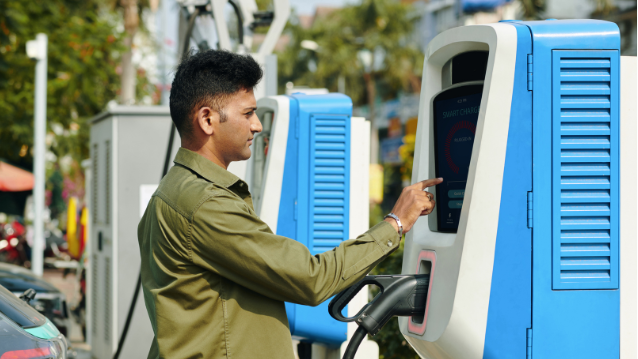
Europe closed 2025 with considerable momentum behind the e-mobility sector. Across the continent, 2.58 million battery‑electric vehicles were sold (+29.7% vs. 2024) lifting BEVs to 19.5% of all new car registrations. Public infrastructure passed a symbolic threshold as well: the European Alternative Fuels Observatory counted 1,148,062 publicly accessible charging points, of which 941,953 are AC and 206,109 are DC. The charging ecosystem remains incredibly complex with customers unable to pay in their preferred way, a lack of price transparency, and a tense relationship between Charging Point Operators (CPO) and e-Mobility Service Providers (EMSP).
The payment issue – “I can’t pay how I want”
A recent study by USCALE places the payment contradiction in plain view: Plug & Charge (40%) and direct card payments (29%) top driver preferences, yet app sessions dominate actual use and RFID remains prevalent. The roots are historical and commercial, not merely technical. Early networks optimised for speed of deployment and user capture, nudging customers into apps and closed‑loop cards. The unintended consequence is a landscape where channel choice too often dictates final price, authentication flow and even session success.
“Customer preference is one thing, and what is actually being deployed by CPOs, MSPs, and manufacturers is completely different. There is a disconnection between how customers want the ecosystem to evolve and what is actually being deployed,” says Marek Gutt-Mostowy, CEO and Founder at WILLBERT by Euroloop, a European charger manufacturer and software provider.
Most EV drivers agree on the direction the industry should go. Plug & Charge is the most intuitive end‑state because it dissolves steps: plug in, authorise, charge. But outside of vertically integrated ecosystems like Tesla, the chain depends on ISO 15118 support across vehicles, chargers and backends, and much of Europe’s predominantly AC estate is legacy hardware being refreshed on multi‑year cycles, explains Issam Tidjani, Co-Founder and CEO of Cariqa.
Direct bank‑card payments are rightly popular for their familiarity, yet they expose another fault line: price dispersion between operators can be extreme (from €0.39 to €0.90/kWh in the same metro area) making “tap‑and‑go” convenient but not always economical. Pre‑authorisation holds add further friction – many drivers complain each time they try a charger they encounter €80 blocks that linger for days. Best-in-class operators like Electra return funds immediately if something fails.
There is also a practical reason apps refuse to die. For many users, especially business drivers, the connected experience matters: receipts, VAT‑friendly invoicing, trip history, tariff discovery. Fleets, meanwhile, still need centralised control and cost policies, which leaves RFID relevant.
“Plug & Charge will grow, but it needs simplification in integration and maintenance. Payment terminals will become more popular as technology evolves. Terminals might eventually be integrated directly into stations,” adds Tidjani.
AFIR was never the magic fix
AFIR set clear guardrails around transparent pricing and direct payments, but regulation cannot, on its own, harmonise the realities on‑site. A terminal is one more device to deploy, certify, power, connect, patch and occasionally reboot. In a distributed network with many uncanopied sites, terminals face heat, weather and vandalism; sending technicians across a far larger footprint than the legacy petrol estate is expensive and slow.
Upstream, each terminal family adds another integration path for CPO backends and service providers to maintain alongside roaming, firmware and metrology. “It is no surprise adoption is slow”, says Gutt-Mostowy.
MOBI.E – Portugal’s case for simplicity
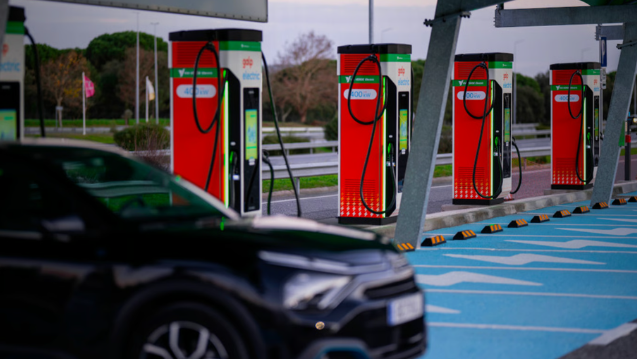
Portugal shows what happens when the rules of engagement are consistent. Under MOBI.E, customers use interoperable mobility cards (CEME, typically RFID) across any operator, with settlement handled behind the scenes. The effect on behaviour is unambiguous. In 2026, 80% of public sessions in Portugal were card‑initiated, and 20% began in apps. Almost a third of app attempts were cancelled due to socket selection errors, authorisation failures or back‑end timeouts within sub‑120‑second windows.
“This clearly shows that drivers are not rejecting digital solutions; they are choosing the most reliable and lowest-friction option at the moment of charging,” according to Duarte Martins, Head of Technical Operations Iberia for Galp. The multi-energy company has installed more than 9,000 chargers in Spain and Portugal since 2020.
Galp’s priority is to remove friction rather than add complexity to the charging experience. “The real opportunity in electric mobility is not to replicate the complexity of today’s digital ecosystems at the charging point, but to make the act of charging progressively disappear into the background of everyday life. The future of payments in EV charging will be defined by trust, simplicity and resilience, where technology adapts to human behavior, not the other way around,” explains Martins.
Spain illustrates the opposite side to Portugal. Without a national aggregator, the operator’s platform or an EMSP app often becomes the practical entry point. The result is higher app usage and, frequently, more channel‑driven price variation. In response, large retailers with CPO arms are pursuing a dual track: guarantee simple, universal access (RFID, bank cards) at the charger while building a single, cross‑border app that ties charging to a broader mobility and retail experience: pricing visibility, receipts, loyalty, energy offers.
The commercial layer is broken
Berlin-based Cariqa works to connect CPOs and drivers directly, trying to fix what they call a “broken system”. In Europe’s prevailing reseller architecture, the CPO sets a wholesale tariff while the EMSP sets the end‑customer price. That separation introduces channel‑driven distortion. In Germany, roaming mark‑ups commonly add 20–30%; across markets, the same charger can present up to 70% price spread depending on the app or card used. This is not demand‑based dynamic pricing; it is pricing by route to market. The effects are corrosive. Price signals never reach the driver as the CPO intended. Competitive positioning becomes invisible. Strategy turns to guesswork. Drivers lose trust. Operators lose one of the few levers they can use to attract customers.
“It’s like paying a different price for a kilo of oranges depending on whether you pay with cash, Visa issued by Santander, MasterCard issued by Revolut... That would be completely unacceptable,” points out Tidjani.
The utilisation penalty is measurable. Many public DC networks still report single‑digit average utilisation (around 8% in some portfolios) while lease costs, grid capacity, maintenance and depreciation accrue regardless. Where price changes do reach the market intact, demand responds. Independent research has shown that a 40% price reduction can lift demand by 117%, while 15% can move the needle by 30%, proof that pricing power matters precisely because drivers are rational.
Cash flow and risk increase the problem. In reseller chains, funds often pool with intermediaries for 30–60 days before the CPO invoices and are paid. That exposes operators to credit risk on delivered energy, even as fraud costs rise in post‑paid flows. It also deprives networks of the working capital required to fix what customers actually see: cleaner bays, better lighting, sturdier cables, faster repairs.
A business model in the making
“No matter how you want to pay, you should pay the same price,” is Cariqa’s motto. The company looks to enable a platform model where the merchant is always the CPO, allowing for instant settlement and real-time session feedback.
In terms of payments, Gutt-Mostowy believes it’s about choice. “At the end of the day, the EV driver chooses how they pay. No industry has ever convinced customers to change their habits, especially once you reach the early majority market,” he adds.
Service station operators are well placed to lead the next phase. Prime locations, canopy coverage, restrooms and food retail are the very amenities that turn a 20‑minute charge into a tolerable pause.
Europe is starting to have the vehicles and, increasingly, the volts. What remains is fixing the value chain that connects the two. When the price on the pole is the price on the phone (and the price on the invoice) drivers will stop comparing channels and start comparing stations. That is the point when public charging stops being an experiment and becomes a habit.