Interview with Mexico’s Onexpo: “Retailers are worried about the legal uncertainty”
PetrolPlaza spoke to Roberto Díaz de León, President of Onexpo Nacional, one of the leading fuel retail associations in Mexico, about the state of the market and the problems with the government’s reforms of the Hydrocarbons Law.
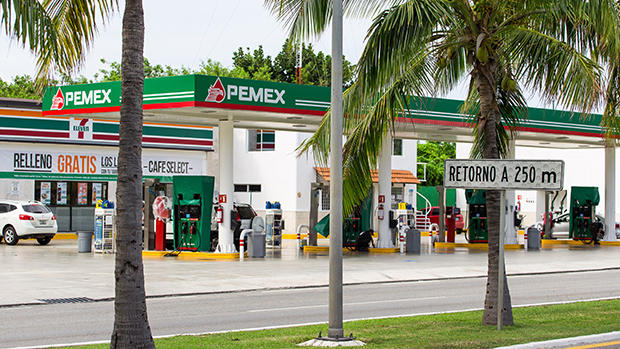
Roberto Díaz de León is the President of Onexpo Nacional, one of the largest associations of Mexican fuel retailers, and CEO of Combured, a chain of 35 gas stations operating under the Mobil brand. He has been listed as one of the 100 leaders in the energy sector by Petróleo & Energía magazine.
Can you give us a general summary of the current situation of the fuel retail market in Mexico?
By the April there were 12,844 service stations in Mexico, representing a 1% growth compared to the previous year. More than 60% belong to small and medium-sized companies that own between 1 and 4 stations. The market is highly fragmented. Sales volume, comparing Q1 2021 with 2020, there has been a 10% decrease. In terms of price, we’ve seen a 40% recovery. That 10% is associated with students going back to school – in Mexico we are still doing online classes so the pre-Covid numbers have not been recovered.
In an online session you did together with McKinsey it was said that the convenience segment had held up better than the fuelling side in this difficult year.
Most of the Mexican business is more focused on fuels and less on convenience. There are very strong convenience store chains that have taken the opportunity to rent the shops to fuel operators. There is an important part of fuel retailers that are increasingly focused on convenience and they have done very well, but this only represents 30% of the business. This segment has evolved – payment methods have accelerated with the pandemic, which goes hand in hand with loyalty programmes. These retailers have also introduced home delivery options.
Have you noticed a rapid technological change?
The change has been exponential, very accelerated. It's one of the few good things about the pandemic. Other [positives] are prevention and hygiene measures. New apps are coming out every day. I like the fact that they are no longer based only on prices but that you can evaluate the product and the service, you can find out about promotions and even attract new customers.
The government of Andrés Manuel López Obrador has tried to make various reforms to the 2014 Hydrocarbons Law. Onexpo has been very involved through comments and proposals. What are the key changes in this reform?
Around Easter the Chamber of Deputies launched an initiative to reform the Hydrocarbons Law. It was quickly approved. After various studies by commissions the reform was enacted. As Onexpo, we explained to them where there were points that generated ambiguity. We tried to ensure that the Law was more clearly defined. For example, it was approved that the permits for professionals with facilities in the value chain (storage, retail, transport) could be temporarily suspended for reasons of energy security, national security or economic emergency. However, they did not say for how long they would be suspended for, or how the suspension process would work. It is also stated that Pemex (Petróleos Mexicanos) would be responsible for taking temporary control of these assets. Another situation that worries us is that it talks about the revocation of permits if there is a repeated offence. We have an over-regulated sector and this could allow some inspection brigades (there are multiple) to make visits and note a repeated failure. It would create little certainty about our business.
Some see this reform as an attempt by the government to regain more control over the market after the liberalisation process.
Another of the reforms that they want to approve is the modification of the transitory Article 13, which refers to the asymmetry of Pemex. When a market is liberalized, the main player has to lose its dominance. In the case of Mexico, it was determined that Pemex had to lose 30% of the fuelling market value chain. Until then there would be rules to ensure it couldn’t tie down supply contracts for franchises and logistics, ensuring it would slowly lose its dominance. These contracts are left out with the recent proposal, which is a cause for concern. Pemex is still the most important player with over 70% of the market share. Private players have been increasing their efficiency through infrastructure projects. There are concerns due to the legal uncertainty caused by rule changing. But major brands, such as Valero, have spoken of their continued commitment to Mexico. None have left the market. The current government wants Pemex to be a lever for national development. They are looking after their productive company and want to strengthen it. We understand that. What we see is that neither the state nor the market can do it alone: public and private initiative is needed.
In an Onexpo announcement on the new reform you also condemn Mexico’s illegal fuel market. What is the state of affairs? Has the situation with ‘huachicol’ improved?
Huachicol is the Pemex product that people take out of the pipelines. The current government faced a very serious problem when it arrived – for every 10,000 barrels that went into the pipelines only 3,000 barrels got to their destination. This product was not sold through service stations. It is often sent to irregular tankers and sold to different transporters. Currently, and since fuel imports have been allowed, we have another problem called 'fiscal huachicol' – they import diesel and mark it as oil so as not to pay the appropriate tariff. This way they take off 4 pesos per litre, which can be 25% of the total price sometimes. Another common irregularity is the importation of bigger quantities of fuel than indicated to the government.
The government has increased security efforts at land and sea customs with some positive results. As gas stations we lost more than 35% of diesel volumes due to this unfair competition. We are in favour of tackling these irregularities.
How have you received the news that Saul Canelo Alvarez has plans to open a network of 100 petrol stations?
This kind of news is always good because it gives confidence to investors. We know that there are regulations that must be complied with. We don’t really know the business plan they [Canelo's team] have in mind. This kind of news sometimes fades when [investors] start to see the conditions in this over-regulated sector. Hopefully Canelo will come up with a business model.
*After this interview took place two judges temporarily suspended both reforms that the government had approved.