Ireland unveils national EV infrastructure strategy to 2028
The plan prioritizes high-power hubs on national roads, neighborhood charging for residents without driveways and fleet depots, as EVs reach a record 26.3% of new car sales.
Ireland’s Minister for Transport, Darragh O’Brien, has launched the National EV Infrastructure Strategy 2026–2028, the second edition of the country’s charging roadmap. The strategy fulfills a Programme for Government commitment and will undergo a mid-term review in 2027.
Its priorities include high-power charging hubs on national roads and main transport corridors, as well as accessible, interoperable infrastructure built to universal design principles. The rollout is meant to be regionally balanced and to meet the EU’s Alternative Fuels Infrastructure Regulation (AFIR). The strategy also targets neighborhood charging for people without home charging, including apartment residents, and depot and en-route charging for commercial fleets and heavy-duty vehicles.
Ireland now has more than 270,000 registered electric vehicles, and EVs have become the country’s top-selling engine type, with a record 26.3% of new car sales. The public network has grown to over 3,620 charge points with a combined capacity of about 280 MW, across more than 1,200 locations.
“With Ireland’s transition to electric well underway, it is essential that our charging infrastructure keeps pace with this growth and remains reliable and accessible,” O’Brien said.
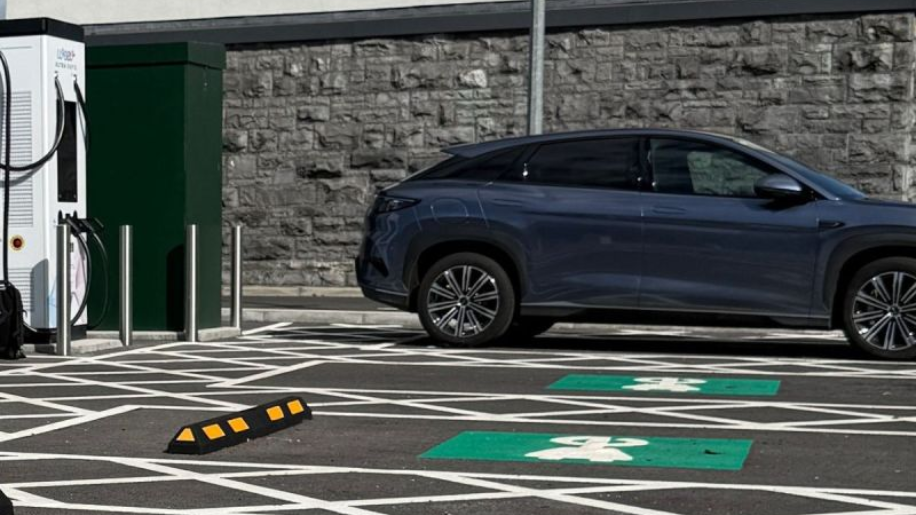
At the launch, the minister also opened a high-power charging site run by Circle K in Maynooth. Transport Infrastructure Ireland (TII) and the Zero Emission Vehicles Ireland (ZEVI) office are running three grant schemes to support high-power charging for light-duty vehicles along key sections of the national road network.