Is there a future for e-fuels?
Synthetic fuels have the potential to reshape the energy landscape, providing a sustainable alternative across all forms of mobility. We examine the current state of this innovative solution and explore its role in driving the transition to a cleaner, more sustainable future.
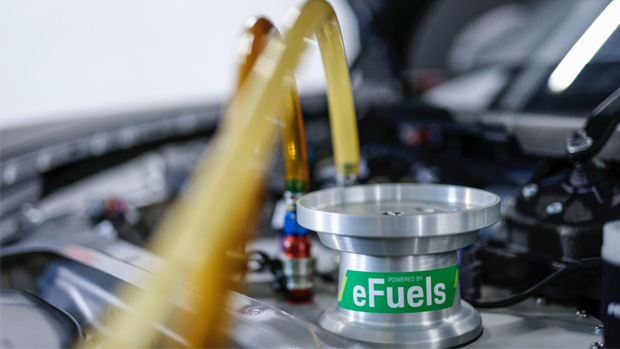
As the mobility industry embraces cleaner energies, the decarbonization of internal combustion engine (ICE) vehicles through clean liquid fuels has emerged as a promising solution. Synthetic fuels, also known as e-fuels, are gaining momentum as a direct substitute of gasoline and diesel.
Presented as a fully carbon-neutral solution on paper, e-fuels allow existing vehicles to operate more sustainably without the need for retrofits or modifications. With these advantages, the transition to a cleaner future seems not only achievable but also within reach. However, challenges such as production costs, scalability and carbon capture persist, as the technology remains in its early stages of implementation.
The roadmap to e-fuel production
According to the latest report by the Transportation Energy Institute (TEI), e-fuel production has the potential to reduce life cycle greenhouse gas emissions in road transportation by up to 75% compared to fossil gasoline. The production process uses renewable electricity for electrolysis and combines hydrogen with recycled CO2.
Highly Innovative Fuels (HIF) Global has been at the forefront of this initiative since 2016. Founded by the Chilean company AME in collaboration with German manufacturer Porsche AG, the firm now operates the first e-fuels production facility in the world, the HIF Haru Oni plant, located in Magallanes, Chile. Backed by four additional international partners, HIF Global has broadened its reach, with production facilities planned in Brazil, the United States and Uruguay.
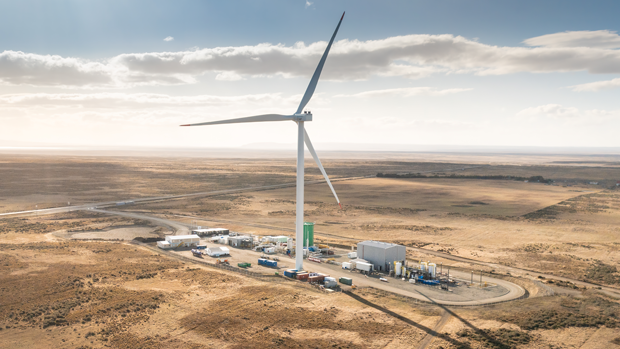
“Our HIF Haru Oni plant is a first step and serves as a model for the implementation of our larger-scale plants. To date, we have already exported over 100,000 liters of e-fuel, with eight shipments to Europe and the United States in total since March 2023,” explains Aram Pedinian, Vice President Commercial at HIF Global.
Beyond the significant investment required to establish a fuel production facility, setting up an e-fuels plant presents additional challenges due to the carbon-free nature of its production process. Abundant access to renewable resources, such as wind or solar energy, is essential to ensure a consistent and efficient supply of clean electricity. The site must have a reliable supply of water and CO2 to complete the production process, as well as adequate infrastructure for production and transportation.
This is why site selection is often limited to specific regions, such as the Haru Oni plant in Punta Arenas—a location renowned for its consistently strong winds, ideal for generating wind energy. Despite these challenges, HIF is advancing multiple projects globally, including its HIF Matagorda plant in the United States, projected to produce 1.4 million tons of e-methanol. Other initiatives include the development of South America’s largest e-fuels facility in Paysandú (Uruguay), an e-methanol production plant in Brazil, and another in Tasmania (Australia).

“We are now moving forward with the development of solutions to optimize economic and technical aspects, aiming to complete the development phase and begin construction of the first commercial-scale plants,” adds Pedinian.
According to the TEI, global e-fuel production could reach 27.5 billion gallons per year. The International Energy Agency (IEA) has also identified e-fuels as a viable emission-reduction solution by 2030, driven by cheaper renewable electricity and anticipated cost reductions in electrolysers. This marks a significant step forward in reducing emissions across multiple industries and brings e-fuels one step closer to widespread adoption on the roads.
E-fuels on the road
With production advancing steadily and new facilities underway, the next milestone for e-fuels is to prove their effectiveness on the road. This is where their feasibility will face scrutiny, as critics highlight challenges such as high implementation costs, inefficiencies linked to electricity dependence, and limited impact on reducing air pollution.
While it is still too early to set a price for e-fuels at service stations, Pedinian explains that their chemical equivalence to fuels currently powering vehicles worldwide allows them to be used in existing engines without requiring any modifications. “Additionally, they utilize the same infrastructure across the entire supply chain, making them an immediate and easily implementable solution for decarbonization,” he adds.
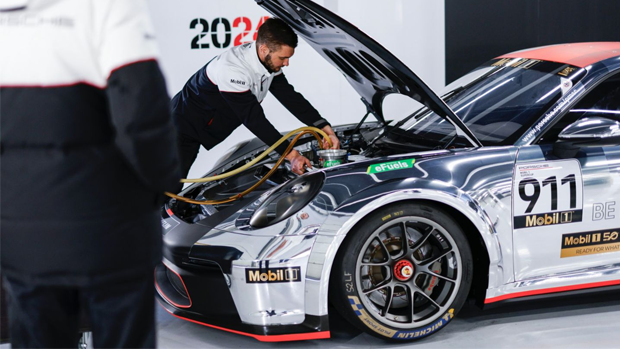
HIF has been making considerable progress in this endeavor, starting with its use in fueling the Porsche Mobil 1 Supercup and its latest partnership with Antarctica1 for tourism transportation. Although pricing remains under discussion, implementations are accelerating, and it is only a matter of time before full-scale integrations occur as production gains momentum.
Environmental organizations criticized the push for e-fuels based on prolonging the use of combustion engines. This debate has been replicated in the European Union (EU), as its climate policies establish a planned phase-out of ICE vehicles by 2035. Several EU member states expressed concerns over this, and discussions persist regarding potential exemptions or revisions to accommodate e-fuels.
The eFuel Alliance addressed this in a recent report about the main challenges for e-fuels, which highlights the differentiation between renewable fuels and fossil fuels as a key initiative that could unlock new implementation opportunities under the EU’s Renewable Energy Directive. Additionally, reworking other standards, such as eligible CO2 sources, could help raise awareness of the potential impact synthetic fuels can have on global mobility across other industries.
While e-fuels will face competition from other alternatives for both light and heavy-duty vehicles, the IEA highlights them as a key sustainability driver for the aviation and marine sectors. Since these industries rely heavily on fuel-based solutions, the impact of synthetic fuels will differ from that of road transportation but may hold even greater potential for reducing emissions.
Although e-fuel production is currently 2.5 to 4 times more expensive than fossil fuels, the TEI estimates costs can decrease significantly due to supportive policies and increased global production. The entity believes that synthetic fuel production could yield products priced below customers’ anticipated willingness to pay in the next 15 years. As these developments continue, e-fuels are on track to become a cornerstone in the global transition toward sustainable mobility, whether on the road, the sea or air.
Written by Gonzalo Solanot