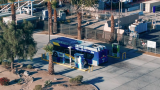
Nikkiso, WestAir support California’s hydrogen mobility with Long Beach station
The collaboration between Nikkiso and WestAir backs transit and distribution in Southern California’s expanding hydrogen economy.
Nikkiso Clean Energy & Industrial Gases Group and WestAir Gases & Equipment have announced a joint project to construct a hydrogen fueling station in Long Beach, California. The facility is designed to dramatically reduce hydrogen boil-off losses, while serving both direct vehicle fueling and trailer loading operations.
Set to begin on-site commissioning in the fourth quarter of 2025 and become fully operational by early 2026, the station will feature dual functionality: a 350-bar (H35) dispenser for fueling transit vehicles such as hydrogen-powered buses, and infrastructure to fill hydrogen tube trailers for onward distribution.
“Alongside WestAir, we’re proud that this record of innovation will continue as together we become one of the first to offer this level of flexibility in a hydrogen fueling station,” said Mike Mackey, President of Fueling Solutions at Nikkiso. “We’re delighted to be partnering with WestAir and looking forward to combining our end-to-end expertise with their commitment to this emerging industry.”
Strategically located near the Port of Long Beach, the facility is positioned to support the decarbonization of road freight in California. A key innovation is the integration of a boil-off gas compressor, allowing for recapture and reuse of vaporized hydrogen, an issue that has long challenged hydrogen storage and fueling operations.
Chris Castiglione, Energy Specialist at WestAir, emphasized the station’s regional significance: “This station represents a crucial step in our commitment to building a clean transit future and making hydrogen-powered transportation a practical reality for the commercial sector.”
The station is designed with flexibility in mind, including the ability to expand to 700-bar (H70) fueling in the future. With a flow rate capacity of up to 120 kg per hour at 500 bar, the station will be able to handle multiple simultaneous fills, both for transit vehicles and for trailers via its dual loading bays.