Q&A with Stefan Kunter (ELAFLEX): "All fuels will be needed in the future"
In this exclusive from Hamburg, CEO of the ELAFLEX Group Stefan Kunter explains why the future will be defined by multiple technologies, and what it means for the industry’s next chapter.
MobilityPlaza. How do you see the global landscape for alternative fuels developing?
Stefan Kunter. It’s a complex and tough debate among all stakeholders in the global market. For the ELAFLEX Group, LNG and CNG are a big market, which can also be CO₂‑neutral in renewable forms. We handle everything from ship‑to‑shore and ship‑to‑ship down to petrol stations and the entire transport sector. It is still a growing global market and seems likely to remain so for the next couple of years.
Another perspective is biofuels. Fuel producers no longer like to use the word “biofuels” because it had the negative association of taking food to make fuel. That is no longer the case. Today we talk about synthetic fuels made from old biomass or real waste, not from food. In Europe, we already see HVO entering some markets and gaining traction. We see more ethanol plants and more biodiesel plants, and also the first early developments in e‑fuels.
Beyond that, those of us who travel often see rising use of sustainable aviation fuel (SAF). IATA aims for all aircraft to fly with SAF or e‑SAF by 2050. This is a major movement for decarbonization. It’s a long journey; you cannot just snap your fingers and have an e‑SAF or e‑fuel refinery. It is a global, ongoing process.
MP. The EU has set limitations on which feedstocks can be used for biofuels. A challenge many foresee is the lack of available raw materials if more companies want to use HVO.
SK. To address this, the WGMM working group is actively analyzing feedstock availability. It is a technical group defining what technologies exist. It is clear that biomass feedstock is not endless. That’s why e‑fuels and e‑SAF are absolutely necessary. Many companies see that we must eventually use more hydrogen to produce fuel because flying directly on hydrogen is still far away.
We must build the refineries that use hydrogen and CO₂ to produce synthetic fuels. It is possible, the capacity exists. But policymakers need to give clear direction. Nobody invests when politicians say, “We’re not sure if we want this now or next year.” Clear answers are needed so the market can respond.
MP. Do you see a more technologically neutral approach from European governments now compared to 5 years ago?
SK. Yes. That’s why this working group exists. We see that the European Commission is now opening its mind and saying it should be possible that after 2035 more than only EVs can exist. European markets are not equal. Some markets have an easier way to bring EVs in, others have more problems. It will come, but it takes time. And there are only nine years left.
MP. The e-fuel industry has been mainly supported by Germany at the beginning. Do you see more investment coming from other parts of the world?
SK. Germany gave a push in terms of messaging, but we also see big oil companies investing in Spain, Finland and Chile, for exmple. It is not a German phenomenon. We need e‑fuels where EVs are impossible. We cannot fly electric today, so this is a global discussion, with some regions more active than others. E‑fuels are one tool but not the only one. Hydrogen, e‑fuels, EV... everything will be needed. It will be a mix.
MP. Is it a challenge to have the products for these solutions, even if you're not sure which ones are going to grow faster?
SK. As a manufacturer of fueling equipment (everything except charging), it’s a challenge and an opportunity. The market is growing with all these new technologies, and the economy grows with it. Being a global supplier helps because not every region moves in the same direction at the same speed. This allows us to find niche markets. Currently, LNG and CNG are strong. Hydrogen in Europe has slowed, but California remains dynamic, and other markets are emerging. In the end, hydrogen is essential. We focus on the whole supply chain, not just petrol stations, we have the full range of required equipment.
MP. The hydrogen mobility market has shifted towards heavy-duty transport and 700 bar. Has that impacted the way you operate in the market?
SK. We have solutions for 350 and 700 bar, and liquefied hydrogen is also coming. Daimler Trucks is investing in liquefied hydrogen for heavy‑duty transport, which provides longer distances, more volume. Others are exploring it too. People ask who will win, but this is impossible to know. Think of your first mobile phone. Apple didn’t exist then; Nokia and Motorola were dominant. Now everything is different. Time will show which technology wins, which infrastructure is easiest, and who drives adoption. If major truck manufacturers push something, it has better chances than a small unknown supplier. But surprises happen, nobody predicted Tesla becoming a global car player.
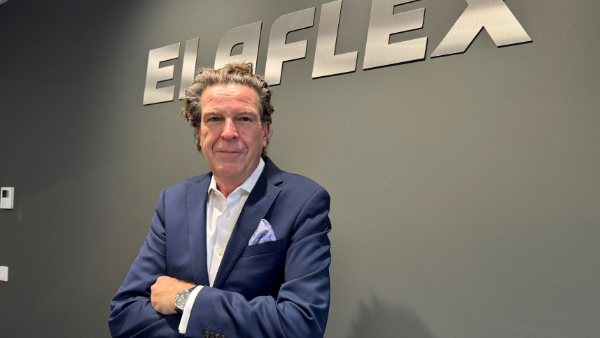
MP. There are plenty of challenges today in a world with various conflicts and more tariffs. How would you describe the current challenges of being a global supplier?
SK. The biggest growth market is difficult to define at the moment. The past two years have been fragmented due to global crises. People only invest when necessary. It is difficult to forecast and steer the company. Immediate reactions to political and economic instability make things harder. Some markets have stabilized post‑Covid; aviation is one example. Travel has surpassed previous levels. People want to meet. Airports are full, expanding, renovating. Aviation is slowly but steadily growing.
In retail fuel, companies often don’t know where to invest, so they hesitate. Traditional fuels (diesel, petrol, AdBlue) will remain for decades, so no reason to stop investing there. But EV charging raises many questions: Does it pay off? Do I have enough power? Should I spend so much money? This uncertainty holds back investment.
MP. ELAFLEX Group is one of those long-stablished, family-owned German manufacturing companies. How do you see the battle between European and Chinese products?
SK. Competition with Chinese manufacturers has existed for many years. We must be better, smarter, and offer a better total cost of ownership, higher quality, and more innovation. Otherwise, we lose. We are in a niche market where the Chinese government does not invest heavily as they did in wind or solar. Quantities are small, so we are somewhat protected. But copies exist everywhere. We must work harder and deliver better support and durability. Cheap is not always best. In professional environments with dangerous materials, reliability matters.
MP. Service stations are undergoing a massive transformation. How do you see the move toward larger, convenience‑focused multi‑energy stations?
SK. I think petrol stations, or future energy stations, are a must. If you have your own house and PV on the roof, you can charge your EV. But when you look at the whole European area, not everyone has their own house. Most people live in flats in cities. So you need energy parks. And, as I mentioned before, there will be different kinds of energies. You will still have diesel and petrol for many decades, and then alternative fuels, e‑fuels, hydrogen, EV charging, car wash.
A convenience store in some areas of Europe is a must. That is why I see much more investment in the future in energy stations than today, because more options are needed. In some areas in Germany or Italy, when they build new petrol stations, they are bigger, with more capacity. They are multi-energy and future‑proof. I guess it’s just a more complex business than before, but it’s good.