Q&A with Joel van Rensburg: “GVR can help hydrogen industry scale”
PetrolPlaza sat down with Joel van Rensburg, newly appointed President, Alternative Fuels Platform at Gilbarco Veeder-Root, to discuss the company’s strategy, why this time hydrogen will succeed, and what makes this sector different to others.

With an engineering background, Joel van Rensburg has been working on gaseous solutions with ANGI Energy Systems and sister company Gilbarco Veeder-Root (GVR) for over 10 years. After embarking on a journey to study the feasibility of hydrogen solutions, he became the General Manager of the Hydrogen Business at GVR. He was recently appointed President of the Alternative Fuels Platform, which includes hydrogen, natural gas and fleet dispensing solutions.
Q. GVR is one of the leading suppliers for liquid fuels equipment and gradually you’ve come to offer solutions for all types of energy. How did GVR get into the business of hydrogen?
A. In 2014, GVR acquired ANGI Energy Systems and truly entered gaseous fueling applications. ANGI designs and manufactures compressed natural gas (CNG) and renewable natural gas (RNG) equipment. They've been a leader in this space in North America for almost 40 years. With our CNG capabilities, and our experience around gaseous fuels compression and dispensing, hydrogen felt like a natural adjacent market to expand into. We are able to leverage both sides of our organizations and global footprint to commercially scale the hydrogen business. We've built a new team focused on hydrogen with Danny Seals – bringing nearly 20 years of GVR fueling solutions experience - as our Hydrogen General Manager. There’s a strong play from the hardware standpoint, overlapping technologies from the software side, and an area of service and maintenance that we know very well.
Q. With your parent company Vontier as the umbrella company, what kind of reorganization has taken place regarding ANGI and GVR to ensure hydrogen is a successful segment?
A. We see a lot of our bigger customers, especially major oil companies, starting to look at the energy transition and setting ESG goals. There are also macro trends like government regulation and funding driving cleaner, more sustainable solutions for the industry. We've reshaped our business to serve those customer needs and created a new platform under Vontier – our Alternative Energies and Sustainable Fleets platform. ANGI Energy Systems now fits under that body. This is coupled with our host of fleet businesses like Teletrac Navman, Gasboy, Driivz and Sparkion. It gives us a well-rounded suite to go and serve our customers.
Q. Could you run us through some of the specifics regarding installations, products and future launches?
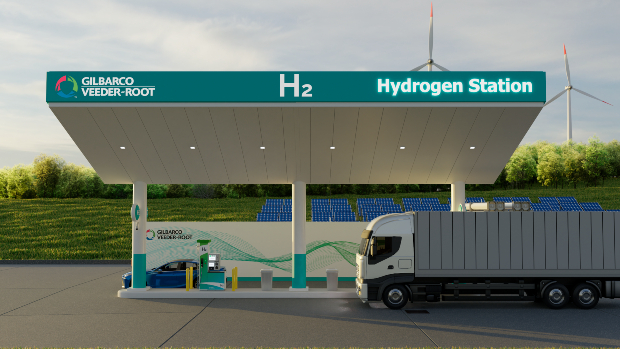
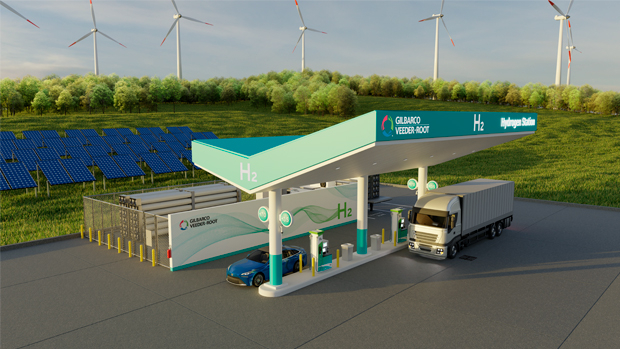
A. It's a very exciting time for us. We are in the process of building and delivering our first customer orders. In 2023 we’re making good progress on the certification front for North America and Europe. We’re taking the learnings from ANGI and natural gas and applying it to the hydrogen business. A part of that is building our own test facility that will be operated on hydrogen. It will give us the ability to test an entire hydrogen station before we even ship it out of the door, helping to reduce some of the commissioning lead time.
With government funding and the commitment from energy companies, we're seeing so much traction in North America and Europe. This growth is truly changing the industry and driving the sector from traditionally isolated R&D type projects, to a commercial business.
Q. What is different about the implementation of hydrogen this time? What’s different to other times it’s been tried?
A. Some of the early adopters that have been in the market for over 10 years have been more focused on R&D projects and light-duty vehicle applications. We’ve seen a shift to heavy-duty applications, a focus on return on investment, and larger scale applications that look to serve a market need. Technology is starting to come online and scale.
Another thing, as we experienced with the CNG and RNG industry, is the chicken-and-egg problem. Who goes first? The difference is that lots of companies in the hydrogen space are coming together. Vehicle manufacturers are partnering up with station builders, station owners and major oil companies to solve highway infrastructure and help the industry come online faster. Finally, an increased momentum with the funding from most governments is accelerating the development.
Q. Consortiums coming together to push the industry forward has certainly been a positive feature of the last years. In terms of timing, what are you expecting?
A. Infrastructure development might be a little bit ahead of vehicle rollout, especially in the U.S. I’d like to see more vehicles on the road. The other challenge I would like to see some improvement on is the whole permitting process. The faster we can make those applications move, the faster this industry can scale. Regardless of the technology being ready, a lead time of 18 to 24 months from inception of a project to hitting the ground is too long. There's definitely a good opportunity there.
Q. The role of Governments to push forward any new industry is key. We’ve seen some ambitious announcements coming from Asia, Europe and the U.S. in recent months. What are some of the biggest takeaways from these announcements?
A. It's exciting to see so many governments come on board and launch different strategies around hydrogen. We've seen at least 9 new countries over the last year. That's a big shift in momentum. Even with the Biden Administration's bigger push on EVs, I truly see FCEVs i.e. hydrogen powered vehicles as part of these developments. These government measures are helping to solidify and give confidence to what larger organizations are doing around stations, technology build-outs and their ESG targets. For example, in the U.S. different regions are coming together with plans for hydrogen hubs and support for the transportation sector.
Q. What’s your view on the BEV vs FCEV debate? Do you expect a lot of segmentation for different fuels?
A. We don't believe that one solution can solve the entire car park. There are different geographies and use cases that impact the selection of fuels – long-haul over road, yard trucks, short deliveries, etc. We need to drive the right applications for the right use case. Depending on where they are located, the electric grid might not be strong or there might be water scarcity for electrolysis. We are well positioned to help our customers make the right investment. The “one size fits all” mentality can slow the trajectory of alternative fuels – driving a multi energy solution can really help.
Q. The current surge in players and solutions in the hydrogen space makes it quite a unique business. The hydrogen value chain is also incredibly intricate. What sets this industry apart in terms of innovation and collaboration?
A. A lot of the players in this space don’t come with the mind of "we have to develop the technology by ourselves to go and serve the market." We’ve partnered with large companies around the globe. Leveraging each other's strengths, scale and technologies is a very different approach than what we've seen in the past, such as the CNG sector. Companies aren't afraid of collaborating and working together, thinking about how we scale the industry rather than what's our piece of the pie. We've taken a heavy engineering approach to this, making sure we get the right partners that can help the industry scale.
Q. As you start to release your products, which markets are you mainly focusing on?
A. The approach is to focus on where it's closest to our core competences, which are North America and Europe. We want to leverage the knowledge of those markets, build up product suites, get them rock solid, and then start expanding into the rest of the world. We are looking at a global release of product suites but we want to do it right.
This article is part of the PetrolPlaza Special "The Future of Hydrogen." Check it out the rest of the Special here.