Q&A with Selman Gezer on Petroleum Istanbul 2025
Selman shares how the event has evolved to attract global participation, address critical industry challenges, and expand its focus on non-fuel activities. He also discusses major trends in the Turkish market.
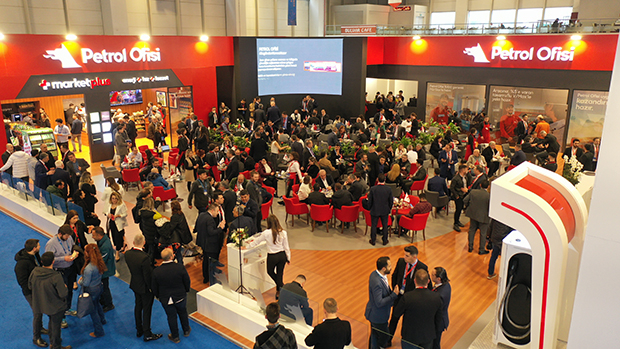
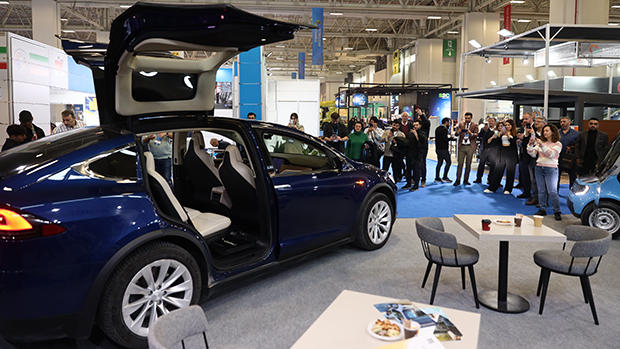
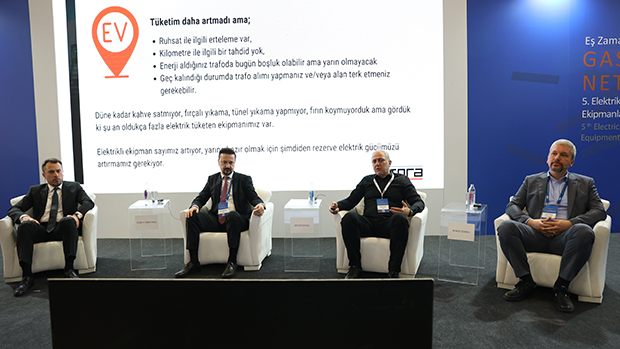
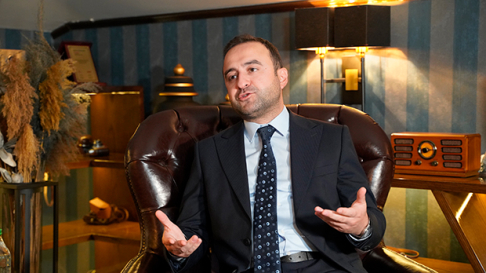
We speak to Selman Gezer, General Manager of Enerji Fairs and Organization Inc., about the plans for Petroleum Istanbul 2025, taking place 24-26 April. As Türkiye’s leading event for the fueling sector, Petroleum Istanbul, held together with the Gas & Power Fair, provides a unique opportunity to explore the latest trends, innovations, and developments.
Question. How would you describe your company and Petroleum Istanbul to an international audience?
Answer. Our group of companies operates in various fields of this market. We have a construction company building fuel stations, media company covering energy news, and we organize events serving this industry.
This is the oldest, biggest, and only international event in its sector in Türkiye. In 2025 we will celebrate the 17th edition. The biennial event focuses on the petroleum industry, specifically the downstream side. It covers fuels, LPG, lubricants, equipments, convenience stores, car wash and services and related sectors. Türkiye doesn’t have a large upstream market due to limited oil and gas production. We have two main state companies—one for oil exploration and production and another for gas transportation—along with a few small-scale foreign companies and two refineries.
Q. Can you share general numbers about the Turkish market?
A. There are over 12,000 gas stations in Türkiye. Most are family-owned businesses. Most dealers and key decision-makers attend our exhibition. There are also more than 30 fuel distribution companies, though around 15 of them hold a significant share of the market. The biggest brands (Ofisi, Opet, TotalEnergies, Aytemiz, Alpet,etc.) are already confirmed for the 2025 edition.
Q. Convenience is one of the big trends in Türkiye. How many of these stations have convenience stores?
A. Roughly 90%, but how many can be considered full-fledged convenience stores is debatable. Larger cities and major distribution companies tend to have better-equipped stores. Expanding our focus on convenience stores and products is the biggest part of our expansion plans.
In these stores, snacks, beverages, and fast-consumption products are among the best-selling items, while healthy and practical products have also become a trend recently. Additionally, services such as car wash, repair points, courier lockers at gas stations are becoming increasingly popular. These developments are helping to reach more people, along with the growing variety of products and services in stations.
Q. In the 2023 edition, there were around 270 exhibitors and 33,000 visitors. What are your expectations for 2025?
A. The 2023 edition was slightly smaller, with 250 exhibitors and over 20,000 visitors, partly due to the earthquake we suffered just before the event. For 2025, we expect to double the number of visitors and significantly expand the exhibition’s coverage. We’re focusing on non-fuel products and services, technological advancements like digitalization and payment systems, and new-generation fuels such as hydrogen and biofuels.
Additionally, we are working on international partnerships to attract more global participants. To this aim, we are working to build partnerships and collaborations with key industrial associations and agencies in various regions, particularly in Europe, Asia, Africa, and Americas.
This year’s event will be a major turning point, and we’ll announce a big surprise during the exhibition.
Q. Will the conference program reflect these changes in the market?
A. The Petroleum Academy will cover issues about fuel and non-fuel sectors like retail sales, equipment, convenience stores, car wash and services and digitalization. The Gas & Power Academy, on the other hand, will focus on emerging areas such as EV charging, hydrogen, biofuels, and energy storage. We’re collaborating with international associations to bring high-profile speakers and strengthen the program.
Q. Is the goal to make the event more international?
A. Absolutely. We aim for at least 30% international participation in the next editions and eventually aspire to make it a global event. Initially, we’re focusing on attracting participants from neighboring regions where Türkiye serves as a bridge. We also want to increase the interest from Europe, Asia, and the Americas. Türkiye’s large market—with over 12,000 stations—makes it an attractive destination for international companies.
Q. What regulatory changes or market trends are impacting the industry?
A. There are two main developments. Profitability in fuel retail has decreased, making non-fuel revenues crucial. Non-fuel activities have grown significantly, with some companies reporting triple-digit percentage increases. On the other hand, digitalization and technological investments are rising due to regulatory requirements, such as fleet tracking systems for fuel consumption.
Recent regulations also contain some limitations to fuel pricing, sparking discussions in the market.
Q. How is the alternative fuels market developing?
A. EV and charging infrastructure are booming in Türkiye, with the country leading in new charging point installations in Europe. However, only a fraction of the licensed 200 companies actively invest in this sector. Hydrogen projects are growing, particularly with investments from refineries and energy companies. Biofuels are emerging, but production is still in its early stages. The most visible growth is in EV and charging infrastructure, which continues to expand rapidly.