Romania’s retailers take the battle to the convenience segment
With four major players dominating the market, most of the efforts to edge the competition are now focused on expanding non-fuel services. Industry expert Adrian Balan-Doltu provides an overview of Romania’s retail fuel market.
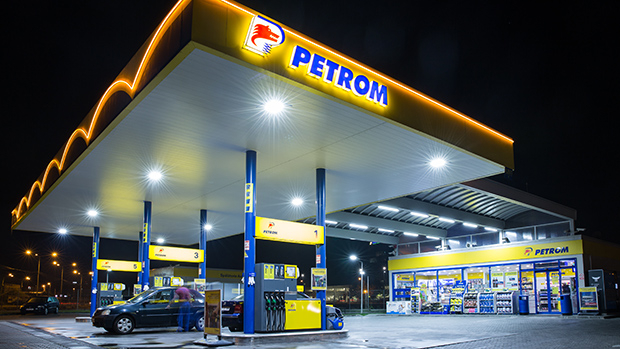
Romania is considered the second biggest market in Central and Eastern Europe (CEE) after Poland. Despite being home to around 20 million inhabitants, there are only 2,300 petrol stations. The passenger car density (in the range of 260/1,000 inhabitants, according to Eurostat) is among the lowest in the European Union (EU), and the country’s infrastructure has been lagging behind its peers for decades.
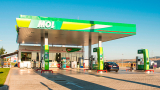
Four players dominate the oil downstream market: OMV, MOL, KazMunayGas International (owner of the Rompetrol brand) and Lukoil. Except MOL, these players also operate the only refining capacities in Romania. Enhancing non-fuel services has been the major focus for all players in the last few years. In that sense, Petrom has partnered with Subway, and rebranded many of its convenience stores to My Auchan, a new c-store concept developed in partnership with Auchan. MOL continues to roll out its Fresh Corner concept across the country, especially after acquiring ENI’s business in Romania in 2015. Both KMG and Lukoil have invested heavily in redesigning their shop formats and expanding their food and beverage offering.
On the short term, no major changes are expected in the market. New players have failed to have a significant impact (SOCAR – 42 locations, NIS Gazprom - 18), and others like Smart Diesel and OSCAR downstream have successfully focused on the commercial vehicle segment. Through partnerships with independent operators, OSCAR downstream, the largest independent fuel and petroleum products trader, has just entered the retail area and may develop its own network in the future.
Although slower that the EU average, the number of electric vehicles will increase in Romania. In particular due multinational companies implementing their policies in the country, such as IKEA. This will have an effect on fossil fuel sales and eventually lead to further concentration, as many independent operators will exit. In parallel, non-conventional players will emerge as competitors – many hypermarkets, specialised parking areas and shopping malls already offer speed charging.
In similar fashion, MOL and E.ON partnered to install 40 rapid changing stations in Romania by 2020 (19 by E.ON and 21 by MOL), financed through a mechanism for interconnection in Europe (NEXT-E, approved by the European Commission).
Alternative fuels are yet to fully develop in Romania. CNG penetration is insignificant for now, while the LPG market revolves mostly around taxis. Fuel-cell vehicles are non-existent.
Written by Adrian Balan-Doltu. Adrian is an industry expert with decades of experience in the downstream sector. You can follow him at @abalandoltu | Edited by Oscar Smith Diamante