Shell’s Krsice twin sites showcase a new age for mobility hubs
MobilityPlaza sat down with Jan Čapský, Shell’s Mobility Manager for the Czech Republic and Slovakia, to explore how the company is redefining motorway stops. At the heart of this transformation are Shell’s Krsice twin sites in Czech Republic, where energy, comfort, and technology converge.
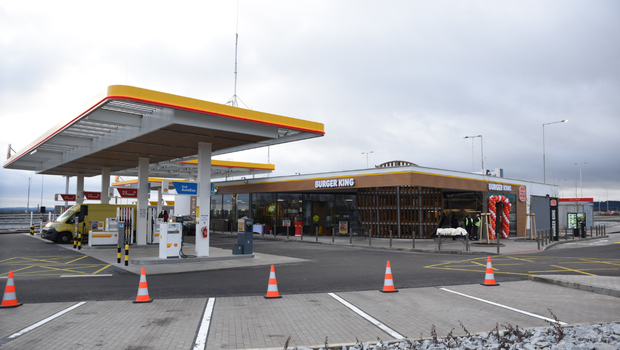
The transition from fuel-focused sites to mobility hubs is evident across the globe, and many of these modern sites bear the Shell flag. In December 2024, the Krsice twin sites on the D4 Příbram–Písek motorway opened as what Shell itself called the company’s “most technologically advanced, largest, and most modern” service stations in the Czech Republic, while also serving as a reference point for how Shell can build “hub-style” locations across its global network.
Set up as two almost identical buildings on opposite sides of the motorway, Krsice is designed to be easy to understand and easy to repeat. The sites combine energy needs (fuels and charging) with amenities and efficiency systems that are increasingly expected at premium motorway locations. Alongside the forecourt, customers find a Shell Café and Burger King, a dedicated rest area environment, and a technology stack that includes waste-heat recovery, solar PV on the canopies, and extensive water-management solutions such as vacuum toilets and rainwater reuse.
That “twin-station” design is not merely architectural symmetry. In operational terms, it supports consistency and predictability for drivers: whichever direction they travel, the offer is effectively mirrored. Jan Čapský, Shell's Mobility Manager for the Czech Republic and Slovakia, explains the concept is meant to deliver a uniform experience: “We are talking about two identical sites – twins, as we like to call them – with everything available at one mirrored at the other, ensuring the same premium experience in both directions of travel.”
Čapský frames Krsice as part of a broader shift in what motorway stations are expected to be. “Shell D4 Kršice redefines what a motorway stop can be,” he says, arguing that the site is designed not just for refueling, but for a more complete break.
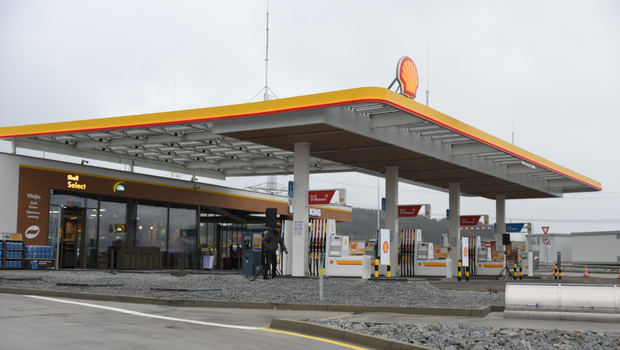
A new customer journey based around multi-service
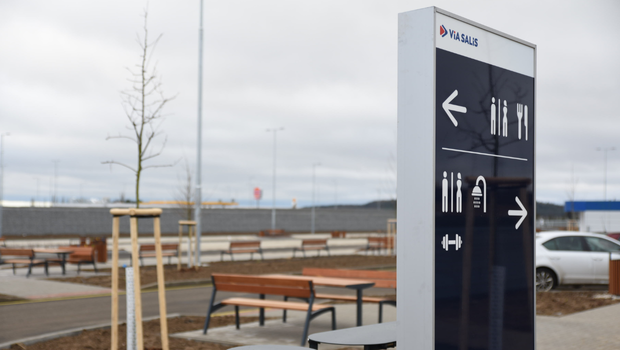
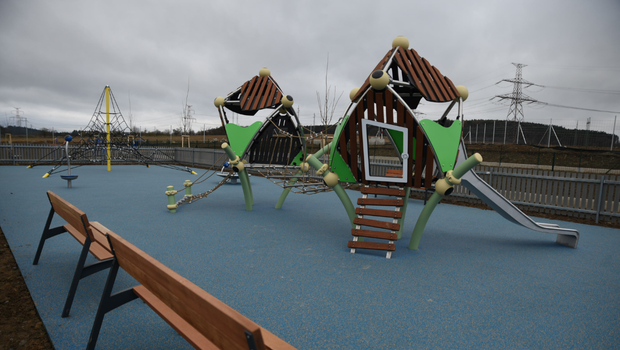
A hub succeeds or fails depending on what a driver does when they step away from their vehicle. Krsice leans heavily into that non-fuel moment, with the aim of turning a functional stop into a more deliberate break. The rest area features separate toilets and showers, a dedicated relaxation zone, fitness machines, and a children’s playground. The food and beverage offer is based around the Shell Select store, Shell Café, and Burger King.
Čapský links these facilities directly to dwell time and customer intent. Rather than competing on the fastest possible exit, he describes the site as one that encourages motorists to pause: “While city stations are built for short stops, Shell highway sites Krsice encourages customers to take a meaningful break,” he explains. That framing mirrors Shell’s broader thinking about modern forecourts and mobility hubs: as EV charging grows, the customer experience around the stop becomes as important as the infrastructure itself, because drivers want to use charging time productively.
The practical point is that Krsice is designed to support different “stop missions” at once. Families can separate from motorway noise and reset. Long-distance drivers can access showers and rest facilities. Everyday travelers can get coffee and food without treating it like a rushed transaction. This is not presented as a lifestyle add-on; it is a central element of the hub concept, and it is why Shell repeatedly describes Krsice as something more than a conventional service station.
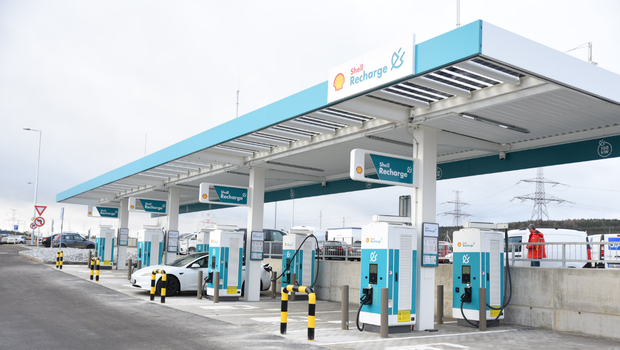
A multi-energy station with an EV charging hub
If multi-service defines the “human” side of the hub, multi-energy defines the mobility side. Krsice is built for a mixed fleet reality: it serves internal combustion vehicles, EVs, and heavy-duty transport through a broad fuel mix. That includes bioCNG and LPG, AdBlue, diesel, and unleaded. The infrastructure is flexible enough to support current demand while accommodating new vehicle technologies.
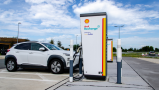
The twin station also features two EV charging hubs – the first in the Czech Republic – each having eight ultra-fast charging points per direction delivering 150 kW. Each charging position has its own unit so that drivers can access full power when vehicles allow it, reducing the chance that “sharing” infrastructure will slow charging times. The charging bays feature lighting and camera monitoring, cable holders, enlarged spaces for accessibility, touch screens, and bank card readers, positioning charging as a complete “forecourt experience,” not a side installation.
Čapský describes Krsice as a highly utilized EV location within Shell’s network. “Both sites are the top utilized EV stations in our network. The convenience of 8 ultra-fast charging points and the comfort of on-site amenities make Krsice a preferred stop for EV drivers, even during peak travel periods.“
Tech-savvy and resource-efficient
The flagship energy-efficiency feature is waste-heat recovery: residual heat from refrigeration equipment is recovered to heat water at the station and in the Burger King operation, improving efficiency and reducing cooling requirements.
Electricity generation is also built into the structure. Photovoltaic panels up to 50kW installed on canopies above both fueling and charging areas, positioned for maximum daylight use. The canopy includes a transparent roof that reduces the need for artificial lighting.
Water and wastewater systems are another defining part of the “advanced” story. Shell describes vacuum toilets with extremely low water consumption, rainwater harvesting and reuse, and roof water collected into a 60m³ retention tank for toilet flushing and grass irrigation. It also notes that wastewater is filtered directly on site and then routed to biological wastewater treatment. Additional measures mentioned by the mobility giant include skylights to reduce electricity consumption and building nets that will gradually be covered with climbing greenery.
This “green tech” layer is closely tied to scale. Shell describes the rest areas as the largest motorway rest areas in the Czech Republic, with 246 parking spaces. A larger station puts more pressure on energy and water systems, so operational efficiency is not only a sustainability claim; it is also part of keeping the hub economically viable.
Putting all the pieces together
Krsice is designed around the idea that a modern station is no longer a single business, but a set of businesses that reinforce each other. EV charging adds dwell time; food, coffee, and convenience retail give that time value; and comfort facilities help convert a “necessary stop” into a stop customers are willing to repeat. Drivers want to use charging time positively and convenience retail helps achieve that.
Čapský describes the behavioral outcome in plain terms: “Drivers often pair charging or refueling with a coffee break or a meal… The station’s layout makes these combinations seamless.” From a commercial perspective, he argues that the implication is measurable: “What truly stands out is how non-fuel retail is becoming a key driver of traffic,” even as fuel and EV charging remain essential. The Shell Recharge facilities are part of a wider system that includes payment flexibility, real-time availability information through the app, and the ability to support multiple customer types from private motorists to fleets.
Synergy also applies across vehicle categories. Krsice is built to handle passenger cars and heavy-duty vehicles, supported by a large parking capacity and features such as parallel truck refueling from two dispensers, designed to reduce time on site for diesel and AdBlue filling. The point is not that everyone stays longer; it’s that the site can serve both “quick throughput” and “meaningful break” use cases without one undermining the other.
Krsice was delivered on a new motorway section built under a public-private partnerships model that sets a new benchmark for motorway stations in the Czech Republic. It also embodies how a modern mobility hub can integrate energy, retail, comfort, and operational sustainability.
Written by Oscar Smith Diamante