
Op-Ed: The benefits of AI-driven energy management systems for service stations
Implementing AI-driven EMS can help service stations save money and energy as well as improve their environmental performance.
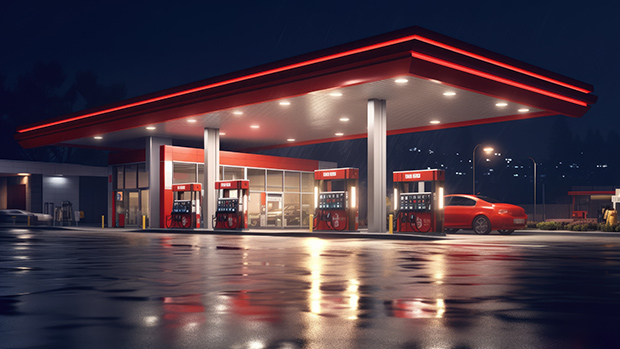
In the bustling world of service stations, energy conservation can sometimes be overlooked. Energy conservation is not just environmentally responsible, it’s also a critical factor in operational efficiency and cost savings. By implementing energy-saving measures, service stations can significantly reduce their operational costs and increase their profitability. Energy conservation strategies contribute to the reduction of carbon emissions, aligning the operations of service stations with global sustainability goals. Therefore, it is not merely an act of environmental responsibility, but a strategic business decision that can lead to substantial benefits.
The cost of inaction
A research paper published in 2023 by the Aristotle University of Thessaloniki in Greece reported that 40% of the annual CO2 emissions in the United States are directly related to electricity consumption. The same paper argues that 20% of all that energy could have been saved if its usage had been more efficient.
Failing to implement energy conservation strategies can have dire consequences for service stations. Energy costs can spiral out of control, eating into the service station’s profits. For instance, consider a service station that operates 24/7, using high-intensity lighting for visibility and safety. If this station fails to adopt energy-saving measures, its energy costs could skyrocket. This could significantly reduce its profits, especially during off-peak hours when customer traffic is low. The station’s excessive energy consumption would also result in increased carbon emissions.
The same happens in the store area – they usually open 24/7, are bigger than ever, and include services such as EV charging. For ejample, refrigeration units for perishable goods run continuously, consuming a substantial amount of energy. Heating and cooling systems also operate round-the-clock to maintain a comfortable environment for customers and staff. Moreover, fuel pumps, EV chargers and electronic equipment such as cash registers and security systems add to the energy demand without mentioning the increasing number of commercial kitchen equipment. Given this high energy consumption, adopting energy conservation strategies becomes of crucial importance.
Another area where energy conservation is very important is car wash facilities. These facilities and their equipment are significant consumers of energy, primarily due to the extensive use of water and electricity by dryers and pumps. Water heating systems, often necessary for effective cleaning, add to the energy footprint too. The need for energy conservation measures in these facilities is therefore paramount.
The power of AI in Energy Management Systems (EMS)
Energy conservation and reduction is possible to achieve, though. The key lies in adopting AI-driven EMS. An EMS is a software and cloud-based system that monitors and controls energy consumption. It can collect data from smart plugs, sensors, meters, and other IoT devices. The gathered data can then be used to optimize the energy usage of water, lighting, refrigeration, and HVAC systems. An EMS provides real-time data on energy consumption, allowing staff to identify trends, detect inefficiencies, and make informed decisions about energy usage. When the EMS leverages the power of AI, then EMS can also analyze the collected data and provide insights on how to optimize energy usage and reduce costs.
Consider a convenience store at a service station. An AI-driven system can analyze energy consumption patterns, weather data, and store occupancy levels to optimize energy use.
In the same vein, EMS has the potential to streamline the operation of car wash equipment by utilizing real-time data. This data-driven approach allows for the optimization of various operational parameters, such as water temperature, pressure, and cycle duration. Consequently, this leads to significant energy savings, making car wash facilities more energy-efficient and cost-effective.
The triple win: cost savings, energy efficiency, and environmental performance
The integration of AI-driven energy management systems can yield considerable benefits, especially in terms of cost savings. An AI-driven energy management system, with its smart algorithms, can analyze the energy usage patterns, identify peak and off-peak hours, and optimize the energy consumption accordingly. By implementing such intelligent adjustments, the system can reduce energy usage by up to 30%, leading to a substantial decrease in energy bills. The adoption of such advanced systems is a strategic move towards improved energy management.
Adopting AI-powered energy management systems can also enhance the energy efficiency of service stations. For instance, consider a large service station that uses AI-driven EMS to manage its HVAC system. The system can analyze data from sensors throughout the store, weather forecasts, and occupancy patterns to optimize the HVAC settings. This results in maintaining optimal temperatures, while minimizing energy use. In this way, service stations can achieve more with less, thereby reducing their energy intensity. This example illustrates how AI can transform energy management, leading to significant efficiency gains.
The implementation of AI-powered EMS can also improve the environmental performance of service stations. For instance, they can lower their energy consumption and thus reduce their carbon footprint by 20-40. A practical example is a service station that uses AI to manage its refrigeration units. The AI system can monitor the temperature and usage patterns of the refrigeration units, adjusting the cooling levels in real-time based on demand. This not only ensures optimal performance but also minimizes unnecessary energy consumption.
Moreover, AI can also be used to predict and schedule maintenance activities for equipment. By predicting potential failures or inefficiencies, the system can schedule maintenance activities during off-peak hours, thereby reducing energy wastage and improving overall environmental performance of service stations.
The implementation of AI-driven EMS at service stations presents a compelling business case. It is not just about cost savings; it’s about future-proofing the business in an increasingly energy-conscious world. The triple win is within reach. It is just a matter of embracing what AI-driven EMS have to offer.
Written by Niels Bengtsson. Contact him on LinkedIn