How agentic commerce is shaping an invisible checkout era
As wallets go agentic and tokens let trusted AI complete the pay flow, we explore how checkouts can become invisible across pumps, chargers, and c‑stores.

AI is already reshaping retail across the customer journeys. In mobility, that can be as simple as a station app reminding drivers to refuel on their commute, an in-car system or wallet applying fuel‑loyalty automatically, or an EV charger suggesting an optimal top‑up based on route and price. This is enhanced even further when e‑commerce enters the mix, with automation showing up in everyday basics: chat‑based ordering, easy subscription clean‑ups, and linked purchases; patterns that replace clicks with quick approvals.
Most of these innovations still hinge on the shopper taking the final step, using assistants that prompt, prefill, or nudge a purchase. Agentic commerce is closing that gap by enabling “invisible checkouts,” where assistants become agents that act on a consumer’s intent and complete the transaction using tokenized payment credentials. With automation moving from reminders to execution, the question now is: how might this shift reshape modern retail?
When tokens do the talking, agents close the sale
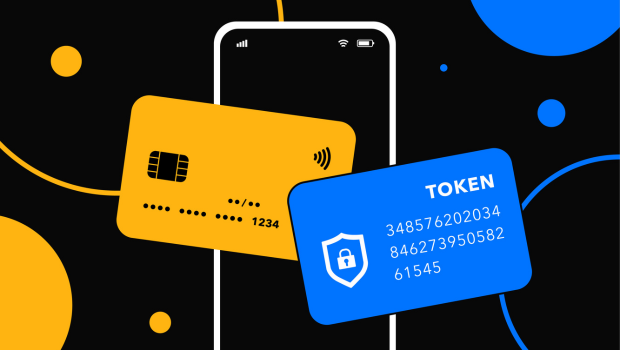
Drawing from PYMNTS Intelligence’s latest issue of The Prompt Economy Tracker, produced in collaboration with Visa, agentic commerce is made safe and scalable by payment tokenization. This network‑issued credential replaces the card number (PAN), travels over existing card rails, and can be refreshed or revoked at any time. With agents able to act on a user’s intent and complete purchases without exposing the underlying card details to each merchant, this token functions as a digital trust layer.
In practice, a user enrolls a card with an agent or digital wallet; those details are sent to the token network, which returns a secure tokenized credential bound to the verified profile. When a transaction occurs, the merchant receives the token, not the PAN, while issuers and networks retain visibility and risk controls. The user simply authenticates that they are themselves and approves the agent’s action.
Leading digital wallets are embracing this model, with Google being the prime example. Wallet‑level authentication plus network tokens allows an agent to transact anywhere the wallet is accepted, eliminating repeated card‑on‑file and extending agentic purchasing across merchants and channels. In contrast to other frictionless experiences, while biometrics help prove “who you are” and smart stores speed “how you pay,” agentic changes who does the payment process.
From friction to flow across the station
Applied to stations, tokenization supports secure pre‑auth and pump‑to‑transaction mapping, and extends into the c‑store. The agent can check range, traffic, and loyalty status, pick the best station on‑route, preauthorize, and add a coffee bundle or windshield fluid in the background. At the station, the driver authenticates once on the dash or phone to unlock the pump or charger while payment completes without a visible checkout, the receipt and loyalty accrual post automatically. This is the promise of invisible checkouts, agents acting on intent while payments happen behind the scenes.
Scaling will hinge on interoperability and portable consent across channels and devices. A dynamic mix is likely: wallet‑led payments, merchant credentials‑on‑file, and agent‑managed card credentials, each built on shared network token standards. Leading digital wallets are already moving this way, and Visa has introduced agent‑ready rails with Intelligent Commerce and Trusted Agent Protocol to connect AI agents and wallets to tokenized payments.
Still, fragmentation remains a real hurdle in fuel retail, making execution uneven unless stations prioritize token acceptance, reliable pump‑ID mapping, and a consistent consent UX. Not as another checkout step, but as a persistent connection between driver, device or vehicle, and brand. Agentic commerce, coupled with tokenized payments, isn’t a new button; it’s a new execution layer where checkouts disappear and relationships stand out.