Stage set for Afrifueling Expo 2025 in Nairobi, Kenya
The momentum towards a spectacular Afrifueling Expo 2025 is now at topmost peak - three weeks to the event. The Expo which is taking place on 6-8 May in Nairobi, Kenya is a platform where players in the fueling industry will launch the new face of the business in the fast growing African continent.
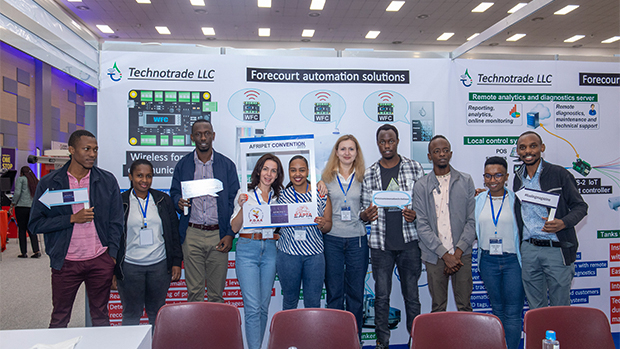
A new era is dawning for the industry across the globe defined by a more conscious consumer. In Africa’s fueling supply chain, LPG, CNG, biofuels, and electricity are taking their share of the mobility space. The traditional fueling sector, which has grown impressively since the mid-20th century, now finds itself at a pivotal juncture.
All this is driven by a new type of customer. One who is more conscious of existential issues like climate change and the impact of our collective actions and behaviors on the environment. Sustainability has also moved to the heart of every conversation with every well-meaning person concerned with how they use resources and whether they shall leave a better world for the next generation or one depleted and uninhabitable.
The traditional fueling industry has for all intents and purposes served reliably. For instance, since the first fuel station after Kenya’s independence opened in 1966, the sector has grown to a documented 4,800 plus stations in 59 years. During this time, the supporting infrastructure has been continuously built and improved to meet new demand from a growing economy.
Growth that once used to be powered by only multinational companies has morphed to include more indigenous companies. The country now has a healthy mix of multinational, regional, and national brands serving across the region.
However, winds of change have been blowing on all sectors of the economy driven by environmental, social, geopolitical and technological factors and the fueling sector has not been spared. For example, during COP 21 in 2015 Kenya committed to cut 32% of greenhouse emissions by 2030. This was followed by a raft of policy changes and plans like the National Adaptation Plan (NAP) 2015 and Energy Transition & Investment Plan (ETIP) 2023. The plans look at how to substitute fossil fuels with alternatives that are sustainable and preserve our environment.
This has opened a door for e-mobility and the possibility of LPG as a transport fuel. Both of these alternatives have been tested here in Kenya and the East Africa neighbors as well. For example, the public transport services piloted the use of EV buses in commuter routes and it has been a resounding success. The Matatu Owners Association (MOA) who are partners at the Afrifueling Expo 2025 are driving this adoption with a further demand of electrifying 5% their fleet which translates to a total of 10,000 units in 5 - 7 years.
The 2 wheeler and 3 wheeler segment is also one that is undergoing a rapid transformation. With breakthroughs in battery swapping technologies, we have seen a surge in adoption and one can see swapping station units in different service stations. The Tuk Tuk Network Association who are partners at the expo as well are supporting their members to acquire EV bikes and rickshaws.
Kenya adopted Liquefied Petroleum Gas (LPG) as a transition fuel primarily for clean cooking but it soon found a solid user base in the transport sector. Due to its pocket friendly prices, fleet users such as taxi services quickly adopted it. With over 20 stations in Nairobi alone, the demand for it is growing and new technologies are supporting 3 wheelers (Tuk Tuks) to upgrade their engines to use gas as well. This is the case in Tanzania, where the country has abundant Compressed Natural Gas (CNG) and now has put policies in place to create a transport ecosystem that is powered by the gas.
All these changes demand that new technologies are adopted by the fueling supply chain. From new types of equipment, to completely new thinking in engineering, design and construction. We are going to see the rise of hybrid stations, which sell molecules on one side and electrons on the other. In addition, the Health, Safety, Environment and Quality standards (HSEQ) will need to become more prominent and inform on the innovations required to drive the fueling sector forward.
This is the whole essence of the Afrifueling Expo, to create a platform where the industry can launch the next phase of fueling in Africa. It is more than an event, but a convergence of supply and demand and the technologies that power it. Together, we shall connect, engage and discover so that we can face the future more boldly.
Looking forward to meet you at Afrifueling Expo 2025!