Understanding the customer of the future
New generations traditionally push companies to rethink their strategies across all sectors. Finding the best way to appeal to an emerging audience often results in a mindset change that aims at improving services and customer experience. PetrolPlaza spoke to experts to understand the challenges and opportunities that Gen Z pose for fuel and convenience retailers.
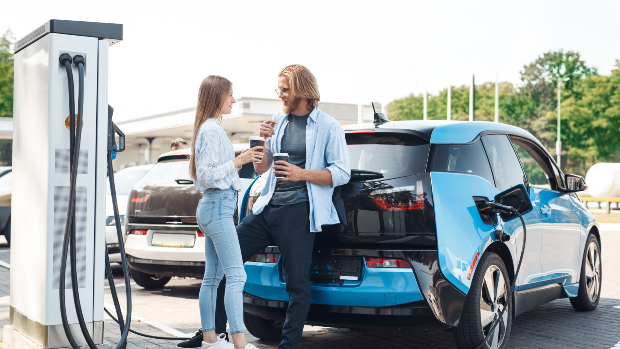
Retailers’ constant search for new and effective ways to engage with their customers is often disrupted by generational gaps. Brands currently face the challenge of connecting to Generation Z as a consumer base – a group influenced by a series of crises, environmentally conscious, social media native, and that represents almost a third of the world’s population. How are companies interacting with them and what’s their impact on the other generations’ shopping habits? PetrolPlaza talked with Sabine Benoit, Professor of Marketing at University of Surrey and C-Store Expert, and Linnea Geiss, Chief Operating Officer at PDI Technologies, to get a better understanding of how this target audience is shaping the strategies of fuel and convenience retailers.

Generational overview
Benoit’s academic research lists four key aspects that define Gen’Zers as consumers: innovation, convenience, security and escapism. The first stems from being born in an Internet-existing world and growing up alongside the rapid evolution of digital technology, this resulting in high expectations for innovation. As for convenience, it is about smooth and quality experiences that the customer only notices if it’s not there, and they will want to see improvement next time they visit.
Security also plays a part in their customers’ journey due to having experienced disruptive events at a very young age, namely the Covid pandemic and the 2008 financial crisis. The exposure to these scenarios has led them to often choose the safest option available. Lastly, escapism has drastically changed in recent years with the addition of virtual experiences, social media, video games and now the metaverse.
These are early characteristics that can often pave the way for new engagement models. New consumers tend to function as magnifying glasses for future trends and habits adopted by older generations, believes Benoit. “We just see it much more clearly and saliently, because all of these aspects are happening on a smaller scale in other generations as well.”

Engagement through digitization
These characteristics show that technology plays a huge role in the interaction with this new audience. Fuel and convenience retailers are increasingly adopting digital solutions to improve services, a shift driven by tech-savvy consumers of every age who seek the best service, explains Linnea Geiss. Companies’ current priorities are implementing delivery services, mobile ordering capabilities, loyalty programs and giveback opportunities.
All of these solutions can be greatly enhanced by data, a tool that can help achieve a better understanding of a customer’s journey and expectations. Although Gen Z’s have developed a certain distrust toward data mining, Benoit understands that consumers are willing to give their data to companies if they get something in return. This can translate into a more personalized service, as a “give and get” scenario can be the perfect ally to build brand loyalty and optimize each experience as much as possible.
One good example of this are Pay-By-Plate services, which leverage this data-driven approach to create a smooth experience, a frictionless service that is becoming increasingly popular. Subscription-based models are another by-product of this, being adopted by car wash brands and coffee vendors. They enable subscribers to have a service tailored to their preferences, choosing when and where to get a coffee or a car wash. “Ultimately, the sweet spot is using technology to understand what matters to the consumer and what drives profitability for the retailer,” describes Geiss.
With service stations integrating more and more services, the potential for cross-selling is huge. But newer generations tend to see beyond these offers, promotions and convenience when choosing where to shop and refuel. Thus, retailers need to seek for other paths to build brand loyalty beyond better deals or experiences.

Sustainable relationships
Going back to the aspects that define Generation Z as consumers, security not only concerns individual integrity but also comprises external issues such as environmentalism or corporate ethics. Customers’ growing involvement with social and environmental causes has led companies to increase their efforts to address sustainability issues – 64% of Americans are willing to pay more for fuel if the carbon emissions from their purchases were offset through sustainability efforts, jumping to 75% for U.S. citizens ages 18-34, according to PDI’s second annual Business of Sustainability Index.
While this survey reports on U.S. consumers, Geiss assures that its findings likely reflect similar or even higher trends across Europe and in other regions, reinforcing the idea that customers pay as much attention to “how companies do business” as “what business they do.” But this scenario brings a new factor to the equation, greenwashing. Academics described difficulties in fuel retailers’ communication strategies, as they struggle to build brand loyalty in younger demographics due to the nature of their business and the impact on the environment.
Although difficult, this can be reversed through initiatives that generate real impact on these sensitive topics, helping not only to appeal to younger customers but also to create more transparent relations with current audiences. “Implementing loyalty-based carbon offset programs, along with exploring the viability of other innovative sustainability technologies like EV charging, will be key considerations for retailers who look to connect with consumers and even their own employees who share a vision for an environmentally responsible future,” adds PDI Technologies’ Chief Operating Officer.
Technology and sustainability may spearhead this generational transition, but there are still more variables to be explored by retailers as further research delves deeper into the customers of the future. Newer trends, behaviours and technologies are set to come in the near future, subject to be studied by companies if they want to keep up with generations to come. Optimizing engagement with these demographics is intrinsic to research and innovation, both of which often pave the way for the transformation of companies.