Do you show up? C-stores battle to be picked by cars and AI agents
As cars, phones and AI agents choose where drivers stop, a NACS Show panel warned that c-stores that can’t be found online risk being skipped entirely.
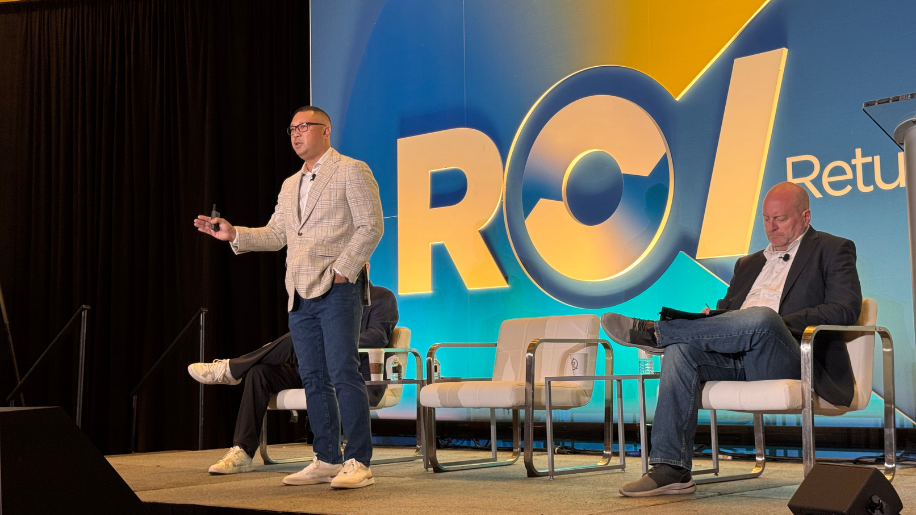
Convenience retailers have long won fuel customers with a bright price sign and a good corner. A NACS Show 2026 panel argued that playbook is fading: increasingly, a phone, dashboard or AI agent picks the stop before the driver sees a sign.
Moderator John Eichberger, Executive Director of the Transportation Energy Institute (TEI), was joined by Art Sebastian, Founder and CEO of NexChapter, and Paul Ziv, VP of Technology at NACS. With gallons per driver falling, retailers are fighting over a shrinking pie of demand.
"The question to you is how do you make sure that your customers pick you when they're looking for a place to buy fuel or pick you when they're looking for a place to charge their vehicle," Eichberger said.
A smaller pie, a smarter car
EPA data showed car fuel economy up 19.5% since 2020, to 36.6 mpg, and trucks up 11.9%, to 25.0 mpg. That means about seven fewer fill-ups a year; a 15,000-mile driver buys roughly 70 to 80 fewer gallons.
TEI figures put 2026 fuel transactions at 12,107 per site per month, down 8% since 2023, even as fuel delivered 58.3% of 2025 sales and 41.1% of gross margin. EV charging reached 188 transactions per port per month in 2025, up 8.7%.
Cars are also getting smarter. Omdia data shows 23.6% of new U.S. light-duty vehicles sold in Q2 2026 had a battery system, mostly hybrids at 16.4%.
Per Deloitte's 2026 survey, half of U.S. drivers want connected infotainment and navigation, and 98% of new cars support Apple CarPlay or Android Auto. TEI research shows half of EV drivers plan their charging stop before leaving home.
Younger drivers, Eichberger noted, simply tell the car what they need and let it recommend where to go.
The forecourt as the front door
Sebastian, an operator before founding NexChapter, urged retailers to invest earlier in the customer lifecycle: awareness through mass media and acquisition through paid digital and social channels, before loyalty and order-ahead drive conversion.
He called the forecourt the front door to the customer relationship and urged retailers of any size to use dispenser screens. "The last thing we want in this industry … is a blue screen when a customer comes to the dispenser."
He also pointed to retail media built on first-party loyalty data, and told retailers to win in search, maps and navigation, because they are now talking to AI agents as well as customers.
NexChapter research found 180 of the top 200 chains run loyalty programs. Sebastian said their real value is recognizing customers and building toward personalization, powered by a data flywheel many existing vendors already support.
When an agent picks the stop
Ziv's message was simple: do something. Walmart and Target are already building agentic AI pathways so their offers get found, he said, and c-stores need a voice in that ecosystem.
His slide showed four handoffs. The car shares fuel level, charge and route through COVESA vehicle data standards. An in-car or phone assistant asks nearby retailers who has what the driver needs. The store answers through an MCP server with live prices, availability, hours and offers, and routing, payment and loyalty are applied on arrival.
Model Context Protocol (MCP), an open standard connecting AI assistants to a business's live data, is in effect a website built for agents. Ask for a sandwich, and the retailer's system can confirm not just that it has one, but that it's fresh.
The hurdle is an industry built on fragmented, on-premise systems. NACS is working with Conexxus, COVESA and W3C on a common language covering age verification, coupons, inventory for the FDA's 2028 food traceability rule, biometrics and payments.
Get found, then live up to it
Sebastian's advice, especially for smaller operators: make your data discoverable. Publish store hours, locations, services, fuel prices and even product listings online.
Agents won't pick up billboards or radio, he said. Retailers need a mobile app, a website with rich product details, and active responses to online reviews.
Eichberger urged over-communicating everything from fuel blends to EV charger power and availability. "We need to make the assumption that the customer knows nothing," he said.
The site must also live up to the listing. Younger customers benchmark against Amazon and Starbucks, Sebastian said, so stores must be clean and well maintained. As Eichberger put it, "if your restaurant's not clean, game's over."
Where to start on Monday
Asked for first steps, Sebastian said to search for your own stores as a customer would, run a light audit of reviews, website, app and digital ads, then prioritize using the ecosystem NACS is building.
Eichberger shared a cautionary test: a NACS colleague standing at a store's coffee station asked a phone for coffee and was sent to Starbucks. In the beer cave, the search pointed to a grocery store; at the ATM, to a bank. "Do you show up? That is, I think, your first task," he said.