European industry leaders launch alliance to scale clean hydrogen
ERA aims to accelerate deployment, boost competitiveness, and cut energy dependence.
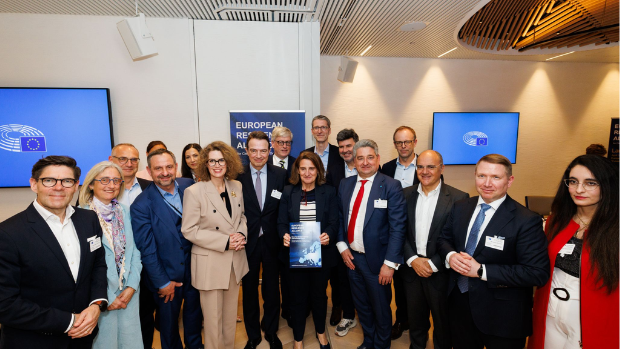
Senior industrial leaders from across Europe have launched a new pan‑European initiative aimed at accelerating the deployment of clean hydrogen and strengthening the continent’s industrial competitiveness and energy independence.
The European Resilience Alliance for Clean Hydrogen & Derivatives (ERA) was formally unveiled at the European Parliament in Brussels, with the launch event opened by Teresa Ribera, Executive Vice‑President of the European Commission for a Clean, Just and Competitive Transition. The alliance brings together executives from across the clean hydrogen value chain to push for coordinated policies, financing tools, and market development at EU, national, and regional levels.
ERA is founded by a group of major European companies including Enagás, Fluxys, Fortum, Gasgrid Finland, Moeve, Nordion Energi, OGE, RWE, SEFE, Stegra and Thyssenkrupp, working in cooperation with Hydrogen Europe. The members represent hydrogen production, infrastructure, industrial demand, and equipment manufacturing.
The alliance is structured around two main pillars. First, ERA seeks to act as a unified industry voice for policymakers to help translate Europe’s climate and competitiveness targets into bankable projects. Second, it aims to coordinate across the value chain, linking production, infrastructure, industrial demand, and finance to identify and address bottlenecks slowing deployment.
At the launch, ERA published a white paper highlighting the gap between Europe’s hydrogen ambitions and project execution. According to the document, fewer than 7% of announced clean hydrogen projects have reached a final investment decision (FID).
The analysis points to fragmented regulation, complex rules for renewable fuels of non‑biological origin (RFNBOs), high electricity costs, uncertain demand, and a lack of infrastructure visibility as key barriers. The white paper calls for coordinated action around four priorities: stimulating stable demand through consistent implementation of EU legislation, simplifying support frameworks and reducing electricity costs, mobilizing private capital through stronger market signals such as ETS and CBAM, and accelerating investment in cross‑border hydrogen infrastructure.