NACS Show 2026: Trends shaping convenience retail
Record crowds, a favorable political wind and a race for the food dollar: the 2026 NACS Show in Las Vegas drew more than 25,500 attendees from 74 countries. We look at the key trends that dominated the show floor.
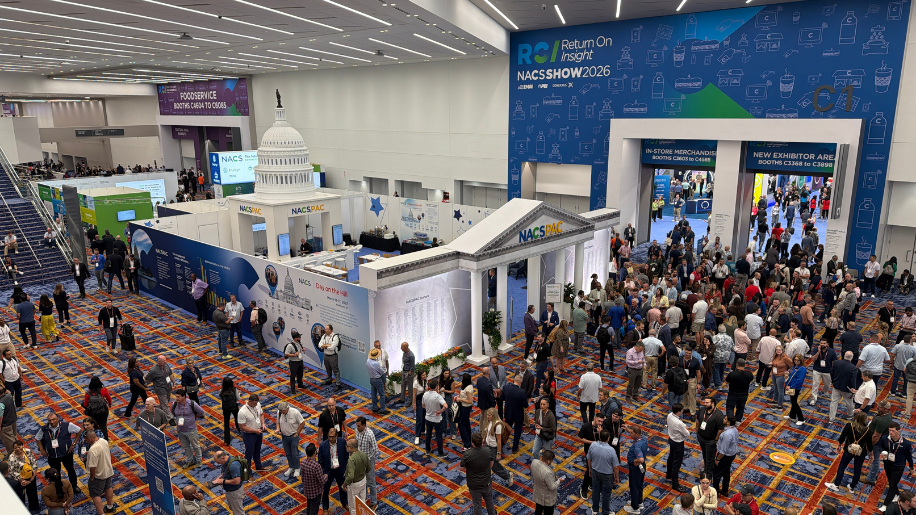
The aisles in Las Vegas were crowded and the education rooms full from the very first morning. The 2026 NACS Show, held October 6–9, drew 25,572 attendees from 74 countries and territories. That is more than 400 above last year, the second-highest turnout in the show’s history and the third straight year above 25,000.
On the 442,600-square-foot Expo floor, 1,090 exhibitors, 173 of them first-timers, showed everything from fuel dispensers to fresh food. The 56 education sessions drew a combined 11,438 attendees, an average of more than 230 per room.
For international visitors, the show remains a window on where convenience retail is heading. “The US market is much better in food service,” said Alicia Cruzado López, Senior Manager of Franchise Development and New Business at Repsol. “They have a lot of solutions, many flavors, many new things that you can grab and eat in service stations. We take home a lot of new ideas.”
Here are five trends that defined this year’s show.
1. Swipe fees: “the end is in sight”
After two decades of lobbying, retailers arrived in Las Vegas with real momentum on swipe fees, the charges merchants pay every time a customer pays by card. For convenience stores, they are the industry’s second-highest operating cost.
The stakes are large. C-stores process about 160 million transactions a day, most of them on payment cards, and the average swipe fee on Visa and Mastercard credit cards has risen to 2.36% of the transaction. In Europe, by contrast, regulators cap fees on consumer credit cards at 0.30% per transaction.
The Credit Card Competition Act, reintroduced in January by Senators Roger Marshall (R-Kan.) and Dick Durbin (D-Ill.), with Rep. Lance Gooden (R-Texas) leading the House version, would require the biggest card-issuing banks to let transactions run over a second network beyond Visa and Mastercard. President Trump has endorsed the bill, and Vice President JD Vance co-sponsored it while in the Senate. During show week, the White House again urged Congress to send it to the president’s desk.
“We’re working super hard on credit cards,” NACS President and CEO Frank Gleeson said. “We’ve got the president on board, the vice president on board. We broadly have a coalition across both parties. So we’re very optimistic that we’ll get it done for our retailers before the end of the year. It’s been a 20-year battle, but we think the end is in sight.”
2. C-stores vs. QSRs: “we’re winning”
Food is now the front line in convenience retail’s competition with quick-service restaurants, and NACS leadership is confident about who is ahead.
“I think we’re winning, right?” Gleeson said. “Our stores are selling great food, they’ve got great service, and they have all the other things that people want for convenience. So we’re winning the battle and we will continue to win that battle because our members are terrific at what they do.”
A McKinsey & Company education session turned the rivalry into a playbook, urging retailers to borrow what made fast-food chains successful. First, build a hero item: McDonald’s core menu generates roughly 65% of its total sales, and McKinsey advised c-stores to create one signature product, then keep it fresh with limited-time offers.
Second, think drinks. With 84% of c-store visitors buying a beverage, specialty cold, sweet and caffeinated drinks are a high-margin traffic driver. Third, design for pick-up: Little Caesars says app and Pizza Portal orders carry a 71% higher average ticket than walk-in orders.
The consultants also pointed to “kitchen theater”, visible on-site prep that signals freshness, and to AI forecasting. Chili’s, for one, credits it with 20% more accurate scheduling and 600 fewer labor hours a week.
The general sessions drove the point home. The closing Ideas 2 Go videos showed how retailers are reinventing their food offer, highlighting innovative players like Chestnut Market, SPINX Market & Eatery, and Weigel’s Inc.
3. Protein, everywhere
If one ingredient ruled the Expo’s snack aisles, it was protein. What started with bars and shakes has spread into almost every salty and sweet format, from chips and pretzels to cookies, popcorn and puddings. Global brands and startups alike are adding grams of protein to familiar favorites.
The numbers back up what the aisles showed. According to Future Market Insights, the protein snacks market will grow from $4.9 billion in 2025 to $5.3 billion in 2026 and $11.7 billion by 2036, an 8.2% compound annual growth rate.
McKinsey ties the shift to wellness: 74% of U.S. consumers say they want to eat healthier, and the spread of GLP-1 weight-loss drugs is pushing retailers toward protein-rich, lower-calorie, portion-controlled options.
Shoppers looking for something filling on the go are driving the shift, and suppliers see no sign of it slowing. For c-store buyers, the question is no longer whether to stock protein snacks, but how much shelf space to give them.
4. THC drinks fade from view
A year ago, hemp-derived THC beverages were one of the hottest new categories on the show floor. This year they were hard to find.
The reason is regulatory. Congress has moved to close the 2018 Farm Bill loophole that let intoxicating hemp products onto mainstream shelves, capping them at 0.4 milligrams of total THC. The ban, already delayed once, is now set to take effect December 11.
Brands are scrambling, with some launching ultra-low-dose versions and others pivoting to licensed dispensaries. A bipartisan bill introduced in August would instead allow drinks of up to 5 milligrams per serving, sold only to adults 21 and over, but it has yet to advance. Until the rules are clear, few retailers are willing to bet cooler space on the category.
5. AI agents and the connected forecourt
Technology took up a growing share of the Expo, and much of it targeted the industry’s stubborn labor shortage: self-checkout, automated ordering and back-office tools that let smaller teams run busier stores.
The next step is agentic AI. Instead of producing dashboards and alerts that someone must act on, these systems monitor the business continuously, then decide and act on their own across pricing, promotions, forecasting and financial performance. One education session argued this moves retailers from lagging to leading indicators, catching problems and opportunities before they hit the bottom line.
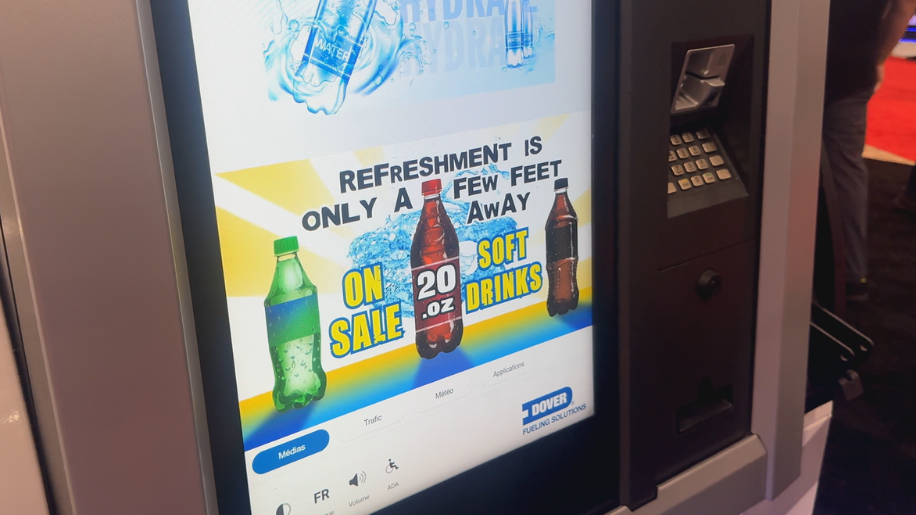
AI is also moving to the customer-facing edge of the site. Interactive pumps and AI-powered assistants can now suggest a coffee, a car wash upgrade or a meal deal while a driver fuels up or waits at an EV charger.
Tying it all together is the push for one connected ecosystem. Rather than separate systems for fuel, car wash and store, retailers want a single platform that bundles purchases across the forecourt and the shop, backed by one loyalty program that recognizes customers wherever they spend.
Looking ahead
NACS is repositioning itself for that future too. At the October 8 general session, Gleeson unveiled “Advancing Convenience 2030,” a strategic framework approved by the NACS board that week. “We are shifting NACS from being the leading trade association to the platform that powers convenience and fuel retailing,” he said.
With Lonnie McQuirter of Minneapolis’ 36 Lyn Refuel Station taking over as 2026–27 chairman, the industry leaves Las Vegas with packed halls, a favorable political wind and, as Repsol put it, plenty of new ideas to take home.