Op-ed: What are the top payment trends in mobility?
After several years of steady progress, the pace of digital payments innovation has accelerated to unprecedented levels. Payments expert Mirko Spagnolatti explores the biggest trends in this opinion piece.

The traditional business model for fossil fuel distribution was relatively straightforward. The main goal was to “connect the dots” with technology at its core. Petrol stations relied on well-established technological frameworks, and the digital payment industry’s role was to provide basic payment functionalities, such as face-to-face or unattended transactions using plastic cards. The challenge was ensuring these payments were reliable, secure, and scalable across B2C, B2B, and loyalty use cases, which the industry solved with compelling approaches, often leveraging widely adopted standards like IFSF.
In recent years, the pace of payments innovation has accelerated, particularly in B2C environments. The overwhelming success of mobile-based digital payments, coupled with the challenges of the energy transition, created disruptions, further amplified by the pandemic. As a result, the tools used by the fuel retailing industry quickly became unfit, if not obsolete.
Today, the end customer experience is at the forefront, rather than the technology, and all retail segments must continually redesign their go-to-market strategies to meet ever-increasing customer expectations. High-end retail environments can capitalize on this by creating memorable customer experiences, delivering value, and fostering loyalty.
Mobility, however, is a commodity, and it’s difficult to craft a (positive) memorable experience while recharging an EV or refueling a hybrid vehicle. In more commoditized settings, the goal is to offer frictionless processes, maximize efficiency, and save time. These are the directions the industry must follow to stay relevant and drive improvements.
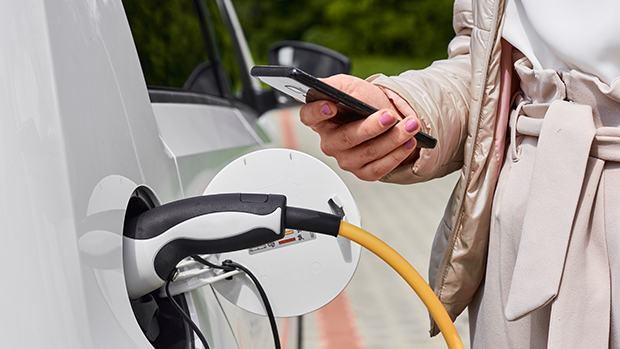
Six payments trends in the mobility space
Omnichannel Payments: The use of mobile-based payments in-store and online is continuously rising, and customers now expect their Amazon or Uber-like experiences replicated across other retail contexts (app-based approaches, product recommendations, personalized offers, customer reviews, preordering online, click & collect, autonomous stores, etc.).
Flexible Payment Options: This is particularly evident in the mobility sector. Merchants must continually expand their payment options to meet customer demands, while also optimizing the costs of setting up and running these new methods. In the traditional fuel sector, the evolution of fuel cards toward EMV is increasingly necessary for enhanced security or as part of rebranding efforts. In the EV charging space, the recent adoption of the AFIR regulation in Europe has pushed industry players to support universal payments (commonly referred to as "ad-hoc" payments by the EV community). These examples highlight the growing demand for additional payment options and the challenge of balancing increased security and convenience with the complexity and cost of implementation. Scalability is key, always keeping security and compliance in mind.
Wallets: Although indirectly referenced above, wallets share a common denominator: they’re smartphone-based. However, they vary significantly in technology and business models. In Europe, NFC wallets like ApplePay and GooglePay dominate, built on international credit and debit schemes. In some cases, domestic schemes or account-based payments (such as Wero in Europe) are used. In Asia, QR codes prevail, and the model is driven by super apps that offer payments as a core feature while covering a wide array of services.
Invisible Payments: When payment is purely transactional, speed and efficiency become paramount, leading to innovations like invisible payments. Use cases include in-car payments, where a regular payment card is registered in the vehicle, and refueling authorization happens automatically with minimal driver interaction. Similar concepts are being developed for the EV industry (Plug & Charge specifications) and for unattended convenience stores.
Central Bank Digital Currencies (CBDC): Possibly the most disruptive trend, CBDC implementations are progressing globally. The ECB’s plans for the Digital Euro could hit significant milestones within a year. The need to build an alternative to card and account-based payments is driven by privacy concerns, universal acceptance (even offline), and reduced acceptance costs.
Security and Compliance: Although not a trend, security and compliance remain fundamental priorities. Payment infrastructures must be continually upgraded to counter evolving fraud tactics, often mandated by compliance requirements.
Retailers and mobility operators, like many other industries, are caught in the midst of the “twin digital and green transition,” as dubbed by EU policymakers. Payments are heavily impacted. A higher level of awareness is necessary for these players to understand, anticipate, and prioritize the adoption of new payment paradigms. Moreover, while some changes are inevitable, it’s challenging to determine the right time to invest in payment innovations. Security and compliance must always remain top priorities.
The service station industry, the growing EV community, and the broader payment industry are all built around principles of standardization, scalability, and interoperability. Unfortunately, barriers and silos still exist, and more work is needed to harmonize industry-specific solutions to achieve a more holistic mobility-hub vision.
In the short-to-medium term, retailers and mobility operators should assess their payment infrastructures to ensure they offer the flexibility, scalability, and interoperability necessary to thrive in the increasingly complex mobility environments already emerging in some markets.
Written by Mirko Spagnolatti. A veteran of the fuel retail industry, Spagnolatti is currently the Business Development Director of Petrol at Worldline Global and is part of the IFSF Executive Committee.