Q&A with Alex Mason (Too Good To Go): “Convenience stores have a lot of food waste”
Too Good To Go has rapidly expanded its business while tackling food waste. In this interview, Alex Mason, Head of Key Accounts for the UK & Ireland, shares insights on the company's journey, partnerships, and innovations. She discusses the role of convenience stores, service stations, and technology in reducing food waste while driving customer engagement.

MobilityPlaza. Too Good To Go has seen massive expansion over the last decade. How did you begin partnering with convenience stores, and what role do they play in your portfolio?
Alex Mason. We don’t discriminate against any outlet that has food waste. Our mission is to save as much food as possible from going to the bin. Convenience stores and outlets in high-footfall travel locations, which tend to have waste, are a great fit for us.
Our journey began with the concept of buffets, but as we grew and unpacked the scale of the problem in the UK, it became clear that our solution was viable for many other businesses, particularly in retail and convenience. Because these locations maximize availability, food waste often follows when expected footfall doesn't materialize. Too Good To Go provides a great solution for those partners. Some of the brands we work with include SSP, Nisa, One Stop, Morrisons Daily, SPAR, MFG, and Shell Waitrose.
MP. Are you seeing more service station chains like Shell, BP, and Circle K outside the UK showing interest in partnering with you?
AM. We’ve seen strong interest from these brands. Many of them have as much, if not more, food waste than larger retailers, especially those with fresh ready-meal offerings. Our partnerships have grown significantly over the past few years, particularly with SSP, which operates both food-to-go outlets and retail stores.
We’ve also expanded into saving food higher up the supply chain. Our Too Good To Go platform is a software solution that helps manage expiry dates in stores. This is a huge challenge in retail from an inventory, health, and compliance perspective. Our software has been game-changing for many partners, including SPAR International.
MP. Expiry date management is a big challenge for retailers. Do you see further expansion in this area?
AM. Absolutely. Our mission is to create a world with no food waste by inspiring and empowering people to fight it. Initially, we focused on the consumer side, but as we’ve grown, we’ve moved further up the supply chain. Our platform helps with inventory management and expiry date tracking, reducing waste at the store level.
Beyond that, we’ve launched a parcels solution in the UK, working directly with wholesalers and manufacturers who have short-dated products. These are then sold as surprise parcels directly to consumers through our app. This allows us to intervene even earlier in the supply chain.
MP. Do brands need to meet any specific requirements for surprise bags?
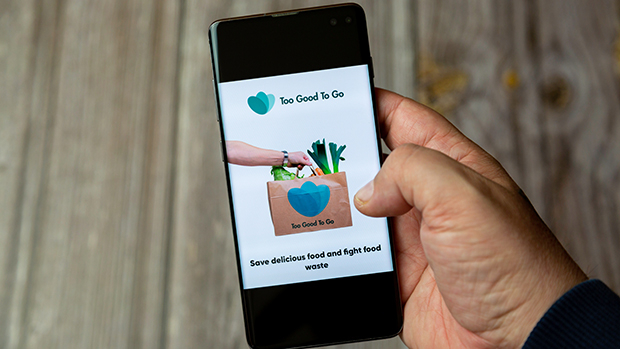
AM. Not beyond standard food hygiene and safety regulations. All products must meet normal retail selling conditions and cannot be sold beyond expiry dates. The flexibility of the surprise bag concept is key—it allows partners to include whatever surplus they have at the end of the day. This makes it easy for them to adopt and why it’s been so successful.
MP. Could you share some numbers about food waste?
AM. Globally, 40% of all food produced goes to waste—about 2.5 billion tonnes per year. Project Drawdown cites food waste reduction as the number one action individuals and businesses can take to fight climate change. Food waste accounts for around 10% of all greenhouse gas emissions, and producing wasted food requires land the size of China.
In retail alone, over 200,000 tonnes of food are wasted annually in the UK, costing over £740 million. Across Europe, food waste costs retailers about 2% of their net sales—almost equal to their average profit margins.
MP. How has the audience responded to your mission?
AM. In the UK, we have over 17 million registered users, and globally, over 100 million. The surprise and delight element of our concept drives strong engagement. Many users create organic content around their surprise bags, sharing how they use the food to plan meals or involve their families. This helps normalize small everyday actions that fight climate change.
MP. Do you find consumers more motivated by cost savings or sustainability?
AM. Our research shows two main drivers: value for money and sustainability. It doesn’t matter which motivates someone—either way, they contribute to reducing food waste. A recent study found that 61% of customers visited stores specifically because they had surprise bags, driving new footfall to retailers.
MP. Which markets have adapted quickly to your model?
AM. Our platform is designed to be scalable and flexible to suit different markets. Australia is one of our most recent launches, starting in Melbourne with strong uptake from consumers and partners. The adaptability of our model helps it succeed across different geographies.
MP. As service stations and convenience stores expand their food offerings, do you see more partnerships in this sector?
AM. Yes, particularly in the UK, where existing relationships with operators like MFG and SSP are deepening as they expand food services. Internationally, we expect growth in markets like Australia, where there’s potential in remote locations with footfall and food waste concerns.