Brazil’s c-store playbook seeks to scale nationally and taste local
Retailers are standardizing supply chains for scale, while regional menus and wellness trends decide who wins at the counter.
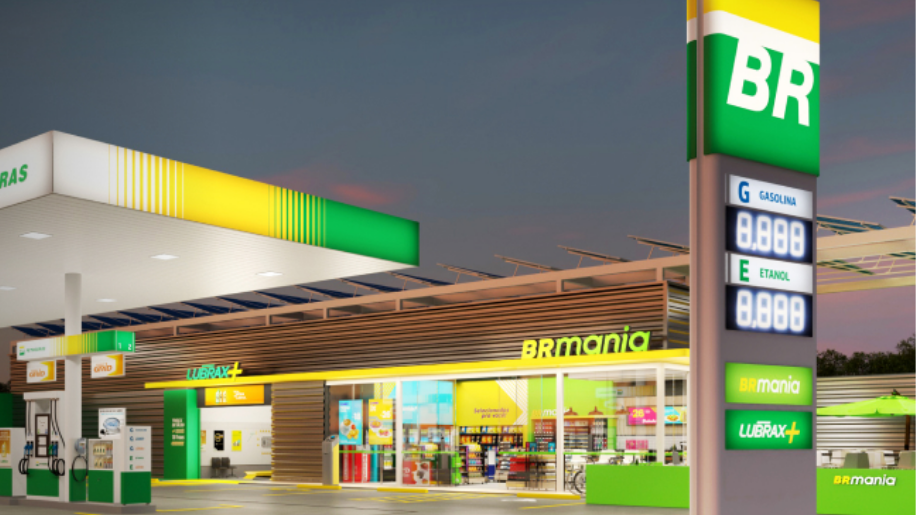
With over 44,000 fuel stations, almost half of this network running independently and unbranded, “diverse” feels like an understatement for the largest fuel retail market in Latin America. Spread across five regions with their own climates, diets, and habits, Brazil doesn’t just sell fuel differently from state to state, it eats and shops differently, too. Even though the convenience store segment alone moved R$38.5 billion ($7 billion) in 2024, only 20% of these stations currently operate a store.
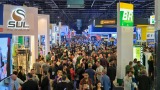
That gap is what’s pulling the country’s biggest fuel brands into an expansion race, building out proprietary store formats and franchise networks to convert independent stations before someone else does. At this year’s ExpoPostos & Conveniência, held in São Paulo, leaders kept circling back to the same idea: between standardized scale and local relevance, operators pulling ahead aren’t choosing, they are building for both.
Less sugar, more regional
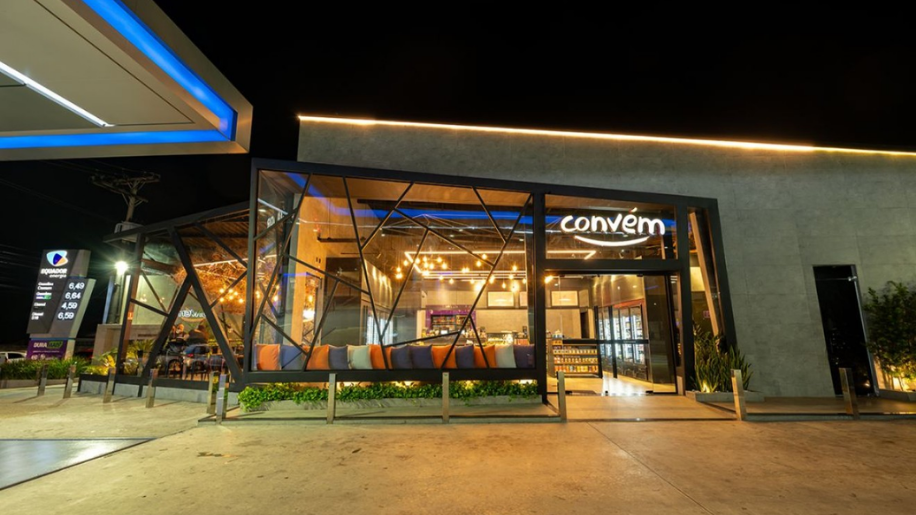
At Grupo Dislub Equador, the convenience brand Convém is built less around fuel and more around what Arthur Ouriques, New Business Development Manager of the company, calls a "hub of connected services" designed to solve as much of a customer's day as possible under one roof. That bet leans heavily on food and, increasingly, on food that doesn't look the same in every state. Ouriques points to what actually drives the needle at 6:30 a.m. in the morning: not a generic chicken wrap, but couscous with dried beef in the Northeast or a regional grilled sandwich up north. "What wins in the morning changes with the region," he says, arguing that chasing viral food trends and hyper-local tastes, rather than a single national menu, is what keeps customers walking in. That same food counter is also where Brazil's wellness shift shows up first. Ouriques cites internal data showing chocolate, cookies, and sugar consumption sliding 20% in the average Brazilian retail basket, even as creatine sales have climbed nearly 700%.
It's a big enough shift that the topic filled an entire panel at the event: "Foodvenience: How to Transform Food Service into a Traffic Generator for Your Convenience Store," featuring Alexandre Cezilla (BR Mania), Diego Pires (ALE Combustíveis), Douglas Castanheira (ampm), Gustavo Campos (Shell Select), Igor Medeiros (SIM Rede), and Ouriques himself, moderated by longtime fuel-retail consultant and Member of the NACS Global Industry Engagement Council, Giselle Valdevez. The panel's consensus was blunt: food service is no longer a side offer, it's the main lever for traffic, margin, and differentiation, and convenience stores are now competing directly with fast-food chains for the same customer.
None of that works, though, without a supply chain that can actually deliver a regionally shifting, trend-chasing menu to thousands of stores without running out of stock. Which is exactly the problem Valber Figueredo, of Aghora Conveniência, spends his time solving.
Standardization without sameness
For Figueredo, the first conversation with a gas station owner considering a franchise conversion is almost always about the same pain point: a lack of standardization with suppliers, deliveries, and benefits. Joining a buying group fixes that by giving smaller operators the negotiating leverage on price, terms and delivery schedules, which they would never get on their own. Standardization though, doesn’t mean identical. At Convém, Ouriques runs four distinct store formats, a no-frills “Ilha Gelada” for stations with minimal space, a container-based model for sites that can’t support new construction, a full-service store, and a mini-market with fresh produce. It’s the same logic Aghora is selling: a consistent supply chain underneath, flexible enough on top to fit whatever a given station’s real estate, or region, actually calls for.
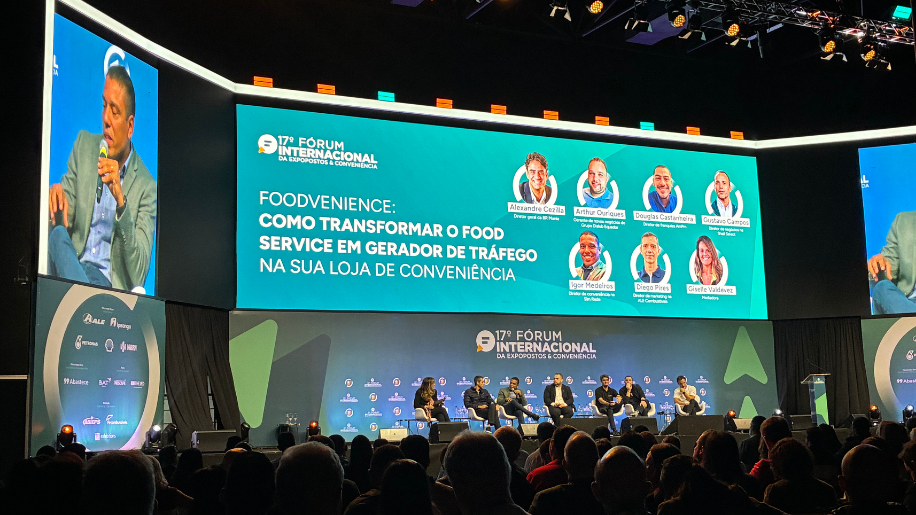
That flexibility was echoed across the foodvenience panel, where standardized sourcing came up less as a back-office detail and more as the precondition for everything discussed on stage. Without it, panelists agreed, none of the regional menus or wellness pivots would scale past a handful of stores. Which leaves operators with the lingering question: once supply chain and format are sorted, what actually keeps a customer coming back?
Loyalty layout
The conversation shifted from what’s on the shelf to how the shelf is arranged. Speakers pointed to layout and product display as concrete levers for consumption and repeat visits, not decoration, but the difference between a customer grabbing one item and grabbing three, or between a one-off stop and a habit. The framing that stuck: in a market where c-stores now compete with fast-food counters for the same five minutes of a customer’s day, the physical experience of the store is doing as much work as the menu.
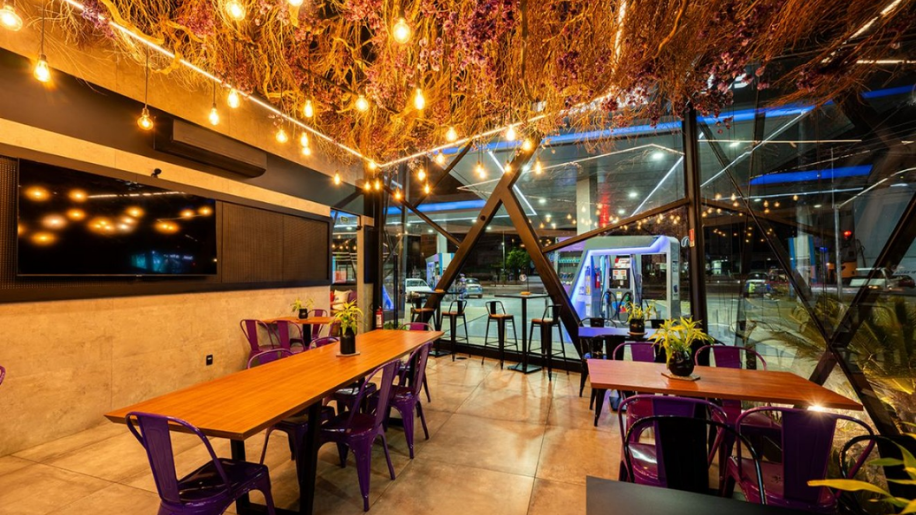
Convém builds toward that same idea from the design side. Ouriques describes the brand’s stores as intentionly “arrojado,” bold, disctintive, meant to feel less like a stop and more like a place worth lingering in. None of that holds up, though, without the operational consistency Figueredo’s model is built to guarantee. Standardization isn’t the opposite of loyalty, it’s what makes loyalty possible at more than one store at a time.
Brazilian convenience stores aren’t picking between national scale and local relevance. The biggest players understand that a regionally shifting menu only works with a supply chain disciplined enough to deliver it everywhere, and a chain’s consistency only pays off if the store on top of it still feels like it belongs to the neighborhood it’s in. For an industry still converting fuel stations one at a time, that balance is starting to look like the actual product.