Coffee is the new battleground for loyalty
A new Paytronix report shows coffee is the most habitual purchase in foodservice. For convenience stores and fuel retailers, that habit is already the single biggest profit lever on site, and the operators winning it are the ones who stop treating loyalty, mobile ordering, and the forecourt as three separate businesses.
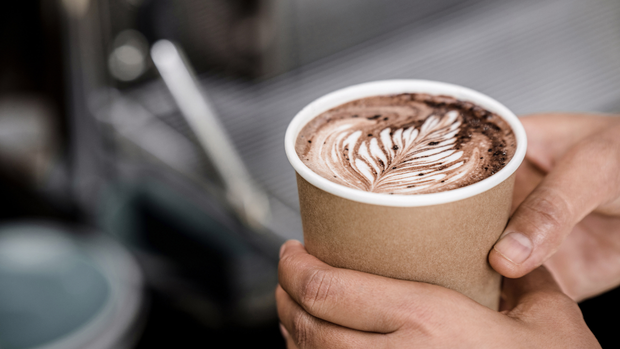
Coffee doesn't need to be sold. It needs to be captured. That's the central argument of Coffee and Cafe: 2027 Loyalty and Industry Insights, a new report from loyalty and guest-engagement platform Paytronix. The data is unambiguous: 73% of consumers drink coffee or tea multiple times a week, and 54% do so daily; a frequency no other foodservice category comes close to matching, according to Datassential. For an industry built on getting people to come back, coffee isn't a product category. It's a behavioural one, and that distinction matters even more for convenience retailers and service station operators than it does for a standalone café chain: coffee has quietly become one of the clearest reasons a driver chooses one forecourt over another, and one of the clearest signals of how well an operator's technology stack actually works.
The most habitual purchase in foodservice
Paytronix frames the opportunity around a simple tension: consumers don’t have to be convinced to buy coffee, they often already buy it daily. The competitive battle isn't manufacturing demand, it's capturing a habit that already exists before a competitor does. The National Coffee Association's fall 2025 National Coffee Data Trends report found that a record 59% of US consumers purchased their coffee at a drive-thru, and 38% ordered through an app. That means that a high number of coffee transactions are already happening through a channel that can be tied directly to a loyalty account. That's the opportunity and the risk in the same statistic: if ordering and loyalty systems aren't unified, an operator is capturing purchase data on more than a third of its transactions and doing nothing useful with it.
Loyalty itself is no longer a differentiator by default, either. More than 90% of companies now run some form of loyalty programme, and the average consumer belongs to 19 of them but is only active in nine — attention, not enrolment, is the name of the game. Paytronix's own client data, drawn from its beverage and snack segment (the closest available proxy for coffee and café operators), shows how that plays out: active rate climbed from 66.1% to 71.6% year over year, even as high engagement, power-user rate, and average visits per member all fell. More people are signing up; fewer of them are yet turning into regulars. Enrolment is outpacing onboarding.
Turning one visit into a habit
60.2% of first-time Beverage and Snack guests return for a second visit, the strongest second-visit conversion of any restaurant segment Paytronix tracks. That rate climbs into the 80s by a guest's fourth or fifth visit, and once someone crosses that threshold they become remarkably sticky: 87.3% of guests who reach nine visits go on to a tenth. The job for coffee and café operators is bridging the first time visit with building a habit. A guest who orders through an app, gets a personalised offer at the right moment, or has a mobile order waiting at the window is far more likely to make that second and third visit than one working through a generic punch card.
Starbucks remains the clearest proof point for what personalisation at scale can do to daily-frequency loyalty. Starbucks Rewards now has 38 million active U.S. members, representing 53% of all U.S. store spend, and the chain is rolling out a reimagined three-tier system built around experiential rewards rather than points alone, powered by Deep Brew, its AI engine, which customises the app experience using purchase history, time of day, location, and even weather.
Why this hits convenience and fuel retail harder than most
Foodservice is now the profit engine of the convenience channel, and coffee sits at its centre. NACSreported that foodservice and merchandise sales hit $341.2 billion in 2025 — the 23rd consecutive year of growth — even as fuel sales fell 5.4% on lower pump prices. Foodservice accounted for 28.5% of in-store sales but generated 38.9% of gross profit dollars, a gap driven by margin: CSP Daily News puts typical foodservice margins around 57%, roughly double the 27% margin on general merchandise, and hot dispensed beverages are among the highest-margin lines in that mix. Coffee buyers are also disproportionately valuable customers rather than just frequent ones: around 88% of convenience operators view foodservice as both a traffic and sales driver, and roughly 85% of millennial foodservice customers visit weekly or more — a driver who stops for a daily coffee is one an operator sees five, six, seven times a week, and capturing even a fraction of that frequency into a loyalty account, rather than losing it to whichever competitor has the faster app, is exactly the difference Paytronix describes.
EV charging is about to make that dwell time, and therefore coffee, even more valuable. Unlike a two-minute fuel fill, charging keeps a driver on site for fifteen minutes or more, turning the store into the primary reason for the stop rather than an afterthought. A specialty coffee ordered and paid for through an app while a car charges is close to the ideal transaction for that model: high margin, habitual, and perfectly suited to the dwell time EV charging creates.
European and global fuel retailers are already treating coffee as a brand pillar rather than an amenity. BP's Wild Bean Café, now operating from more than 320 UK sites including a franchise model opened to independent retailers since 2020, launched in 2025 its largest-ever UK marketing campaign specifically to challenge lingering scepticism about forecourt coffee quality — built around messaging like "delicious milky lattes, from a fuel station." That a major fuel retailer would invest its biggest-ever marketing push in convincing drivers that forecourt coffee can be genuinely good says a great deal about how central the category has become to on-site differentiation. Shell, Circle K, OMV, and MOL Group have all pursued comparable branded food-and-beverage strategies at their own forecourts, treating the coffee counter as a competitive front in its own right.
Why point solutions fall short
Operators evaluating loyalty technology are often comparing point solutions such as Toast, Punchh, or SpotOn, each typically handling one piece of the guest relationship (POS, loyalty, or marketing) rather than all three together. When a loyalty platform doesn't talk to the ordering system, an operator can't trigger a personalised offer based on what's actually in a guest's cart; when the POS doesn't share data with the loyalty programme, an in-store visit and a mobile order look like two different guests instead of one. For a category built on daily-frequency habit, that fragmentation is expensive: every disconnected touchpoint is a missed chance to recognise a regular. Integrated guest-engagement platforms close the gap with faster time to value, lower total cost, better data quality, and higher guest satisfaction, since a guest who orders ahead, picks up at the window, and has rewards auto-applied experiences one seamless interaction rather than three separate systems bumping into each other.
The proof: fastest-growing coffee chains aren't winning on menu innovation
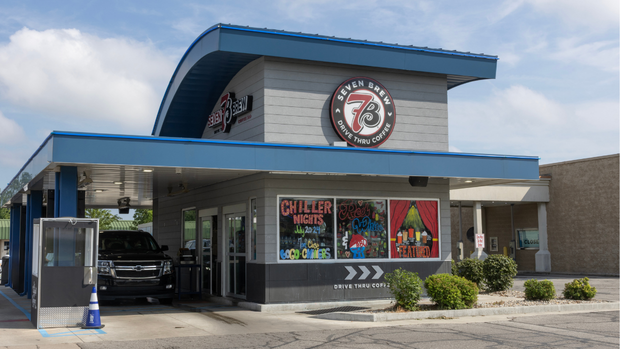
Three independently reported growth stories show the pattern in action. 7 Brew has grown from 14 locations at the start of 2022 to more than 700 across 38 states, a trajectory Datassential's 2026 500 report ranked as the fastest sales growth of any chain measured, with systemwide sales jumping from $502 million in 2024 to nearly $1.2 billion in 2025; according to Technomic's Robert Byrne, its loyalty mechanic succeeds because it's simple: a straightforward points structure matching the brand's high-frequency drive-thru model. Foxtail Coffee has doubled its footprint to 100 shops in two years, with a further pipeline of 250 units sold, and founder Alex Tchekmeian points directly to loyalty and AI tools, used to learn guest behaviour and reduce lapses in visits, as one of the brand's biggest differentiators. And Wake Up Call Coffee, a Spokane-based chain founded in 2004, more than doubled its footprint in late 2025 by acquiring 13 Black Rock Coffee Bar locations and converting them to its own drive-thru-forward brand, built around a deliberately simple mechanic: one stamp per drink, ten stamps for a free one, tracked through a mobile app and phone-number check-in. The three brands are winning because they've made the daily-frequency habit easy to build and keep, with loyalty simple enough to understand in one visit and digital ordering wired to work with it.