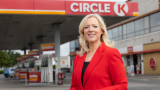
Exclusive interview: Circle K Germany executives discuss convenience-first strategy
Two years after taking over roughly 1,200 former TotalEnergies stations, MobilityPlaza sat down with Circle K’s Vice President and Managing Director Christian Howe and Market Development Director Josefine Meinert at UNITI expo 2026 to hear more about their strategy.
Two years after the deal between TotalEnergies and Circle K, the Canadian-owned convenience and mobility group is betting big on the German market. Circle K acquired TotalEnergies' German retail network (stations and fuel cards). Circle K acquired TotalEnergies' German retail network of stations and fuel cards, and now runs those stations as an authorized TotalEnergies retailer under the TotalEnergies fuel brand through a brand and supply agreement. Led by Christian Howe, Vice President and Managing Director of Circle K Germany, and Josefine Meinert, Market Development Director, the company is rolling out a strategy built around three pillars: convenience retail, electric vehicle charging, and a deeper technology overhaul, all aimed at closing the gap between Germany and its more convenience-savvy European neighbors.
"Circle K stands for the consistent evolution of the fuel station business in Germany, toward an offer that reconnects mobility, convenience, and retail," Howe said. "We're taking this path step by step, and we are continuously rolling out more Circle K concepts."
That evolution began in 2024, when Circle K entered the German market by taking over roughly 1,200 former TotalEnergies stations. Meinert said the network has been rolled out gradualy rather than all at once. "We tried the concepts because it's important, as an international brand, to test whether this works in Germany," she said. "We're not branding a new shop every day just to test the concept. But in parallel we have nearly 40 shops with a full Circle K concept, and we're adapting every week, looking at what's working well in Europe and bringing it to Germany, while making sure we protect the products German customers actually need."
Meinert said the shift goes deeper than store design. "It's not only the furniture and the look and feel; it's more that we train the people," she said. "As a customer, it's important that they are friendly, that they are service-oriented. That's why we look at these topics really often."
Closing the convenience gap
Germany has long been considered a laggard in food-to-go and convenience retail compared to neighbors like Switzerland or Denmark, a gap Howe believes reflects execution rather than demand. "I don't think it's because the customer doesn't want to be served, doesn't want friendly people, or doesn't want on-the-go products," he said. "The customer wants it here too. Maybe the focus on delivering it just hasn't been there the way it has in other countries."
Part of that focus, according to Howe, is pricing: German service stations have traditionally charged a steep premium over supermarkets. Circle K has responded with value-driven offers, including two-for-one deals, across roughly 800 to 900 of its German stores over the past two and a half years. "The German customer is really price-driven," Meinert added. "If we have good quality with a good price, we want to be the preferred brand for mobility in the future."
The convenience push is now visible at scale: Circle K has more than 700 sites offering tiered car wash programs, a nationwide rollout of the company's own coffee brand, K Kaffee, and consistent national promotional offers.
Technology and the road to full integration
Behind the scenes, Circle K Germany is still completing a more fundamental transition: migrating off legacy TotalEnergies IT systems. "This is one of the very big projects we're currently having," Howe said, "stepping into the Circle K IT system world, which will bring us loyalty, and more technology-driven offers for our customers." The migration is expected to continue into next year, after which Howe expects a further step-change in the in-store experience as systems fully integrate with Circle K's global infrastructure.
Building out EV
Electrification has moved faster. Circle K became its own charge point operator (CPO) in 2024, a decision Howe frames as strategic control rather than simple infrastructure rollout. "We are not just putting hardware in place; we want to control the whole chain," he said. "You need to control the software too, and you need to be a CPO." The network is approaching its 100th EV-equipped site and 500th charge point in Germany. Meinert noted that EV is now a fully Circle K branded touchpoint for German customers, "the first market entry for the German customer," and that the company is working to pair longer charging dwell times with food offers.
Challenges remain, chiefly regulatory. "One of the big challenges we see when putting up EV is the time it takes: from deciding to install it to when it's actually there for the customer. Sometimes it takes two years," Howe said, pointing to administrative processes in Germany as a bottleneck to faster investment. Germany, he added, still trails Scandinavian markets and Belgium, currently Europe's fastest-accelerating EV market, though transaction volumes per charge point are climbing.
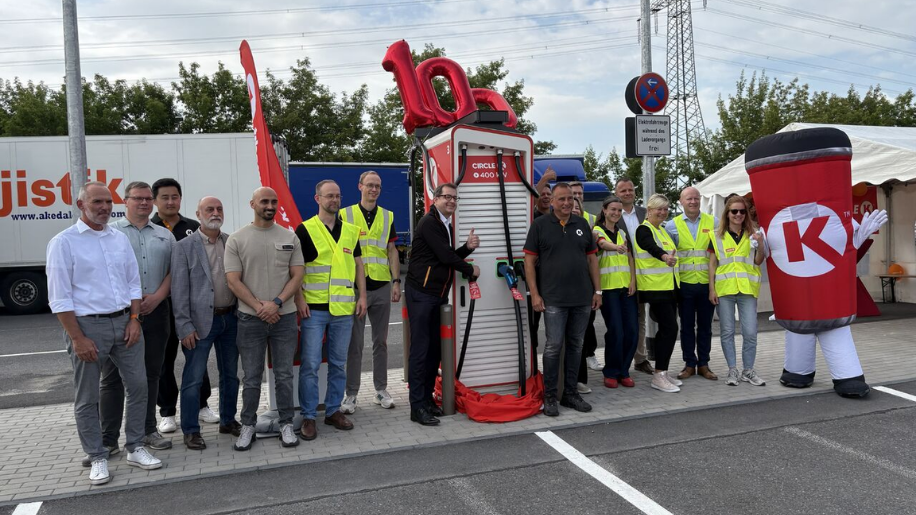
That 100th-site milestone landed last month in Nauen, Brandenburg, where Circle K unveiled its 100th high-power charging site at a station modernized under the brand. The rollout, delivered with technical partner Alpitronic and the company's HPC Network Development team, paired the new fast chargers with an upgraded car wash and shop, the kind of combined offer Howe and Meinert point to as central to Circle K's approach in Germany.
AI as an assistant, not a replacement
On artificial intelligence, both executives were measured. Howe sees near-term value in basket analysis and personalized offers, "what can we propose to the customer if he buys a Coke," as he put it, as well as in back-of-house logistics, calling it a route to "become a better retailer" for customers. Meinert added that the company is working with Circle K's European functions on how AI can help in food operations, though she cautioned that much of the near-term focus is on making internal processes and analysis easier rather than customer-facing change. Howe, addressing one of the industry's most persistent pain points, framed AI's role around staffing: "I don't see AI replacing staff," he said. "I see AI helping staff, and taking tasks away from them, so they can concentrate more on the customer and the customer experience in our stores."
The scale of the opportunity underpinning all of this is underlined by a wider market figure: German roadside convenience currently captures only around €2 billion in foodservice revenue, against an expected €13 billion in foodservice revenue flowing through German grocery, drugstores, and other non-food retail, according to The Retail Marketeers. For Circle K, that gap is the business case, and the reason to keep pushing on convenience, EV, and technology at the same time rather than sequentially. As Howe put it, the ambition is straightforward even if the execution takes time: "We want to be the preferred brand for mobility in the future."
The interview was recorded in May 2026 at the Circle K booth at UNITI expo