Moeve weighs sale of 1,700-station Iberian network after Galp merger collapse
The former Cepsa has reportedly hired Rothschild to sound out buyers for Spain's second-largest fuel retail network, weeks after downstream merger talks with Galp ended without a deal.
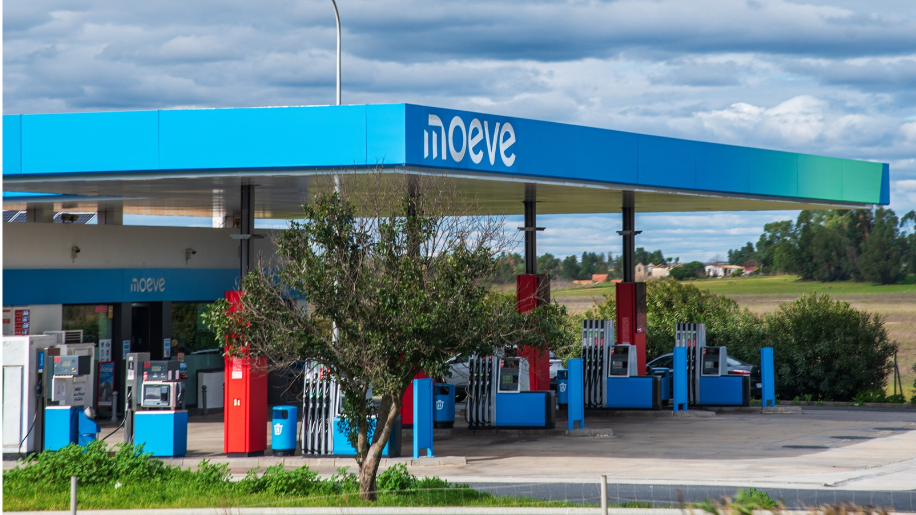
Moeve is exploring a sale of its fuel retail network of more than 1,700 service stations in Spain, Portugal and Andorra, according to Spanish business daily Expansión, which first reported the move on November 16. The energy company, formerly known as Cepsa, has reportedly hired investment bank Rothschild to test market appetite. Moeve declined to comment.
Sources close to the company described the process as being at a very early stage, and said a final decision would depend on whether bidders offer an acceptable price. Experts cited by Expansión put a potential valuation at €1.5 billion to €2 billion ($1.7bn to $2.3bn) or more. That would make it Europe's largest fuel station deal since TotalEnergies agreed in 2023 to sell 2,175 sites to Alimentation Couche-Tard for €3.1 billion ($3.6bn).
The network is Spain's second largest after Repsol, which operates more than 3,200 sites, and well ahead of bp (about 710) and Galp (548). It is also one Moeve has invested heavily to reposition. Since dropping the Cepsa name in late 2024, the company converted 500 stations to the new brand by the end of 2025, roughly a third of the network, and says sales at rebranded sites now exceed those of its former Cepsa stations. The new format combines fresh food under Moeve Market, premium coffee and bakery corners branded R'SPIRO, parcel and delivery services and Moeve Wash car washes, backed by the Moeve gow loyalty program, which has about 3.5 million members, according to the company.
"Moeve is a commitment to quality and to the customer," Pierre-Yves Sachet, Moeve's director of mobility, said in January when the company announced the rebranding milestone.
Moeve has also built what it calls one of the largest ultra-fast charging networks on the Iberian Peninsula, with more than 280 public charging points of 150 kW, and sells HVO 100 renewable diesel at its stations. It also owns Ballenoil, a fully unmanned low-cost chain that reached 370 stations in 2025. Reports so far do not make clear whether Ballenoil would be included in any sale.
Galp talks collapse over refinery valuationsThe potential divestment follows the collapse on October 26 of talks with Portugal's Galp. The two companies signed a non-binding agreement on January 8 to combine their Iberian refining, distribution and marketing businesses through two joint ventures, a combination valued at €20 billion ($23bn). Market sources point to two factors linked to the US-Iran war: volatile prices and margins that made refineries hard to value, and the heightened strategic weight of Galp's Sines refinery, Portugal's only one. Galp's refining margin rose by about 390% between the fourth quarter of 2025 and the third quarter of 2026.
"No deal is better than a bad deal," Galp co-CEO João Diogo Marques da Silva told analysts, adding that the commercial terms did not allow for a sustainable, value-creating agreement. Galp chair Paula Amorim said the strategic logic of the transaction remained compelling, but that the parties had not reached the commercial alignment needed for a lasting partnership.
The Portuguese government, which holds an 8% stake in Galp, had made its position on the refinery clear. Its priority was to ensure Sines "continues to serve the national interest," energy minister Maria da Graça Carvalho told lawmakers in July.
Shareholder dynamics may also be driving the process. Moeve is owned by Abu Dhabi's Mubadala (63%) and US investment firm Carlyle (37%), which entered in 2019. Sources cited by Spanish media say the urgency comes from Carlyle, which is seeking to exit its investment. Moeve paid its shareholders €195 million ($225mn) in dividends in 2024, a year in which it reported a profit of €90 million ($104mn).
A bet on green moleculesA retail exit would also fit Moeve's Positive Motion strategy, launched in 2022, which aims to reposition the company around green molecules. In early November it agreed to sell its last upstream assets, in Algeria's Berkine basin, to Indonesia's Pertamina for about €1 billion ($1.15bn), becoming what it calls the first traditional European oil and gas company to fully exit exploration and production. It is investing €2.4 billion ($2.8bn) in green hydrogen and second-generation biofuels at its Energy Parks in Huelva and Cádiz, including the Andalusian Green Hydrogen Valley and a 2G biofuels plant at La Rábida that will produce HVO and sustainable aviation fuel. Chief executive Maarten Wetselaar said in late October that the strategy did not close the door to opportunities to gain greater scale.
Industry observers expect a broad field of potential bidders. Carlos Moncada Vidal, an international fuel retail executive, wrote on LinkedIn that candidates could include international oil companies or traders, infrastructure funds, low-cost operators bidding for regional lots, and Iberian incumbents, which would face competition hurdles. For Moeve, he argued, success would mean "locking in the buyer as a long-term B2B client" for both conventional fuels and green molecules such as HVO, SAF and hydrogen.
Founded in 1929 as Compañía Española de Petróleos (Cepsa) and headquartered in Madrid, Moeve adopted its current name in late 2024. The company operates two refineries in Andalusia and more than 1,700 service stations across Spain, Portugal and Andorra, and plans to invest about €8 billion ($9.2 billion) in its transformation between 2022 and 2030.