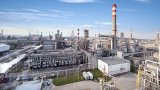
MOL Group completes second SAF and HVO test at Rijeka refinery
This achievement strengthens the company's role in Europe’s energy transition.
MOL Group announced the successful production of Sustainable Aviation Fuel (SAF) and renewable diesel (HVO) at INA’s Rijeka Refinery in Croatia. The pilot marks the second successful SAF and HVO test within the group, following earlier trials at Slovnaft’s Bratislava Refinery.
The project, conducted with Chevron Lummus Global, tested the co-processing of 5% Palm Oil Mill Effluent (POME) with fossil feedstocks. More than 1,000 tonnes of biogenic material were processed, and the operation was certified by Bureau Veritas under ISCC standards.
Earlier this year, the company also produced HVO from cashew nut shell oil and SAF from partially refined cooking oil in Bratislava, proving that its existing aviation kerosene unit can handle biofuel production. At its Danube Refinery, it has long used co-processing to reduce emissions by blending bio and fossil components directly during production.
“MOL Group already produces diesel and sustainable aviation fuel from renewable feedstocks and is ready to expand the production,” said Csaba Zsótér, Senior Vice President, Fuels at MOL Group. “We are already playing a leading role in this process in the region, and we are determined to maintain this position through continued investments and innovation.”
MOL has supplied SAF commercially since 2022 in partnership with Budapest Airport, Wizz Air, and Airport Fuel Supply. Today, it provides SAF in Hungary, Slovakia, and Croatia, equivalent to 14 kilotons of biocomponents annually. With global supply still falling short of demand, the company sees SAF as a key driver of both climate protection and regional energy security.