A new phase for mobility automation at UNITI expo 2026
The upcoming edition of Europe's leading trade fair for the service station and car wash industries will showcase how connected platforms and phased automation are setting a new standard for fuel and convenience retail operations.
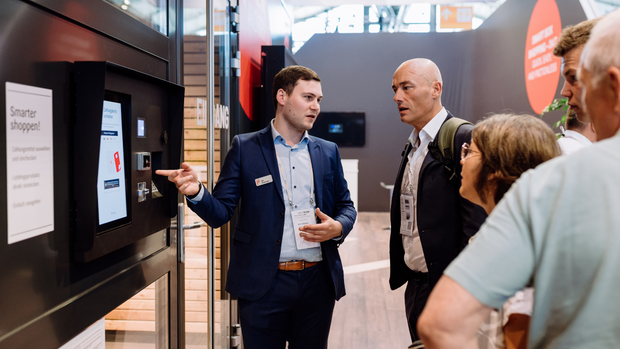
Automation has become one of the most discussed, and most misunderstood, themes in fuel and convenience retail. While the industry often frames automation as a shortcut to lower costs, operators on the ground are navigating far more complex realities: volatile fuel pricing, tightening regulations, fragmented IT landscapes, and constant pressure to improve operational reliability. As the sector prepares for UNITI expo 2026 on May 19-21, the conversation is shifting from whether to automate to how to do it responsibly, without sacrificing control or trust.
In this Q&A, Stijn Bakker, Business Line Manager Energy at Alistar, offers a pragmatic perspective on where automation is delivering real value today, and where expectations need recalibration. Drawing on day-to-day experience with fuel retailers, he explores how the result is not a fully hands‑off model, but a more disciplined, data-driven way of running fuel and convenience networks.

MobilityPlaza. Where are you seeing the strongest pull from operators right now: speed, cost reduction, fewer errors, or better decision-making?
Stijn Bakker. It’s rarely just one driver. What we see most consistently is the demand for fewer errors, better decision making, and operational excellence. Operators manage complex environments such as fuel pricing, compliance, and inventory, where manual processes introduce risk. Achieving operational excellence means streamlining workflows, increasing reliability, and enabling teams to focus on proactive improvements instead of reactive fixes. Cost reduction is certainly on their radar, but it tends to follow because of reducing errors, making faster, data-driven decisions, and elevating operational standards rather than being the starting point.
MP. Is there a specific workflow that has shown the clearest impact and where does the human role shift?
SB. Fuel price management is a strong example. When pricing is automated based on predefined rules, market data, and competitive positioning, you eliminate delays and manual errors. The human role shifts from executing price changes to setting strategy and handling exceptions, adjusting rules when market conditions change, and making judgment calls that algorithms can’t.
MP. Where do automation initiatives most often fall short in real-world station environments?
SB. Three common pitfalls. First, poor data quality, automation is only as good as the data feeding it. Second, insufficient adoption on the ground. If station staff don’t trust or understand the system, they’ll work around it. Third, overambitious scope. Trying to automate everything at once instead of proving value in one workflow first and building from there.
MP. How does fragmentation set a ceiling on automation and what tends to improve first with consolidation?
SB. Fragmentation is one of the biggest barriers we encounter. When stations run separate systems for POS, back office, tank gauging, and pricing, you end up with data silos and manual bridges between them. There’s no single source of truth. Automation needs connected, reliable data to function. Without integration, you’re automating within silos, which limits the value significantly.
Visibility almost always comes first. The moment you bring data together into one platform, operators suddenly see what’s happening across their network in real time. Process consistency follows naturally, because you can now standardize workflows.
MP. What quality controls or monitoring practices are still essential to build trust?
SB. Automation without clear rules brings extra risks. That’s why we see a few key things as important: alerts when something unusual happens, a logbook so everything is easy to track, and human approval for big decisions. Like major price changes or anything related to compliance. Routine work can be automated, but for important matters, human oversight remains necessary.
MP. How are you communicating this evolution and helping operators understand what “responsible automation” looks like?
SB. We take a phased approach. Both in implementation and in how we communicate. We don’t promise full automation overnight. Instead, we work with operators to identify the highest-impact, lowest-risk workflows first, prove the value, and then expand. Real customer cases and demonstrable results are far more convincing than feature lists. Responsible automation means being transparent about what’s automated, what still needs human judgment, and giving operators the confidence to trust the system.
We share these insights in conversations with customers during our own events and through industry events such as UNITI expo 2026 in Stuttgart, where we also show FuelVision365, our AI powered ERP solution based on Microsoft Dynamics 365 Business Central.
We will be present at UNITI expo 2026 in Hall 5, Stand 5A35.