Battery Storage: Building More Resilient Energy Infrastructure
Ad
Electrification is accelerating, but power access is the new challenge. TSG helps businesses turn energy constraints into opportunity with smart, integrated solutions combining storage, solar, and intelligent management. Discover how to unlock flexibility, resilience, and smarter energy use.
From electrification to energy resilience
Across Europe, organisations are investing heavily in electrification. EV charging infrastructure continues to expand, solar installations are multiplying, industrial facilities are modernising their electrical systems, and businesses across logistics, retail, hospitality, data centres and manufacturing are looking to reduce both their carbon footprint and their exposure to volatile energy costs.
But as these investments accelerate, a new challenge is emerging.
For many organisations, the question is no longer whether to electrify or not. It is how to secure, manage and optimise the electrical power required to support increasingly complex operations.
Grid connection delays, transformer capacity constraints, rising peak-demand charges and growing pressure on local electrical distribution networks are becoming familiar obstacles across Europe. Whether it is a logistics platform deploying EV charging infrastructure, a public fast charging hub deployment, an airport increasing its renewable energy production, a data centre securing critical operations or an industrial site electrifying its processes, access to power has become a strategic issue.
This is why Battery Energy Storage Systems (BESS) are becoming a key component of modern energy infrastructure.
Far beyond their traditional role as backup systems, batteries now help organisations optimise energy flows, improve resilience, accelerate electrification projects and maximise the value of their renewable energy investments. Batteries are increasingly deployed as part of integrated electrical solutions combining solar generation, EV charging infrastructure, High and Low Voltage infrastructure and intelligent energy management.
The conversation is no longer simply about storing energy. It is about making better use of available energy and existing infrastructure creating more resilient, flexible and efficient energy ecosystems.
Turning power constraints into flexibility
For decades, increasing power capacity typically meant reinforcing the grid connection, upgrading transformers or investing in additional electrical infrastructure. These upgrades remain essential, but they can be costly, complex and dependent on lengthy permitting and network reinforcement processes.
Battery storage offers a complementary approach. By capturing electricity when demand is low, when tariffs are favourable or when on-site solar production exceeds consumption, BESS allows organisations to redistribute that energy when demand peaks. This reduces pressure on the grid, limits peak-demand charges and improves the utilisation of existing infrastructure.
In practical terms, batteries can help defer transformer upgrades, optimise contracted power levels, support peak shaving strategies and facilitate the deployment of new electrical assets without immediately requiring major grid reinforcement. The value proposition is both technical and financial: battery storage creates flexibility where the grid alone cannot always deliver it.
Building integrated energy ecosystems
Yet batteries alone are only part of the answer.
As organisations electrify more of their operations, energy systems are becoming increasingly interconnected. Solar generation, battery storage, building management, refrigeration systems, industrial processes and EV charging infrastructure all compete for the same available power.
Managing these assets independently often creates inefficiencies. Managing them together creates opportunities. This is why many organisations are moving towards integrated energy infrastructures where generation, storage, distribution and consumption are coordinated through a single strategy.
The objective is to improve resilience, maximise self-consumption, optimise available grid capacity and create the flexibility required to support future growth.
At Gubra Green in Denmark, TSG delivered a hybrid solar and battery park combining 2 MW of photovoltaic generation and battery storage to cover 100% of the biotech company’s electricity demand. Here, storage is not supporting mobility infrastructure. It is helping secure energy autonomy while strengthening operational resilience.
Intelligence creates value
As energy systems become more sophisticated, storage only creates its full value when it is actively managed.
Knowing when to store energy, when to discharge it, when to prioritise self-consumption and how to balance competing electrical loads has become just as important as the battery itself. This is where advanced Energy Management Systems play a critical role.
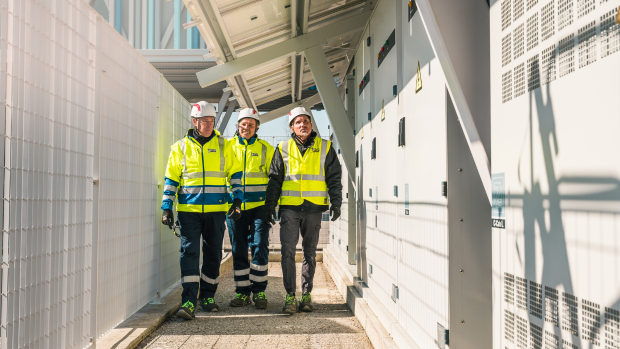
TSG’s Energy Hub approach reflects this evolution. Rather than managing assets independently, operators can monitor and orchestrate energy flows across an entire site, enabling dynamic load balancing, peak shaving, self-consumption optimisation and improved energy resilience.
By integrating battery storage, solar production, charging infrastructure and building operations into a single platform, organisations gain real-time visibility over their energy ecosystem and can optimise performance continuously. In many ways, the battery is only one part of the equation. The intelligence that manages energy across the site is what unlocks its full potential.
Proof in the field
The value of battery storage becomes particularly clear when organisations face real-world infrastructure constraints.
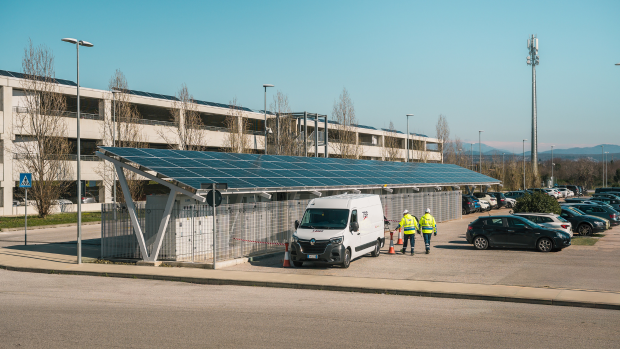
At Trieste Airport in Italy, TSG co-developed a 3 MWh battery installation combined with a large-scale solar project. The system enables the airport to cover up to 80% of its daytime energy demand through self-generated electricity, while supporting both terminal operations and mobility infrastructure during consumption peaks.
In the Netherlands, TSG and Pixii deployed three PowerShaper battery units to support a 150 kW Alpitronic fast charger on a site where the local grid could only provide 40 kVA. Instead of waiting for major network reinforcement works, the solution bridged the power gap while offering a modular architecture designed to scale with future demand.
Beyond mobility, battery storage is also increasingly relevant for energy-intensive sectors such Retail and Warehousing and Logistic Companies with cold storage. By combining solar generation, battery systems, HVAC, high-voltage grid connection and intelligent energy management, companies can strengthen operational resilience, optimise consumption and reduce exposure to energy market volatility.
Different sectors, same challenge: integrating generation, storage and consumption more effectively while preparing for a more electrified future.
Managing energy as an integrated system
The growing importance of battery storage reflects a broader transformation in customer expectations. Organisations are no longer looking for standalone technologies. They need partners capable of designing, integrating and maintaining complete energy ecosystems, from solar generation and e-mobility to high-voltage infrastructure, transformers, substations, battery storage and digital energy management.
As a provider of integrated electrical solutions, TSG supports customers from initial energy audits and system design through to deployment, optimisation and long-term maintenance.
In this environment, battery storage is becoming an essential enabler of energy flexibility. But it is also part of a broader shift: the move towards Full Electric Solutions, where generation, storage, distribution and intelligent management work together as one resilient energy infrastructure.