Discussing TotalEnergies’ ambitious hydrogen strategy
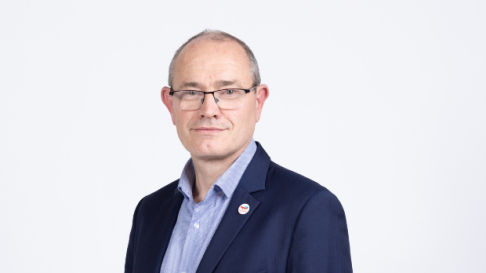
Antoine Tournand, Vice President of H2 Mobility Solutions, spoke to PetrolPlaza about their plans to roll-out 100 hydrogen stations for HDVs in Europe, why H2 and heavy-duty are a great match, and his reaction to EU’s announcement on AFIR.
TotalEnergies recently announced plans to roll out 100 hydrogen stations for heavy-duty vehicles (HDVs) in Benelux, France and Germany with Air Liquide. How did this project come about?
We are an important player for heavy-duty mobility in Europe through TotalEnergies and our other brand AS24, a very important player with over 1,200 stations in 29 countries. It was important for us to serve our customers and provide a decarbonization solution for transport. TotalEnergies opened its first hydrogen station in Germany in 2002 more focused on light-duty vehicles (LDVs). After that we were a founding member of H2 Mobility, an important hydrogen player in Germany. In 2021, we constituted the Hydrogen Mobility Solutions (H2MS) business unit, which aggregates all the projects taking place in our affiliate.
Dealing with hydrogen, we realized that it was valuable to partner with a competent player for the molecule and equipment. We know how to manage and operate retail stations, and we have the customer base. We found that partner in Air Liquide. This process led to the announcement of a 50/50 shared company to develop 100 or more stations in Europe with a focus on France, Germany and the Benelux – the core markets of our operations and key European transport areas. Our joint conviction is that hydrogen provides real benefits to heavy-duty mobility and its long-term decarbonization.
Do you expect these European markets you mention to be the first to develop in the hydrogen mobility space?
International transport is the preferred segment for H2 to develop due to its intensive use. The countries we are taking about are really at the centre of Europe. They represent a big part of our customer base. It's also important to make commitments in a geographic space that allows our customers to plan routes. We are not restricted to these five countries but they are the focus for now.
Will all the 100 stations be added to existing TotalEnergies and AS24 stations? Or will you also build new sites?
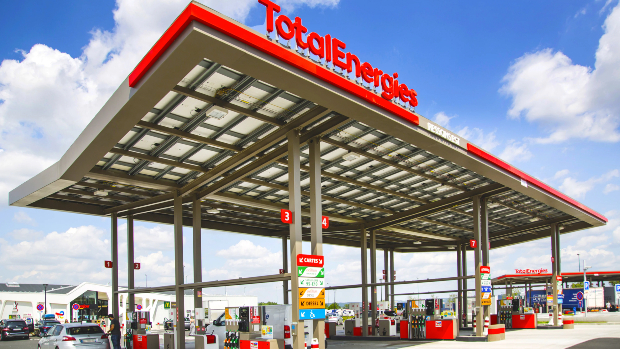
The idea is to have stations along main European corridors following the general view of Europe and the subsidy programs. Some of them will be on existing stations from our two brands but we are also considering the opening of stations on brownfields. The network will be branded TotalEnergies in any case.
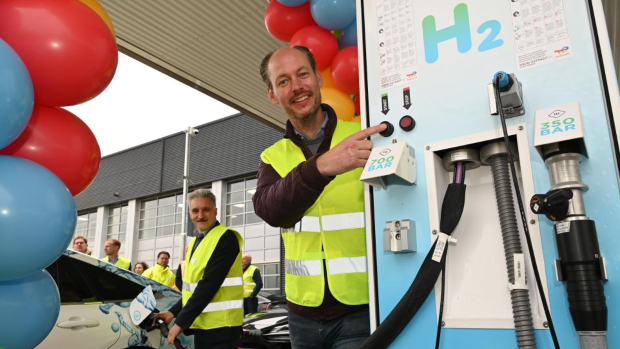
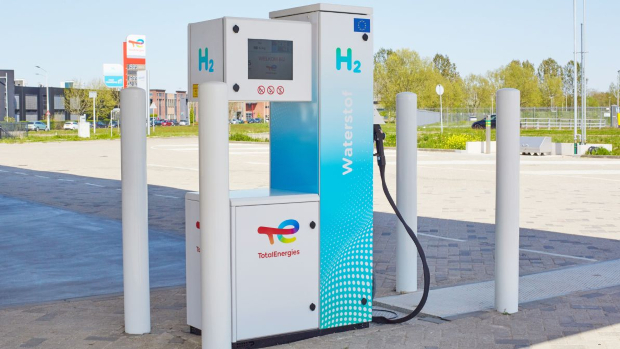
Today we have four operating stations which have both 350 and 700 bar. We will focus on 700 bar going forward. In terms of capacity, we want to start with the general view of 1,000kg of capacity per day, with a possible extension in the future.
TotalEnergy is in an interesting position having been a leader in the liquid fuels sector, investing lots of resources into EV, and now with an ambitious hydrogen strategy. What role do you see hydrogen playing the future European transport sector?
Regarding international long-haul, hydrogen is definitely part of the solution. BEVs will be the biggest drivers of decarbonization in transport. H2 has its best competitive advantage in heavy-duty due to the intensive use. It allows quick refilling (comparable to diesel), it gives long autonomy (up to 1,000km), and it safeguards a key element for transporters, the payload. It’s a market that will take time to scale up. The expectations for commercialization of trucks in Europe is for the biggest players to begin in 2027. We expect the sector to increase significantly by the end of the decade. That is why we are planning these 100 stations over a 10-year period. It's a general ecosystem process – we need to put in the infrastructure, the OEMs need to provide vehicles, and customers have to get used to the process.
In recent years there has been a clear shift from hydrogen passenger vehicles to HDVs. Do you still see a future for light-duty hydrogen vehicles?
In general, light-duty transportation will be BEV. Most of the time these cars are not moving – they can recharge at home, the office or malls. The key word is intensive. When it comes to intensive, with no time for long stops, there might be cases where H2 is interesting in light-duty. We are a shareholder in HysetCo, a pioneer in H2 light-vehicle mobility in Paris. Although we think heavy-duty is where hydrogen will have its more important role to play, we remain involved in lighter mobility.
What are your thoughts on the recent EU agreement on AFIR that will require hydrogen stations every 200KM on major corridors and urban nodes? Is this enough support for companies like TotalEnergies to heavily invest in new solutions?
The main message is that the preliminary focus for H2 is heavy-duty. We are fully aligned with the vision to focus on TEN-T corridors (Trans-European Transport Network) and urban nodes as part of an international approach. TotalEnergies supports this international view. The second important message is that the AFIR statement is aware that the landscape changes rapidly. They say they will reassess the market in 2024 including the technical part. Everyone would have been happier with 150km per site instead of 200km but when you consider that it will be revised, it's an important and positive step. The market will take some time to mature – we need the trucks to come in – but between 2027 and 2033 it will accelerate strongly. By that time, we hope AFIR will have changed to the 100KM mark. It's a positive sign to see public support for hydrogen stations. We will contribute to kickstart this market.
Do you see a lot of interest from transport companies and OEMs to increase the number of FCEVs on the roads?
There are positive signals. There was a lot of expectation around AFIR and the European programs because it's a very cost-intensive business. These trucks can be three to five times more expensive that traditional ones – that is why the logic of an ecosystems is so important. To take the next step the customer expects to have the truck and the infrastructure. We see lots of customers willing to take the risk of changing their fleets but we need to work together. The consortium and association format, like the ones that we are a part of (H2 Accelerator), are key to keep a connection between us.
TotalEnergies recently sold its service station business in a number of key European markets. What role does the company want to play in the future mobility and transport ecosystem?
TotalEnergies is fully committed to providing solutions for the decarbonization of the sector. AS24 is the main infrastructure for this sector with a strong customer base. That is why we are designing these stations.
We see mobility changing. If you look at light-duty vehicles, ending the sale of ICE vehicles in 2035 is very important. Mobility is turning electric. We want to accompany mobility to these new energies. We are deploying charging points and hydrogen stations in major roads in Europe. TotalEnergies is contributing to this transition by investing in the future – a future that’s electric.
This article is part of the PetrolPlaza Special "The Future of Hydrogen." Check it out the rest of the Special here.