Future-Ready Fuel Retail: Payment Technology for a Hybrid Mobility Era
Ad
As mobility becomes more digital, traditional fuel payment systems are reaching their limits. From EV charging to regulatory pressure and customer expectations for frictionless journeys, the industry faces unprecedented change. This article reveals how reinforcing the payment backbone with aiEazyFuel® empowers retailers to innovate smoothly, without disrupting day‑to‑day operations.
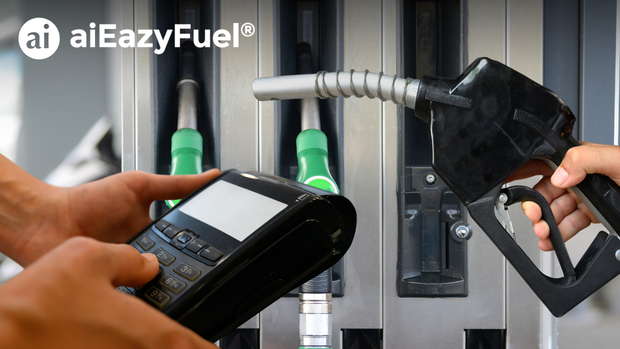
Fuel retail is entering a decisive phase. Payment expectations are evolving faster than many legacy systems were ever designed to support. EV adoption, digital wallets, integrated mobility applications and increasing regulatory complexity are reshaping how transactions are authorised, secured and settled. At the same time, customers expect greater convenience, stronger security and more meaningful loyalty experiences.
For fuel retailers, mobility providers and fuel card issuers, the challenge is not whether change is coming, but how to respond without destabilising operations.
Across markets, digital innovation is progressing at different speeds. Some organisations are already supporting EV charging, mobile wallets and app-based journeys. Others continue to rely on legacy payment systems built for a far simpler retail environment. Yet regardless of geography or scale, all stakeholders face similar pressures:
- The rise of EV adoption
- Stricter compliance and regulatory obligations
- Growing exposure to fraud risk
- Consumer demand for seamless, digital-first experiences
In this environment, complete system replacement is not always realistic. For many operators, the more pragmatic approach to upgrading legacy payment systems is to strengthen the issuing and processing core. Investing in infrastructure like aiEazyFuel® from The ai Corporation, enables structured evolution rather than disruptive transformation.
Why traditional payment systems are under strain
Legacy issuing and processing frameworks were designed for predictable forecourt transactions. Authorisation flows were simpler, compliance requirements narrower and fraud threats less sophisticated.
Today’s fuel retailer operates within a hybrid ecosystem. Forecourt payments, fleet authorisation, EV charging sessions and digital wallet provisioning must coexist within a connected mobility environment. Traditional platforms often struggle to support real-time integration, tokenisation and regulatory agility.
The result is operational friction. Security measures are layered rather than architected. Compliance adjustments require disproportionate effort. Innovation becomes constrained by infrastructure limitations.
The fuel retailers and mobility companies that will thrive in this next phase are those that reinforce their issuing and processing backbone — enabling interoperability, scalability and resilience without disrupting established workflows.
EV adoption is redefining payment architecture
Electric mobility is not simply another payment channel. It represents a shift in how identity, authorisation and convenience are managed.
Charging transactions require identity-driven authentication, roaming compatibility and integration with digital platforms that extend beyond the forecourt.
aiEazyFuel® supports these demands by providing flexible, API-driven infrastructure where charging sessions, fuel purchases and fleet controls can operate under a unified framework. This unified approach prevents fragmentation as retailers evolve their energy and payment offerings.
Compliance as a core principle
Regulatory oversight continues to tighten globally. Data protection standards, scheme requirements, PSD3 and enhanced credit, KYB and KYC obligations are increasing operational complexity for fuel and mobility providers.
Future-ready infrastructure must embed compliance at its core.
aiEazyFuel® is architected to comply with legislative and scheme requirements including GDPR, POPI, PCI DSS, SOC and related regulatory frameworks— helping organisations strengthen governance while reducing administrative burden.
By embedding compliance into the issuing framework itself, organisations gain confidence and continuity as regulations evolve.
Managing fraud in a hybrid payment environment
As digital channels expand, so too does exposure to fraud. EV charging, mobile wallets and cross-border fleet transactions significantly increase risk across both proprietary fuel cards and open-loop scheme cards.
Security must be unified and adaptive.
The ai Corporation’s proprietary fraud management platform, aiRiskNet®, is directly integrated with aiEazyFuel®, providing advanced behavioural analysis, anomaly detection and adaptive controls across closed-loop and open-loop environments. This ensures consistent protection across traditional forecourt transactions and emerging digital mobility journeys.
Delivering digital-first customer experiences
Today’s consumers and fleet operators expect frictionless, digital-first journeys.
aiEazyFuel® utilises an API-first architecture to enable smooth integration with third-party systems such as EV platforms, loyalty programmes, digital wallet provisioning and other innovations to be introduced incrementally, without destabilising existing operations.
Trust is central to mobility payments. Customers expect secure authentication without friction, especially when payments are embedded within apps or vehicle systems.
Tokenisation transforms sensitive credentials into secure digital representations that cannot be reused outside authorised environments. aiEazyFuel® supports tokenised payment instruments that can be provisioned directly into mobility applications, digital wallets and connected vehicle ecosystems.
Tokens can be dynamically managed, revoked or reissued without exposing underlying card data. When combined with integrated fraud monitoring, this layered approach strengthens protection while streamlining user experience.
Payment evolution without disruption
Not every organisation is ready for a full-scale transformation — nor is it always necessary.
aiEazyFuel® enables businesses to maintain their existing closed-loop value propositions and operational continuity while modernising the underlying issuing and processing infrastructure. Open-loop expansion, EV and digital payment adoption can be introduced progressively, aligned with each organisation’s transformation timeline.
Futureproofing fuel retail does not require replacing everything at once. It requires reinforcing the foundation. And in a rapidly changing mobility landscape, that may be the most logical next step of all.