Interview with the CEO of Puma Energy Africa: “Gas stations have become safe-havens”
PetrolPlaza spoke to Eghosa Oriaikhi Mabhena, CEO of Puma Energy Africa, to discuss the company’s efforts to tackle COVID-19, the challenges that remain and the importance of supporting local communities.
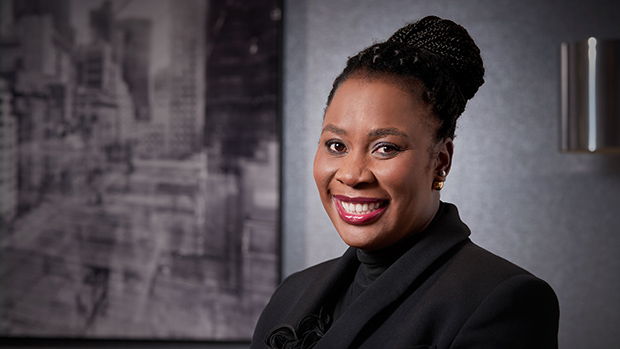
Eghosa Oriaikhi Mabhena joined Puma Energy in July 2019 with the mission to create ‘One Puma One Africa team’. That integral approach has now helped the company to ensure the supply of equipment and maintain health & safety standards across its 18 African markets. Calling from the head offices in Johannesburg, Oriaikhi Mabhena details Puma Energy’s three-step approach to tackle this crisis.
Q. From an organizational point of view, operating in 16 different African markets, how are you dealing with COVID-19?
A. We have developed a three-step approach (global, regional and country) from a crisis management perspective, and we are all very well aligned. In early January, we launched the first crisis management group at a global level. Our very first priority was the safety of our people, starting with personnel health equipment (masks, gloves, temperature checks). At the time the only country under lockdown was China. We were very focused on contact tracing - making sure we didn't have any employees travelling to any affected country.
The situation quickly progressed and we then had to look at what each government was mandating, and ensure we complied with it. We also took an expanded look at the health and safety of our people which includes third-party contractors and dealers. We sent them the requirements that had to be in place ensuring that dealers operating a retail site had to comply to the same stringent standards that we had set. Another key focus was business continuity planning - in all the countries where we operate, fuel is considered an essential service so continuity of supply for our products is critical.
We are really proud of the work we have done. There's been office planning based on physical distancing, we installed hand sanitizers and carried out temperature checks. Now that we are in more extreme conditions most of our employees are working from home and only those that we consider front-line, those involved in fuel retail, terminal and depot, are working outside. We are giving them all the support necessary.
Through that three-step approach we are now discussing how we safely come out of lockdown as countries start to open up. In some cases, we are taking more conservative measures to ensure workers' safety this includes looking at the daily rate of infection in a country and the number of tests per population.
Q. As some countries decide to relax lockdowns, such as Ghana, you have to decide if you follow that or have a more conservative approach.
A. It's calculated more than conservative. In Ghana, the first African country to say they would release the lockdown, the daily rate of infections is still high, so we take a cautious and measured approach - rotating employees in offices, providing company transportation to avoid public transport, etc. We will continue to be measured in all our moves.
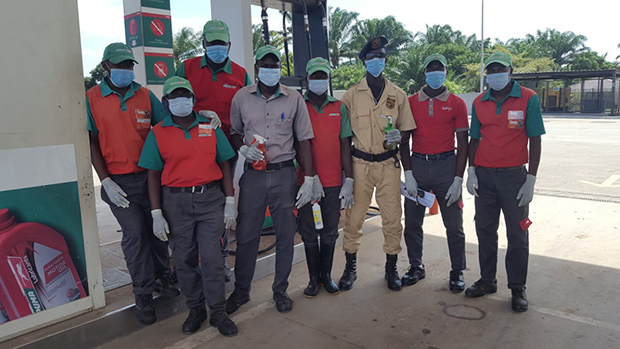
Q. One of the biggest challenges for retail sites in many countries has been the supply of personal protection equipment (PPE). In some cases, site workers have made their own protective screens and face masks. How have you dealt with that challenge?
A. From a company group level, at the very beginning we purchased gloves, masks and other materials. We made sure that at country level our procurement team had done the same. Luckily we have not run out of safety equipment in Africa because of that early approach. In several countries we have actually used some of it to support health workers, police forces and other front-line workers. In Zimbabwe, for example, our corporate social responsibility reaction was to donate face masks to charities and the police.
In all countries we also ensured that our dealers made sure their people had gloves, masks, hand sanitizer and had no physical contact with customers. We made our purchases contactless quite early on.
Q. The drop in sales has been so steep in countries like Spain that some sites have had to close down temporarily or agree minimum services with the appropriate authorities. Is that something that you've suffered in your markets?
A. There have been no requirements for stations to close down. Early on we were tracking the activity level of sites. So far we have not closed down any in Africa. There hasn’t been a loss of sales volume to justify that. However, Puma Energy made an effort to adapt work shifts for people in challenging commuting situations - in Angola we felt like we couldn't get certain category employees to the sites so we asked them to work different hours. The Francophone countries are in more of a curfew system rather than a true lockdown like South Africa so we changed the working hours to fit that. In Zimbabwe, sites have gone from operating 24 hours to doing day shifts.
The Puma network is supported by dealer-owned, dealer-operated sites. In most of the countries where we operate there are social relief programs that our dealers can apply for. Rather than closing a site they will ask their respective authorities to assist them.
We also saw some interesting patterns in sales - many people in Africa still have generators at home and they can drive far distances to reach their homes. South Africa has the most stringent lockdown in the continent where you are only allowed to go to the grocery store and pharmacies. That is a market where the drop in sales is more obvious, especially due to the aviation industry. You also see an increase in fuel usage by ambulances, the military and private flights.
Q. Social distancing will continue to be in place for a number of months even if the worst of the pandemic is over. The situation has had an effect on the way retail sites operate their business. We've seen increases in the use of mobile payments and product delivery. What steps did you take in this direction and will COVID-19 accelerate some of these trends?
A. As an organization, prior to the virus, we wanted to be a driving force in technological development for sustainability and the reduction of carbon emissions. We have a whole department dedicated to that. On the back of it, we were looking at mobile payment solutions for African markets.
In our retail sites today, you see physical distancing of customers, contactless card payments and very careful measures for the handling of cash. Employees will try to use masks the minimum amount of times possible to ensure their efficiency.
I do see the acceleration of trends like mobile payments. You have to look at the infrastructure inside Africa that supports companies like us to make these changes. To be able to transact contactless payments you need the banking system of the country to support that. Us having quite a strong voice in the industry will mean that, for us to leverage our own advancements, we will have to lobby for that change. That’s a challenge. What we looked at is rolling out a type of loyalty card where you load up Puma Money and that would allow for a contactless and mobile payment system.
Q. Due to the uncertainty around the global economic situation we've seen a number of oil companies taking a series of financial measures such as reducing capital expenditure. Has Puma Energy considered any similar measures?
A. This is a more palatable conversation in the downstream sector than in upstream. In Puma Energy's case, we are an infrastructure-heavy business. For storage, we have terminals and depots; if you look at the retail business, you are either building or acquiring sites. What is interesting for us is that the ability to manage liquidity in the company is simply a conversation of timing. With Africa as an example, we had our sights set on a number of construction projects to continue to grow our market share. At the moment, with the reduction of sales, you can think of delaying a plan by six months to potentially reduce capital expenditure in 2020, purely based on timing. If I build five more sites in a country but I am not going to make a return on investment… I should time it with the increase of sales. We are in a very privileged position because we can talk more about timing rather than cancellations. Although the aviation recovery may be different, we will continue to transact fuel.
Q. Has this situation changed any other plans you had for Puma Energy in Africa?
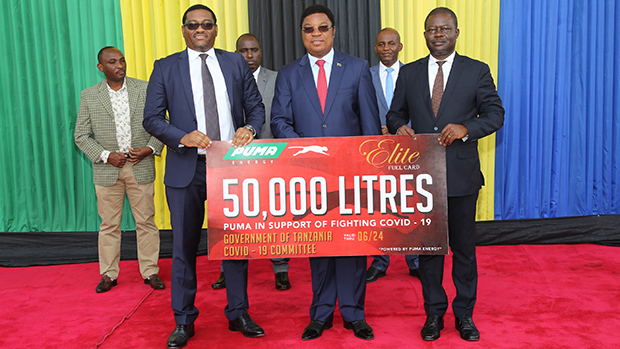
A. Myself and the team, the first thing we said last year was that we wanted 'One Puma, One Africa'. The reason is that when I came on board there really wasn't a regional African business. I wanted to integrate the countries. We wanted to grow our business in 2020 and then the COVID-19 crisis started. Still, the purpose is to be a voice in the community so a lot has been done through social media and through our retail sites to provide equipment and knowledge. As a group we wanted to be there for front-line responders. We've provided fuel, masks, donations and meals for children across our markets. I hope we have made people understand Puma Energy sees itself as an integral part of these countries.
Q. Do you think this crisis has had a positive effect on the public perception of gas stations?
A. I believe this will be a turning point. Puma Energy sees itself as part of the community and we want our retail footprint to be a one-stop shop for most customers. In Angola, we reached out to the most disadvantaged communities and we said we can bring the food to you. In South Africa, we can also deliver products. In a world where I can only drive to a grocery store or a fuel retail site, these are places where you can buy PPE or even get your temperature checked. You are almost becoming a safe-haven in this new world. So yes, the perception of a retail site could change for the better.
Interview by Oscar Smith Diamante