LNG Bunkering Moves towards Operational Maturity
As LNG bunkering enters a new era of growth, the pressure is on to deliver safer, cleaner, and more efficient operations. At LNGCON 2027, global experts will share insights on infrastructure expansion, ship-to-ship transfer innovations, emissions control, and the rising role of Bio-LNG and e-LNG. Explore the trends transforming the maritime sector and connect with the leaders driving the industry's next chapter.
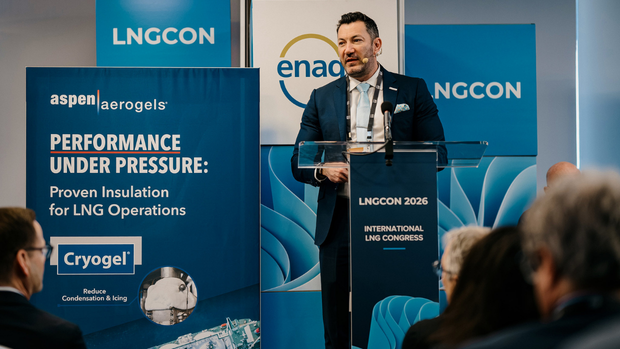
LNG bunkering is developing quickly, with more vessels, new infrastructure and growing demand for cleaner and more reliable operations. At the 13th International LNG Congress (LNGCON 2027) on 1-2 March in Amsterdam, speakers from Moeve, JOGMEC, Storengy Deutschland and Die Gas- und Wasserstoffwirtschaft add their experience to the marine discussion. Topics include LNG fuel infrastructure, market trends and the role of LNG in supporting energy resilience.
Nearly 800 LNG-capable vessels already operate worldwide and around 600 remain on order. Their entry into service increases demand for dependable fuel supply, suitable infrastructure and the expertise required for safe bunkering.
A broader supply chain requires close coordination between crews, port operators and suppliers. Vessel compatibility, berth access, mooring arrangements, safety procedures and scheduling need to function as one connected process to prevent delays.
Ship-to-ship transfers add further complexity through vessel movement, weather exposure and restricted time windows. Automated mooring, equipment monitoring and real-time data exchange help operators maintain control throughout each operation.
Greater visibility also strengthens environmental performance. Methane management, safe degassing, equipment integrity and onboard reliability stay central across the marine value chain. Bio-LNG and e-LNG are gaining relevance because existing engines, storage systems and refuelling assets can accommodate renewable methane-based fuels.
LNGCON 2027 connects these operational and environmental priorities within a closed-door B2B setting for the global LNG industry. Representatives of Moeve, AutoMooring Solutions, STS Marine Solutions, ETS Degassing, NEUMAN & ESSER Deutschland and many other companies share experience related to ship-to-ship transfers, mooring technologies, emissions control, equipment reliability and marine fuel infrastructure. Their contributions form part of a two-day agenda designed for more than 400 decision-makers and technical experts from gas majors, EPCs, shipping, infrastructure developers and technology providers.
Networking breaks, a focus exhibition and over 300 B2B meetings extend the exchange beyond the stage, helping participants build connections around current projects and operational needs.
Join LNGCON 2027 to explore the technologies and strategies shaping the next stage of LNG bunkering on 1-2 March in Amsterdam: https://sh.bgs.group/4tv