On Brazil’s forecourt, solutions are built for the world
At ExpoPostos & Conveniência 2026, Brazilian companies showed that solutions shaped by one of the world's most demanding fuel retail markets are ready to compete abroad, while industry leaders spoke candidly about the challenges the sector still faces at home.
Brazil's fuel retail sector has long been seen as a destination for global suppliers, but its scale and complexity have also made it a proving ground for homegrown players. The country has more than 45,000 active service stations and around 8,500 convenience stores, and stands apart on fuel, enforcing one of the highest ethanol blending requirements in the world and, uniquely, offering pure E100 as a standalone option for its large flex-fuel fleet. Operating across a continent-sized territory, a multi-fuel forecourt and a shifting regulatory landscape has produced Brazilian companies whose solutions and concepts are increasingly competitive beyond the country's borders.
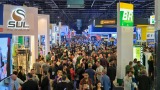
That was the backdrop to this year's ExpoPostos & Conveniência. From 8 to 10 September, ABIEPS and Fecombustíveis celebrated the show's 22nd edition, bringing together more than 30,000 attendees and over 250 exhibitors at São Paulo Expo, in collaboration with GL Events. Alongside the international suppliers on the floor, several Brazilian companies used the stage to show how far their ideas can travel.
Excel is one of them. Cristian Bazaga, President & CEO of Excel and President of ABIEPS, recalled that the company entered the Brazilian market 36 years ago with a product almost every driver has used at least once, the tyre inflator, and has kept innovating for the local market ever since. What started as a domestic story has become an export one: founded in 1990, Excel launched the world's first digital tyre calibrator and today exports its fuel management and fleet control technology to more than 30 countries.
For Bazaga, the secret to exporting lies in first mastering a market of continental proportions. "Within Brazil you have several ‘Brazils,’ with different needs, different cultures and different demands," he explained, arguing that quality, technology and close customer support are what make it possible to operate with excellence across such diversity. That is also why he rejects the usual industry labels: rather than a solutions or technology provider, he sees Excel as a service provider.
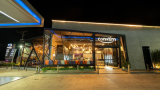
On the retail side, the Brazilian concept travelling furthest may be Convém. David Freidzon, Marketing Manager at Grupo Dislub Equador, explained that the group invested in the convenience franchise a few years ago as a differentiator, giving customers one more reason to fuel up at its network, and that Convém sets itself apart from other convenience stores through its architecture. Working with Argentine studio Balko, the group developed its flagship Convém store in Manaus, which was recognized at the NACS Show 2024 in Las Vegas as the best convenience store in Latin America, receiving the NACS Convenience Retailer of the Year Award for the region. Freidzon said the award fueled the group's motivation to keep investing in its brand and customer experience, while highlighting what he sees as distinctly Brazilian strengths, from product mix to the architecture the country now offers.
Those strengths are increasingly shaping the fair itself. Tatiana Zaccaro, Managing Director at GL events Exhibitions, explained that the event is growing stronger in new energies, artificial intelligence and payments, while placing more focus on convenience and foodservice, a major trend as Brazilian service stations continue to expand their offer beyond the pump.
Still, building for the world does not mean the home market is without obstacles. James Thorp Neto, President of Fecombustíveis, singled out organized crime as one of the issues weighing most heavily on the sector. Of Brazil's roughly 45,000 service stations, more than a thousand were found to be linked to criminal groups, though he credited recent police operations with delivering significant victories in removing bad actors from the market. Equally pressing, in his view, is the constant churn of tax rules in a country with a heavy tax burden, which disrupts day-to-day operations and can create the public perception of wider margins than retailers actually enjoy. In reality, he stressed, margins in Brazil are very tight.
MobilityPlaza's on-site interviews at ExpoPostos & Conveniência 2026 gathered perspectives from Excel, ABIEPS, Grupo Dislub Equador, GL events Exhibitions and Fecombustíveis, capturing a market that is not only attracting global innovation but increasingly exporting its own. The video report is sponsored by Excel.