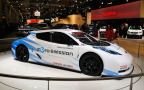
Russia imposes hundreds of gas stations to install EV chargers
Hundreds of Russian gas stations will have to install electric vehicle (EV) charging stations by November 1, 2016, after the government signed a new decree.
Prime Minister Dmitry Medvedev signed a decree on Aug 27 requiring hundreds of gas stations owners across the country to install EV chargers, in an effort to boost the shy production and use of EVs in Russia.
EVs have been highly unpopular in Russia since their introduction a few years back, with only 500 electric cars having been sold in total, reported the Moscow Times.
Their expensive price-tag, an exiguous network of charging stations, spare parts and maintenance stores, as well as the popular belief that EVs are unsuited to Russia´s tough weather conditions, have hampered their status and popularity.
Industry professionals have criticized the governments´ decree of forcing gas station owners to turn electric due to the heavy installation costs, and scarce profitability for the near future.
The other side of the coin: Norway
Russia´s neighbouring country, Norway, is the world leader in use and popularity of EVs. In April of this year, the country achieved a milestone by registering the 50,000th electric car.
Norway´s Liberal Party recently suggested that the country should make a 100% switch to green cars by 2025, clearing the roads of any vehicles powered by gasoline and diesel.
“By 2025, it is entirely possible to fully eliminate cars that run on diesel and gas, and completely switch to ecological alternatives,” said Ola Elvestuen of the parliament’s Liberal Party and chair of the legislature’s Standing Committee on Energy and the Environment, reported Bellona.
In the first quarter of 2015, 8,112 plug-in electric and plug-in hybrid electric vehicles were sold in Norway, accounting for 33.1% of the country´s total number of registrations, according to Forbes.
That ratio crushes that of any other country - second is Holland with a 5.7% of registered vehicles being EVs or PHEVs. The U.S. and China sold more electric or hybrid plug-in cars during the first quarter, 14,832 and 12,555 respectively, but those numbers do not even account for 1% of the total registration figures.