Shell details strategy to net zero in new report
In its first ever Energy Transition Strategy Report Shell details its efforts to decarbonize transport and industry, including the use of hydrogen, charging and natural gas for light and heavy-duty transport.
Shell has published its first Energy Transition Progress Report to help investors and wider society gain a better understanding of their energy transition strategy.
Shell is the world’s largest mobility retailer, with more than 46,000 service stations operating in more than 80 markets. As detailed in the study, their strategy to decarbonise their portfolio is to offer more low-carbon alternatives such as biofuels, hydrogen and charging for electric vehicles.
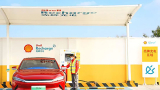
In 2021, Shell operated almost 90,000 electric vehicle charge points, up from around 60,000 in the previous year. They aim to increase that to more than 500,000 by 2025, and to 2.5 million by 2030. That is around 7% of the expected number of charge points in the world by 2030, according to the IEA. In January 2021, they acquired ubitricity, a European provider of on-street charging for electric vehicles through lamp posts.
The global energy company is also expanding their network of hydrogen refuelling stations. By the end of 2021, there were around 50 hydrogen refuelling stations at Shell-branded outlets in Europe and North America where drivers can fill up their vehicles with hydrogen.
In Germany, they are part of the H2 Mobility joint venture to develop a nationwide network of hydrogen refuelling stations for passenger cars. The venture operates more than 90 stations across Germany.
As part of their strategy, Shell also offers carbon credits to passenger car drivers who want to offset the life-cycle emissions of the fuel they buy. In 2021, around 49 million litres of fuel sales were offset, accounting for 1% of the total volumes sold in markets where we have an offset programme.
The view on heavy-duty transport
The road freight sector will be able to use battery electric power and hydrogen to get to net zero, as well as biogas, biofuels and LNG, according to Shell. In 2021, they added 18 LNG refuelling stations to their network, which now consists of 44 sites across Europe.
In 2022, Shell started construction of their bio-LNG liquefaction plant in Rheinland, Germany, which will provide bio-LNG to 4,000-5,000 LNG trucks by 2023. They also started offering bio-LNG blended with regular LNG in the Netherlands.
Another part of the plan is to increase the use of hydrogen and electric trucks with partners. Shell signed an agreement with Daimler Truck AG, for example, to encourage the adoption of hydrogen trucks in Europe. They aim to build 150 hydrogen refuelling stations and supply around 5,000 Mercedes-Benz heavy-duty trucks with hydrogen by 2030.
In the USA, through the subsidiary Shell Recharge Solutions, they started providing electric charging infrastructure for trucks as part of a project led by Volvo Group and South Coast Air Quality Management District.
The report also details their plan to decarbonize aviation, marine, and light and heavy industry. Read the full report here.