South Korea revises EV subsidy rules, raising hurdles for imports
New criteria link incentives to local jobs, R&D spending, and supplier support.
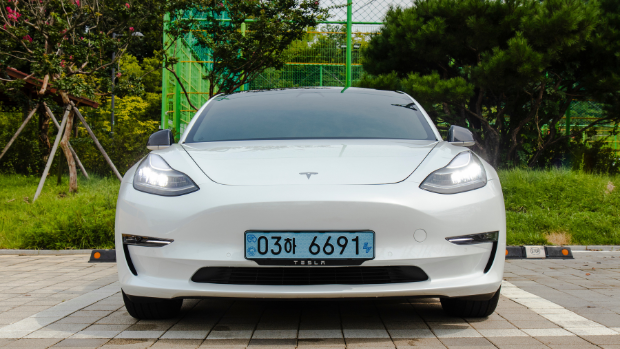
South Korea is tightening its electric vehicle (EV) purchase subsidy system by introducing new evaluation criteria that place greater emphasis on domestic economic contribution, a move expected to disadvantage many imported models.
Under revised guidelines set to take effect in the second half of the year, the Ministry of Climate, Energy and Environment will assess EV manufacturers and importers based on factors including industry contribution, research and development capability, and local employment. The changes will apply to subsidies issued under the government’s 2026 EV supply program, reported ChosunBiz.
Until now, purchase incentives have been awarded primarily based on vehicle performance metrics such as driving range and battery efficiency. Popular imported and domestic models, including vehicles from Tesla, BYD, Hyundai, and Kia, have qualified for subsidies of up to 5.8 million won (roughly $4,300) for midsize and large EVs and 5.3 million won (roughly $3,900) for smaller models.
Going forward, companies will be scored across seven categories: business capability, technology development, after‑sales service, sustainability, ESG performance, industry contribution, and safety management. Only manufacturers averaging at least 80 out of 100 points will qualify for subsidies.
Under the revised framework, higher scores will be awarded to companies that have invested in EV‑related research and development within South Korea over the past three years. Sustainability scores will account for local employment levels, while industry contribution will assess joint R&D projects, technology transfer, and support for domestic suppliers transitioning to electric mobility.
Industry analysts expect imported EVs to face greater difficulty meeting the new thresholds, particularly in areas tied to domestic R&D spending, job creation, and collaboration with Korean parts suppliers. Imported vehicles accounted for roughly 43% of South Korea’s EV market last year.