A food shop that sells fuel: Inside the race to win Europe's roadside appetite
Foodservice is outgrowing grocery and earning far richer margins, yet few convenience operators have made the leap. Maxol licensee Thomas Ennis, Valora's Roger Vogt and industry expert Christian Warning explain what the best are doing differently, and what to watch out for.
On Ireland's commuter roads, the lunchtime rush at a service station starts at the deli, not the pumps. Vans fill the car park, and the tables inside fill with workers who came for a hot meal. For the convenience and mobility sector, food is no longer a side business. McKinsey data shows foodservice turnover in the EU grew 6.8% a year between 2022 and 2025, against 4.8% for grocery. The average foodservice item earns a gross margin of around 53%, compared with 10 to 30% for packaged goods, and more than 60% of customers who come in for food or a drink also buy something else. With fuel volumes set to fall as electrification spreads and tobacco sales in long-term decline, the logic is hard to argue with.
Knowing this and acting on it are two different things, though. Across Europe, many forecourts still treat food as a hot counter next to the tobacco gantry. To understand what the best operators do differently, MobilityPlaza spoke to an Irish franchisee who has just won Europe's top store award, the executive behind one of Europe's leading convenience players, and a consultant who is incredibly tapped into the sector.
The Irish lesson
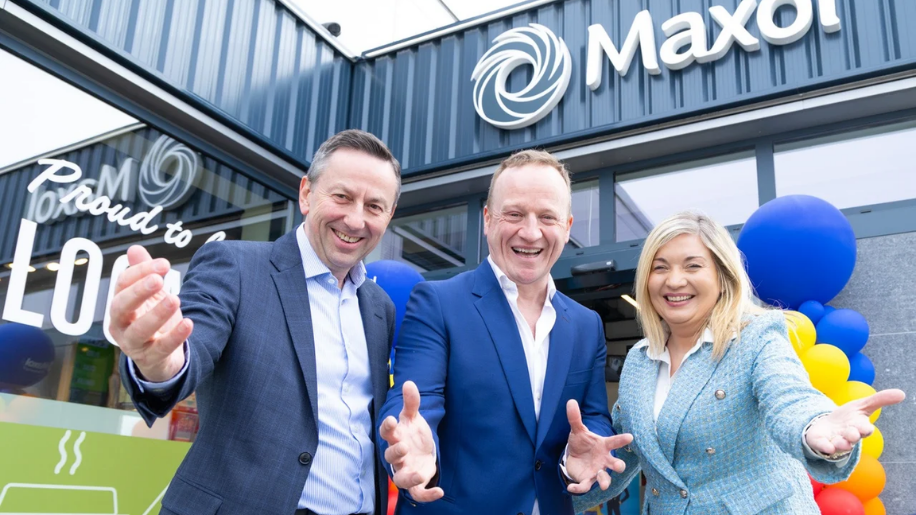
When industry executives talk about foodservice done well, Ireland comes up almost immediately. Few people understand why better than Thomas Ennis. He is the licensee behind Maxol Long Mile Road, the southwest Dublin site that took the NACS Convenience Store of the Year Europe 2026. The €4.5 million redevelopment brings together an expanded Maxol Deli, a Burger King drive-thru, Mexican brand Zambrero, ROSA Coffee and seating for 48 guests. It is the latest in a string of European awards for Maxol, the family-owned Irish forecourt group, which has invested more than €225 million in its network over the past decade.
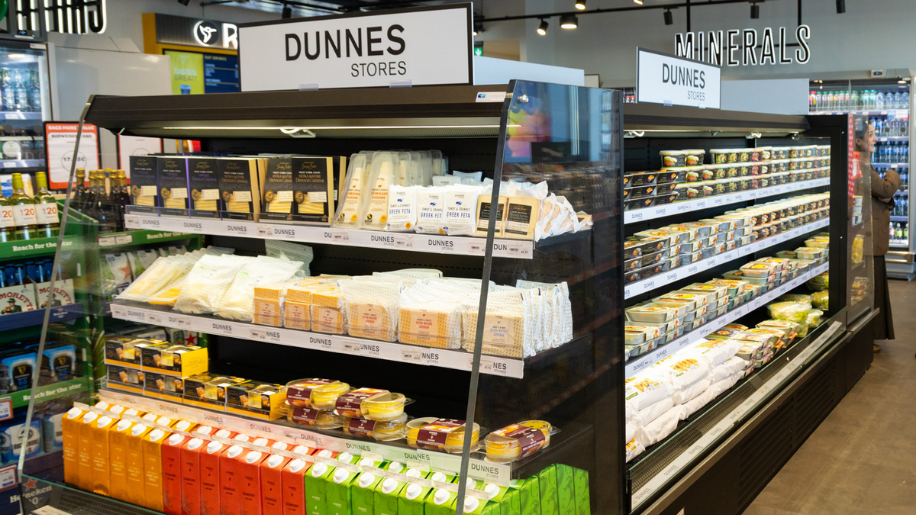
Ennis opened his first stores in 2005 and now runs 12 across Ireland: four Maxol forecourts and eight Spar and Eurospar stores. Most of his business is fresh food, prepared by his own chefs, and he has a simple way of describing it.
"We're a food shop that sells fuel. Not the other way around," Ennis says. "My whole focus has always been food and service. The way to differentiate myself from everyone else in the market was to do good food with exceptional service. The two of them have to go together."
Visitors from abroad often ask him why the Irish market is so strong on food. His answer has less to do with recipes than with patience. Irish retailers, he says, are willing to try things, but not on a whim. "Where a lot of people fail is that they don't give it time. We give it time, we work with our partners, and we share the pain," he says.
Competition keeps everyone sharp. Ennis is quick to say his rivals are every bit as focused on food as he is, which is exactly why standards keep rising. His philosophy borrows from the late Feargal Quinn, founder of Irish supermarket chain Superquinn, and his "boomerang principle": give customers what they want, do it better than the next person, and make sure they come back.
A people business
What sits behind retail is people. That belief shows most clearly in how he handles the two costs that put most retailers off fresh food: waste and labor.
"If you're going to get into the food business and you ask questions about waste and the expense of labor, don't do it," Ennis says. "Those are the two things the food industry will give you. But if you run your department correctly and use the data that's there for you, you should have very little waste."
Using data and AI-assisted ordering, his stores keep waste well below the industry average. That frees him to pay above-average wages. Because fresh food participation is far above average, gross margin is strong enough to carry the extra labor cost. Better-staffed stores serve customers faster, customers spend more on high-margin food, and the cycle feeds itself. It's taken him 21 years to get that balance.
Food as the operating system
For Christian Warning, founder of The Retail Marketeers, what Ennis describes is not a better way of running a food category. It is a different business altogether.
"Foodservice isn't another category to slot in next to tobacco, fuel add-ons and car care. It's becoming the operating system the whole site runs on," Warning says. "Once you treat food as the organizing logic of the location rather than a line on the assortment plan, everything else follows."
It's all about frequency. A driver fuels up once a week but will stop for a drink, a snack or a clean restroom three to five times a day. McKinsey's data points the same way: 84% of convenience store visitors buy a beverage. Forecourts, Warning argues, still leave most of that frequency on the table.
"Fuel is what brings a guest onto the site. Foodservice is what brings them in, and brings them back, much faster and much more often, and makes them loyal," he says. "Fuel gets you a transaction; foodservice gets you a relationship."
Three things separate the leaders from the rest. First, they build their offer around who actually lives and travels in the area. Second, they don't insist on building every concept themselves, bringing in proven QSR and bakery names where that is the faster route to credibility with guests. Long Mile Road, with its own deli next to Burger King and Zambrero, is a textbook example. Third, and most important, they know who they are really up against.
"It's not the next gas station down the road. It's the next QSR, the next supermarket with a serious foodservice counter, the next bakery," Warning says. "That's a fundamentally different competitive set, and it demands a different playbook."
He also agrees with Ennis on what makes or breaks the model. "This is a people business. You can have the best signature product on paper, but if the person handing it over isn't trained, motivated and genuinely hospitable, none of it lands."
Germany's billion-euro gap
The gap between potential and reality is especially stark in Europe's biggest economy. According to The Retail Marketeers, roadside retail in Germany captures only 1 to 2% of a roughly €90 billion out-of-home food market. In the Nordics, the figure is 15 to 18%.
"That gap alone represents a billion-euro growth opportunity in Germany, and it's not a ceiling, it's a floor," he says. "What Ireland shows so well is that success breeds success. That's the north star for markets like Germany."
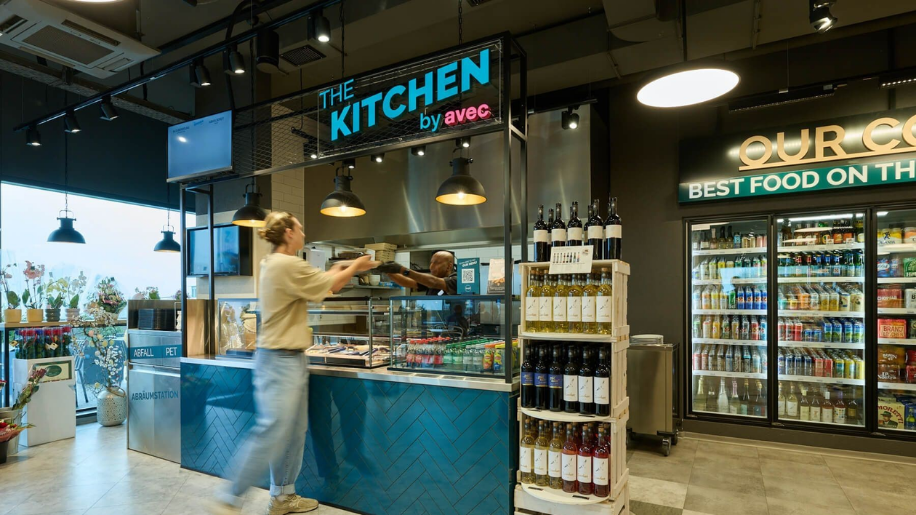
One of the operators trying to close that gap in the DACH region is Valora. The Swiss group, owned by Mexico's FEMSA since 2022, runs around 2,800 points of sale across Switzerland, Germany, Austria, Luxembourg and the Netherlands. Its innovative food concept is The Kitchen, an open kitchen inside avec stores where hot meals are cooked in front of customers. The first opened near the University of Zurich in 2024 and won Valora the NACS European Convenience Retailer of the Year title in 2025. The concept now runs at 16 Swiss sites, six of them at service stations. In Germany, Valora is converting around 90 Deutsche Bahn ServiceStore outlets at major train stations into avec stores, with the rollout due to finish this year, and at the end of 2025 it opened the first avec in Hamburg built on its new food-led format.
Roger Vogt, CEO Retail and Food Service at the Valora Group, says The Kitchen was a response to changing customer expectations rather than a margin fix.
"People increasingly want fresh, high-quality food that is prepared on site and available quickly, even when they are on the move. At the same time, they value the experience of seeing their meals freshly prepared in front of them," Vogt says. "Traditional grab-and-go products remain important, but they cannot always deliver the same level of freshness, customization and experience."
That experience doesn't come cheap. Compared with a standard avec, The Kitchen needs dedicated kitchen space, specialized equipment, specially trained staff and extra food preparation processes.
"Foodvenience opens up exciting new opportunities, but it also adds operational complexity," he says. "Success depends on accurate planning, disciplined processes, strong capabilities and teams that can execute consistently throughout the day. Ultimately, the concept is only as strong as its daily execution."
In Valora's strongest locations, food and beverage already accounts for more than half of total store sales. Vogt also rejects the idea that food simply replaces lost fuel income. At several sites where Valora expanded its fresh food offer, customer traffic rose, and so did fuel sales.
"While this cannot be attributed to one factor alone, it suggests that a stronger store proposition can benefit the entire location," he says.
Vogt also sees eating patterns fragmenting into several smaller occasions through the day. Coffee and fresh bakery dominate the morning, complete meals take over at lunchtime, and later in the day demand shifts toward food for the evening or the next day.
Technology in service of the basics
Technology runs through all of this, though Ennis is careful not to confuse the tools with the job. "Nothing has changed in retailing. You give the consumer what they want: good food, good service."
Maxol Long Mile Road includes self-ordering kiosks, electronic shelf labels and AI-assisted suggested ordering and stock control. In Ennis's view, the point of all of it is to free up time for serving customers.
To win the evening, Maxol has partnered with Danish food-tech company Noahs. Its compact smart kitchens cook pizza, tacos and fried chicken to order, sent out through delivery apps together with everyday groceries. The service started at three sites, including Long Mile Road, and is planned for more than 60. Statista puts online food delivery in the UK and Ireland at around €9 billion this year.
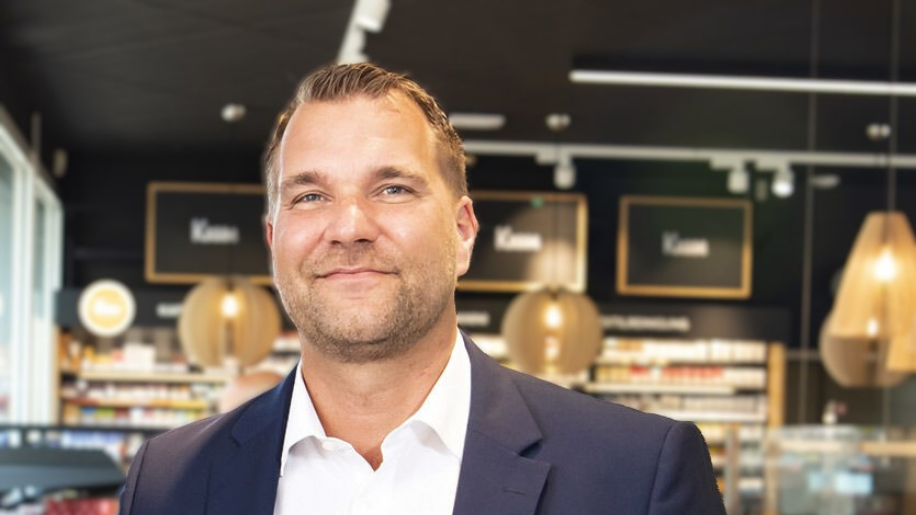
At Valora, technology helps forecast demand, manage inventory and cut food waste behind the counter, while making ordering and payment simpler and faster for customers. The data it produces gives the group a clearer picture of how customers behave and which products belong in the assortment.
Value, indulgence and the cost of change
For all the opportunity, Warning believes the biggest risk lies in how the industry manages food. Most forecourts, he argues, still run it the old-school way: as a category to be restocked and promoted, rather than as the thing that should decide site design, staffing and opening hours.
"Unlocking that requires a fundamentally different management approach: data-driven mission management, not old-school category management," Warning says. "As fuel volumes gradually decline with electrification, foodservice isn't just growth potential anymore. It's the future revenue base of the site."
The consumer backdrop makes that harder. McKinsey's data shows 73% of consumers in Europe's five largest markets plan to trade down on price and 36% expect to spend less on sit-down restaurant meals, yet 34% still plan to treat themselves. More than half of Europeans rank health as more important than they did two years ago. The operators who win will need sharp value, a genuine reason to indulge and credible healthier options, all from the same counter.
Then there is the cost of getting there. Fresh food needs investment in kitchens, equipment and people, and budgets are tight. In the UK, the Association of Convenience Stores forecasts sector sales growth of just 0.6% in 2026, well below inflation, while retailer investment has fallen from a record £1 billion in 2024 to around £900 million a year.
The future is already here
Warning sees the industry heading for what he calls a "Future Split." Some sites will become unmanned energy stops. Others will become genuine food-led hospitality destinations, run with foodservice as the operating system.
Valora has already reorganized itself around that future. In June 2026, merged its Retail and Food Service B2C divisions into a single unit, putting convenience formats such as avec and k kiosk under the same roof as food brands including BackWerk and Ditsch. For the FEMSA-owned group, it is another step towards becoming a European leader in convenience and food service.
For Ennis, that future has already arrived. He points to another of his Maxol sites, in the North County Dublin hinterland, home to one of his busiest delis. Customers travel there specifically for the food. Upstairs there are seating, showers and toilets, and outside there is ample parking, EV charging and a car wash. At the weekend, local football teams use it as a meeting point and the place is full. "That's not the future. That's now. If you're not doing that now, you're in trouble."
Whatever ends up on the counter, customers will keep coming back for great food and great service, and that will still be what sets one operator apart from the next.