China shifts gears on e-mobility
From aggressive pricing to global expansion and grid integration, we explore how China’s evolving EV strategy is reshaping the global landscape, international partnerships, and infrastructure transformation.
It’s no secret that China has become the most influential force in the electric vehicle (EV) market—driven by a dynamic domestic industry and an expanding global presence. The country’s strategy is now entering a pivotal new phase, characterized by aggressive pricing, strategic partnership and energy resilience aimed at maintaining its dominance as EV sales are projected to exceed 40% of the global car market by 2030.
BYD’s strategic intent
The Chinese e-mobility landscape was jolted recently as shares of BYD, the country's largest EV manufacturer, plummeted by 8.6% following steep discounts across several of its models. The move has reignited fears of a renewed price war in the fiercely competitive market, especially amid persistent economic uncertainty and increasing geopolitical tensions with the United States. The pricing cuts, perceived as an aggressive attempt to clear swelling dealer inventories estimated at 150,000 units from January to April 2025, are also seen as a broader response to declining consumer demand.
Despite the market’s nervous reaction, industry analysts view BYD’s strategy as a calculated push to maintain its momentum both domestically and abroad. While the price reductions may pressure rivals to follow suit, they also reaffirm BYD’s intent to consolidate leadership in a market where affordability and production scale are becoming decisive factors.
Last year, international tensions escalated when the European Union (EU) imposed countervailing duties of up to 35.3% on imported EVs from China, in addition to the existing 10% import duty. More recently, the EU and China have initiated talks to potentially replace these tariffs with a minimum pricing mechanism. The proposed shift aims to ease trade friction and create a more balanced competitive landscape, as China continues to export tens of thousands of EVs to the EU while exports from the EU to China remain comparatively stagnant.

Global influence
In 2024 alone, Chinese manufacturers exported close to 1.25 million EVs to markets around the world, including emerging economies where Chinese imports have helped lower retail EV prices. In Europe, BYD outsold Tesla for the first time in April, marking a major milestone as registrations of its battery-electric vehicles surged. Alongside its new plant in Brazil, BYD is also building a manufacturing facility in Hungary.
BYD remains less exposed to trade tensions and tariffs by avoiding the U.S. market, focusing instead on growth in Southeast Asia, South America, and Europe. According to a recent IEA report, this expansion is already showing positive momentum, despite logistical challenges related to charging infrastructure and the complexities of entering less mature EV markets.
Chinese automakers more broadly have been steadily embedding themselves into local mobility ecosystems. In Spain, Repsol recently signed a comprehensive collaboration agreement with Chery’s OMODA and JAECOO brands to support automotive decarbonization. Meanwhile, in Germany, the public transport sector is piloting fully autonomous services using vehicles from Nio and technology developed by Intel-owned Mobileye.
Powering the world’s largest EV market
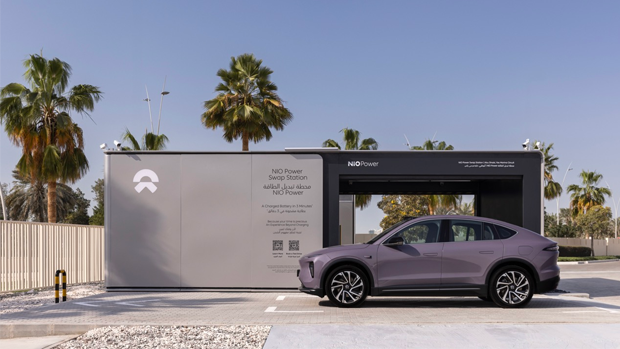
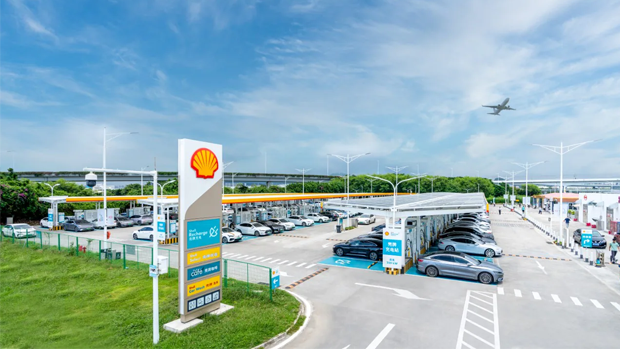
As Chinese EV makers expand globally, the domestic landscape is being shaped by large-scale infrastructure efforts designed to future-proof the transition and address interoperability. Recent notable moves include a partnership between battery manufacturer CATL and energy giant Sinopec to develop a nationwide battery-swap network alongside the country’s plans to use EVs as mobile energy storage in nine cities to feed power back into the grid during peak demand periods.
Similar initiatives from XPENG and Volkswagen Group China, as well as from NIP and CATL, mark a shift toward a more collaborative EV ecosystem. These initiatives signal a shift from individual vehicle sales to ecosystem-based solutions aimed at making EV ownership more convenient, flexible, and energy-aware.
But with speed comes structural strain as oversaturation looms. China’s EV rollout has outpaced regulatory development, particularly in areas like battery recycling and grid integration. According to East Asia Forum, only 156 of more than 40,000 licensed firms are certified to process decommissioned EV batteries, with fewer than 0.4% of used batteries handled properly. To ease growing grid stress from rising EV demand, China is also pushing energy reforms, including unifying its six regional grids into a national electricity market and adopting spot trading mechanisms to improve responsiveness.
The cost of being an EV powerhouse
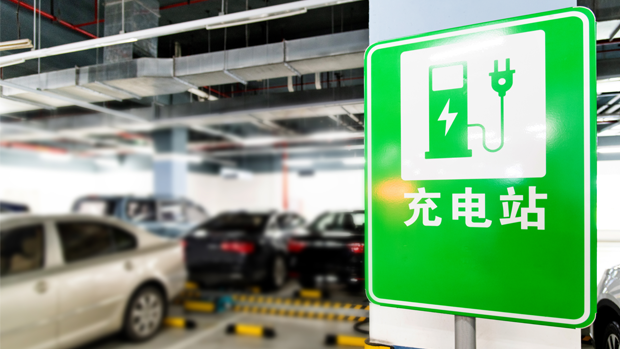
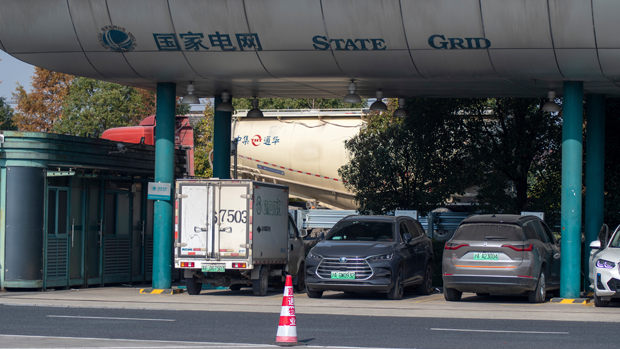
According to the Electric Vehicle Charging Infrastructure Promotion Alliance (EVCIPA), China had installed 12.82 million charging points by the end of 2024. However, this infrastructure remains unevenly distributed, with 69% concentrated in economically developed provinces and cities such as Guangdong, Zhejiang, Jiangsu, Shanghai, and Beijing. This regional imbalance not only shapes access but also contributes to significant differences in charging costs across the country.
In 2023, prices at public charging stations in several cities rose sharply, with increases reaching up to 87% in some areas. As a result, charging costs climbed to around 1.5 yuan (aprox. $0.21) per kilowatt-hour in urban areas and 2 yuan (aprox. $0.28) in suburban areas. The surge was triggered by a policy change implemented on June 1, when the government reclassified electricity consumption at large charging stations as “industrial” use, making it subject to higher rates than those applied to “residential” electricity.
In addition, a comprehensive analysis of levelized costs of EV charging at the provincial level reveals stark geographical variations. While the national average cost is 0.973 RMB/kWh (aprox. $0.14/kWh) with home chargers and 1.148 RMB/kWh (aprox. $0.16/kWh) without, provinces like Xinjiang and Shanghai report cost differences of up to 147%, driven by disparities in electricity prices and usage intensity.
While Chinese automakers make inroads into foreign mobility ecosystems through exports and strategic partnerships, domestic priorities are shifting toward long-term resilience. Rising charging costs, regional price disparities, and evolving electricity policies are reshaping the economics of EV ownership within China, revealing that dominance in scale must be matched by affordability and accessibility. How the country manages this balancing act will determine not only its future dominance, but the trajectory of the global EV transition itself.
Written by Gonzalo Solanot