Fastned opens flagship charging stations on Belgian highway
Largest-ever sites combine ultra-fast EV charging with restaurants, shops and family-friendly amenities.
Fastned has inaugurated its largest electric vehicle (EV) charging stations to date with the opening of the new Gentbrugge rest areas on the E17 highway between Ghent and Antwerp. Designed to serve the 26 million vehicles that pass annually, the stations mark a new benchmark for people-focused EV charging in Europe.
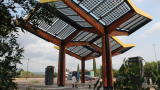
Each of the two locations features 16 ultra-fast chargers delivering up to 400 kW each under Fastned’s Solar Tree canopies, alongside two heavy-duty chargers for electric trucks per site. Beyond charging, the facilities include a restaurant, a 24/7 self-service shop, restrooms developed with ONE HUNDRED Restrooms, warm showers, picnic areas, and a family play zone in landscaped surroundings designed for people, not just cars.
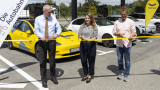
Michiel Langezaal, co-founder and CEO of Fastned, said: “EV drivers today are too often forced to go from one place to another to get their needs met — reliable fast charging, good food, fresh coffee, comfortable restrooms and a place to relax. Fastned Gentbrugge is about showing that we can answer all these needs in one place within a beautiful, sustainable and human-focused environment.”
Covering more than 8,000 m2 across both sides of the motorway, Gentbrugge is also among the company’s most sustainable projects. The entire site operates fully on electricity, including kitchens and retail areas, ensuring zero emissions during operation.
“With EV sales in 2025 up 25% year on year, we are building the long-term infrastructure to offer Belgian drivers impeccable charging, the best amenities and environments, and an experience they look forward to every time they stop for a break,” added Matthias Pletinckx, Country Director Fastned Belgium.
Gentbrugge brings the company’s Belgian network to 47 stations and expands its footprint to more than 380 sites across nine countries. By the end of 2025, Fastned plans to operate 50 stations in Belgium and surpass 400 across Europe, on its way to a long-term goal of 1,000 stations by 2030.