OIL&NONOIL: the centrality of the distribution network in a new balance between competitiveness and transition
Presented on 10 November in the Roman setting of Palazzo Wedekind, OIL&NONOIL 2022, the three-day event dedicated to the future of the fuel distribution chain and sustainable mobility.
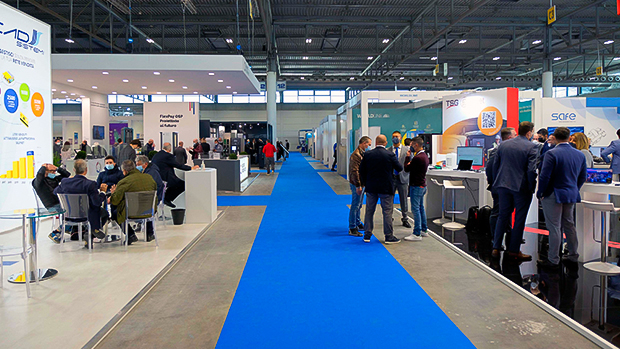
Oil&nonOil is the only event in Italy and the Mediterranean basin aimed at operators in the fuel distribution chain, scheduled at the Verona Exhibition Centre from 16 to 18 November and organised by Piemmeti Spa. There will be 116 exhibitors from all over Italy, compared to 56 at the last edition, for an event that combines trade fair exhibition and collective debate among all the sectors in the supply chain.
In fact, Oil&nonOil has the ambition of being not only a trade fair exhibition for the sector, but also an Agora where the production world linked to the entire oil and fuel system supply chain, that of the relevant trade associations, and the national ruling class, meet to debate the major issues related to the energy question: a subject in constant flux, contextualised in a topicality traversed by ever-increasing complexities that, taken together, define the opportunity for an approach that is as participatory as possible in identifying strategies to functionally address the challenges of Innovation and Change. And in which, the search for gradualness in the transition between present and future structures is one of the central aspects of the sector's demand for its competitiveness at international level.
The fair wants to start a participatory process that highlights the strategic importance of maintaining competitiveness in the market and the possibility of marking out a path that enhances the right relationship between time and climate objectives dictated by the European Green New Deal - as regards, for example, the stop on the production of cars with endothermic engines from 2035 and the Fit for 55 package to achieve climate neutrality by 2050.
A balance that must not only be based on electrification, but on the variety of technologies possible in the new mobility. The appeal is to the principle of technological neutrality, which translates into a fair valorisation of advanced biofuels and e-fuels that can play an important role in the decarbonisation of light transport: the sector is keeping a close eye on them, while signs of openness for their possible use beyond 2035 are also coming from the European Union. In addition to electric vehicles, the sector is also looking with interest at the possibilities offered by experimentation with green hydrogen. A prospect that today would see a production price that is still too high, but destined to fall over time if research continues in this direction, enhancing the study of environmentally sustainable solutions based on the use of hydrogen.
The world of fuel production, on the other hand, is not new to innovation, but has been engaged in a process of qualitative evolution for decades. It began as far back as the 1980s, with the advent of unleaded petrol, continuing with experimentation with biofuels, produced from non-fossil components and now an established reality, while experimentation is now starting on liquid fuels, derived from sources such as waste and CO2. The change, in short, is already underway, but from now on it must be based on strategies that reflect an integrated vision, the result of a balance between environmental demands and European economic competitiveness.
Petrol stations as energy hubs
The associations make the fuel distribution network, a strategic infrastructure and a real bridge in the transition, available to this path, which in Italy has more than 22 thousand stations and employs about 24 thousand people (Istat data). Reduced by years of profound changes, also linked to decisive action to combat the phenomenon of fraud, today the distribution network brings with it the need to reform its current structure, to be achieved through a reorganisation of the same that is functional to rationalise it and make it congruous with its reconversion towards sustainable mobility.
Service stations will increasingly be true energy hubs, capable of providing quality services with an ever lower environmental impact and the growing use of digital technologies, artificial intelligence and smart data management.
Last but not least, the 2022 edition will host the first Oil&nonOil Innovation Village, a themed area dedicated to start-ups and innovation where nine innovative companies selected through a call for tenders will find space. During the fair they will present their proposals to the public and to a technical jury. The latter, on the basis of the live pitch presentation and the documents sent in the application phase, will decide the winning startup of the Oil&nonOil Innovation Village Award, which will be announced during the final event.
The sponsoring associations
Numerous associations and organisations are sponsoring the fair: Unem - Energy Union for Mobility, Assopetroli-Assoenergia, Assogasliquidi - Federchimica, Federmetano National federation of methane distributors and transporters , Assogasmetano - National Association of Automotive Methane Distributors , Alis - Sustainable Intermodality Logistics Association , Assocostieri, Faib - Autonomous Italian federation for petrol stations owners, Assolavaggisti, Fegica - Italian Federation of Fuel and Related Operators , Fai - Italian Road Transport Federation and Fiap - Italian Federation of Professional Hauliers, NGV Italy, FIGISC - Italian Federation of Road Fuel Managers, Confartigianato Trasporti, CIB - Italian Biogas Consortium, Assoporti, Confesercenti, ACI - Italian Automobile Club, Grandi Reti, Autovie Venete, ENEA.
For information, please see the website: www.oilnonoil.it