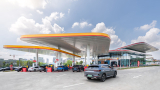
Op-Ed: What Shell Shenzhen reveals about the future of mobility retail
Six out of every ten new cars sold in China are now electric, and the business models evolving around that reality are unlike anything seen elsewhere. NACS APAC Director George Zheng writes about Shell Mobility's Shenzhen operations and the transformation quietly rewriting the global playbook for mobility retail.
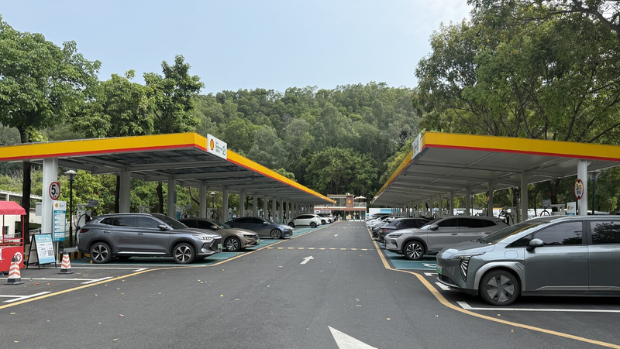
The numbers tell a stark story. As of April 2026, China's NEV penetration has surpassed 61% — over 6 out of every 10 new cars sold in China are now EVs. According to CPCA data, April retail NEV volume reached 850,000 units, with penetration at 61.4%, a historic first-time breakthrough above 60%. Only one ICE model remains in the top 10 best-seller list. The ICE age in China auto market is ending faster than almost anyone predicted.
Meanwhile, China's expressway charging network now covers over 98% of travel centers, with more than 28,000 charging stations and 71,500 individual chargers — meaning range anxiety is rapidly becoming a thing of the past.
Against this backdrop, I had the privilege of visiting Shell Mobility's sites in Shenzhen recently, hosted by Yutong Sun. What I witnessed was nothing short of transformative. Shell Shenzhen is not merely keeping pace with the energy transition — it is actively shaping the playbook for next-generation mobility retail.
Customer Destinations: From Fuel Stop to Lifestyle Hub
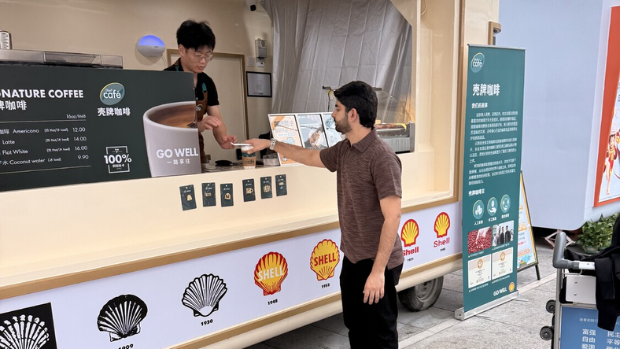
At Shell Shenzhen Bao'an Airport site, Shell has launched Shell Cafe as a destination product, with Shell Coffee fast emerging as a customer magnet. At the Pull-Up pop-up Shell Cafe located just outside Shenzhen Airport, the customers are attracted by the brand of Shell Café. In the stand alone Shell Café under the office building, the menu goes far beyond coffee — fruity milk tea, Mocha, Baozi, Oden, and on-site prepared noodles are drawing office customers' alike.
Valet Charging: Innovation at the Edges
One initiative truly stood out. In Shenzhen's older urban neighborhoods, Shell Mobility has rolled out valet parking and charging services — an entirely new business model. EV drivers drop their cars, pay a service premium, and go about their day. Shell charges a fee for this convenience, unlocking a new revenue stream from sites where physical space is constrained. Innovation in mobility retail isn't always about building bigger — sometimes it's about building smarter.
Commoditizing Energy: Batteries as a Margin Engine
Shell is steadily advancing battery energy storage, treating electricity as a commodity to be traded and managed. By storing lower-cost electricity during off-peak hours and discharging during peak demand, Shell captures the spread — turning volatility into margin. On-site solar PV adds another layer: green power generated during the day can be stored and deployed at optimal times, expanding the site's total energy revenue.
Ancillary Services: Car Washes as a Customer Loyalty Engine
At the Bao'an Airport EV Hub — globally recognized as the 2025 "World's Best EV Hub" — Shell has added self-service car washes. For ride-hailing drivers, who can't afford downtime, charging without value-add services is a missed opportunity. A 20-minute charge becomes a 30-minute stay, building both customer dwell time and incremental revenue. Car wash services are emerging as a genuine loyalty driver — keeping drivers coming back long after their charging session ends.
A Blueprint for Global Mobility Retail
China's EV and charging infrastructure are advancing at breathtaking speed. Shell (Shenzhen) China stands out as a top performer in this transformation — not just deploying assets but building a replicable, scalable business model across retail, energy management, and service innovation.
For our global mobility retailers, the lessons being forged in China — from destination retail to battery trading to valet charging — will shape how the rest of the world builds profitable, sustainable EV ecosystems. The experience and know-how accumulated here is a competitive asset of immense value.
Written by George Zheng, NACS APAC Director, the global association dedicated to advancing convenience and fuel retailing.