Philipp Angehrn (Valora): “Germany's c-store market has a lot of potential”
Valora is scaling up its avec convenience brand with a bold move into Germany’s transit retail landscape. We spoke with Philipp Angehrn, Managing Director Retail Germany at Valora, about this transformation and what it means for the future of convenience in Germany.
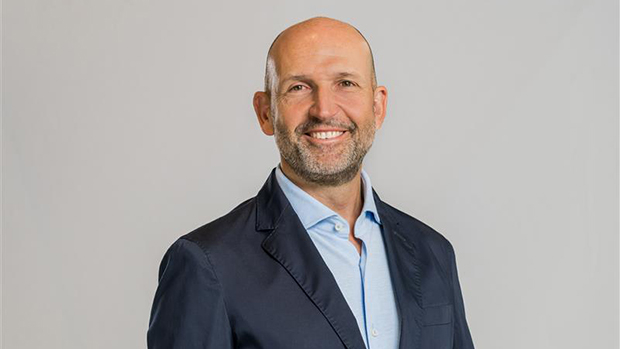
In early 2025, Valora made headlines with a major step in its expansion: securing the contract to operate 90 convenience stores in German railway stations previously run under Deutsche Bahn’s ServiceStore DB brand. This move will see Valora rebrand the majority of these sites to its successful avec concept, a brand that has gained wide recognition in Switzerland for its high standards in foodvenience and innovative store formats. avec Freiestrasse recently won the 2025 NACS Convenience Retailer of the Year Europe. With this move in Germany, Valora strengthens its presence in Germany’s growing convenience market — and promises fresh, faster, and more customer-focused solutions for travelers. We speak to Philipp Angehrn, Managing Director Retail Germany at Valora, about what it means for the avec brand in Germany, and how the company plans to roll out its next phase of growth.
MobilityPlaza: Congrats on the big news. When we last spoke, you were just starting to bring avec to Germany. Could you tell us how this railway station project came about?
Philipp Angehrn: Back then, we were just setting things in motion. It was a bit of a slow start because the setup and negotiations took time, but now things are moving fast. We had already been running about 90 stores as convenience shops for Deutsche Bahn under the ServiceStore DB brand. Then there was a change in the real estate management team that basically re-evaluated the SSDB concept and we agreed to continue running the stores with the avec .
We see this as a huge opportunity to bring in fresh ideas, better solutions for travelers and to move much faster than what was possible before.
MP: And how long will it take to rebrand all these locations?
PA: Our goal is to do it within one year, which is quite ambitious — as you can imagine, the buildings are old, they come with a lot of structural constraints, and you need countless permits. But we have already done detailed planning for about 95% of the stores.
We’ve divided the rollout into three waves. We’re starting with two pilot locations near Hamburg to test our construction processes and workflows in the German context. It’s not about the concept itself — we know how to build these stores; we’ve rebuilt about 300 stores in Switzerland at the railway stations there — but Germany is a different environment with different people and processes, so we want to check everything runs smoothly. Once we validate that, we’re ready to roll out at a pace of one or two stores per week. We’ve increased our resources to make sure we can keep up the speed.
MP: Valora already operates brands like BackWerk, Press & Books and Ditsch, so railway stations aren’t new territory. How do you see the integration of avec?
PA: We’ll be phasing out the ServiceStore DB brand completely and replacing it with avec. The big advantage is that we’re already very integrated between Switzerland and Germany on the operational side. Of course, the markets are different but the backbone — the know-how about how to run convenience for travelers — is the same, and we can transfer that experience.
We have learned a lot over the years in Germany as well as in Switzerland, Austria, and Luxembourg about what travelers really want: a mix of speed, fresh food, easy checkout, and a good price-performance ratio. Fundamentally, the operational synergies are there, which makes us confident we can do this better and faster than before.
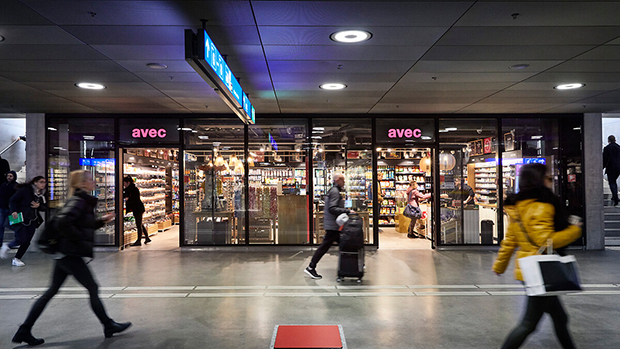
MP: In places where you have other food concepts like BackWerk, how will the food offer differ with avec?
PA: BackWerk is primarily a bakery concept that includes breads, pastries, sandwiches, that sort of thing. It’s bakery-focused and very good at it. Avec is a full convenience store: yes, we also have bakery items, but they’re just one part of a broader product range.
avec is a one-stop shop: quick meals, drinks, snacks, fresh food, impulse items, the whole convenience experience. So if you’re in a rush, you can grab a coffee and a croissant, but also a salad, some fresh fruit, or a bottle of water in one stop. In terms of pricing, we cover all tiers: we have affordable everyday items and also slightly premium treats if you feel like indulging yourself.
For example, you can get a simple filtered coffee, which Germans love, or you can go for a specialty espresso-based drink from a high-end machine. So the customer chooses how they want to spend. The same thinking applies across the assortment.
MP: The avec brand has been operating in a very mature and developed c-store market in Switzerland. How do you see the German market?
PA: I think the convenience market in Germany is still in its early stages compared to countries like Switzerland or even Ireland. But that’s what makes it so exciting. It’s picking up momentum now because more players are seeing the potential: gas station brands, railway stations, and now even urban high-frequency spots.
Competition is good because it educates the customer. The market is big enough for more than one convenience player — it’s getting people to adopt convenience as a way of shopping on the go which is more difficult. Once people understand they can trust the quality and speed, then gaining market share is the easier battle. So more competition actually helps us all by lifting the standard and growing the market overall.
MP: Do you see a lot of potential to expand the avec brand in the service station segment?
PA: Definitely. Right now, we have three avec stores: one in a metro station, two in city locations. Plus, we operate two gas stations under the avec banner — one of them is even a hybrid with BackWerk, which lets us test how to merge the strengths of both concepts under one roof.
Going forward, we see three main growth pillars: first, high-frequency transit hubs like train stations and bus terminals. Second, gas stations, which are very promising because they have captive traffic. We’re actively testing different setups there. And third, select inner-city locations. But we have to be cautious with those because the customer has to choose to visit; they’re not passing through by default. That’s more challenging but still interesting for the future.
MP: Switzerland has seen concepts like Brezelkönig and The Kitchen gain a lot of attention. What have you learned from these and will you bring similar ideas to Germany?
PA: Brezelkönig is a real love brand in Switzerland, people adore it. For many commuters, it’s a ritual: you come out of the train, smell the fresh pretzels and grab one warm in your hand. It sticks in people’s minds and creates loyalty.
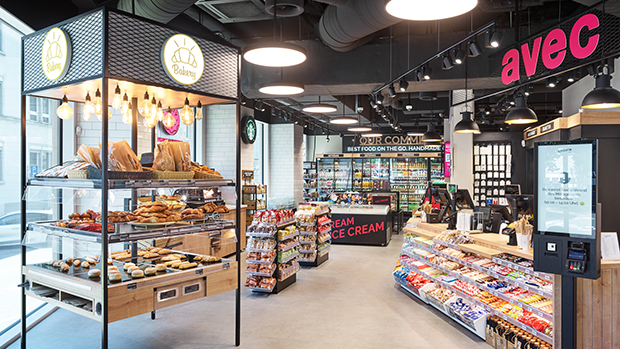
This mindset (creating small moments of delight) is part of our DNA. We constantly innovate, whether it’s adding a small kitchen, self-order kiosks, self-checkout, or fresh ideas for the assortment. We don’t invent everything ourselves; we look globally, see what’s working elsewhere, and adapt it.
The important thing is not to stand still. The customer today wants newness all the time — new products, new experiences. So we have to constantly rethink and tweak our stores. Where it makes sense, we add The Kitchen or Brezelkönig counter; where it doesn’t, we don’t. It’s a flexible approach.
MP: But German customers can sometimes be more cautious about new tech or change. How does that fit your plans?
PA: Yes, it’s a common cliché that Germans are slower to change, but honestly, I think it’s more about whether there’s a good offer. If you make life easier for customers, they adopt it like anywhere else.
Sometimes regulations or cultural habits slow things down, but look at how fast contactless payments spread after COVID — once the benefit is clear, people switch. So it’s our job to build compelling solutions. If it’s quicker and more pleasant to grab a coffee at our store than go to a discount supermarket, people will come to us.
MP: Will you have a loyalty app now that you’re rolling out so many stores?
PA: Yes, that’s definitely on our radar. We’re currently restructuring our loyalty program in Switzerland. Once that’s up and running, we’ll roll out a new version for Germany as well. It’s not ready tomorrow, but it’s coming — we see big potential there.
MP: Lastly, what’s your big-picture view for foodvenience in Germany?
PA: I’m very optimistic. If I didn’t believe in it, I’d be in the wrong job! Germany is just starting its foodvenience journey — there’s so much growth ahead. We have the international experience, great people, and the technology to drive it forward.
We also learn a lot from our parent company FEMSA, based in Mexico. With their core retail brand OXXO they’re experts at scaling, data-driven assortment planning, pricing, and operations. We tap into that know-how. In five to ten years, I believe Germany will have a robust, mature convenience market, and we aim to be a leading player shaping that future.
Interview by Oscar Smith Diamante