South Korea welcomes first hydrogen station powered by food biogas
The site located in the city of Chungju has started commercial operations to supply hydrogen to vehicles and nearby service stations.
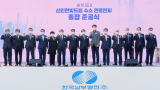
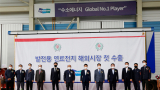
South Korea’s first hydrogen “mother” station powered by food biogas commenced operations last Wednesday. The site produces and supplies hydrogen using biogas to integrate hydrogen production, storage, transportation, charging and sales both to drivers and other service stations.
According to a news report by local news site Aju Business Daily, the new hydrogen station is located at the city of Chungju, 90 kilometres south of Seoul. It will be the country’s first station that can fuel cars and supply hydrogen to nearby forecourts via tube trailers.
Back in 2019, the city was selected for a government project that involved the injection of 12.3 billion won, which translates into roughly $10 million, for the demonstration of a hydrogen fusion charging station via biogas usage. This is in part possible thanks to a food treatment centre located in the city, where food waste is decomposed with microorganisms in an anaerobic digestive tank to produce biogas.
This means that the site is capable of producing hydrogen with biogas that was previously burned and eliminated. According to the article cited, this can help to stabilise hydrogen prices thanks to the reduction of greenhouse gases and low production costs. Normally, a steam methane reforming extractor can produce up to 600 kilograms of hydrogen diary.
Biogas is commonly generated through the biodegradation reactions of organic matter, through the action of microorganisms and other factors, in the absence of oxygen. The resulting product is a mixture consisting of methane and carbon dioxide, containing small proportions of other gases such as hydrogen, nitrogen, oxygen and hydrogen sulphide. Its production by anaerobic decomposition results in a fuel that can be used to produce electrical energy through gas turbines or gas-fired power plants.