H2Accelerate seeks combined EU funds for hydrogen trucking
The industry group, backed by Daimler Truck, Volvo and TotalEnergies, says funding vehicles and stations together could roughly halve public support per project, citing Dutch and German schemes.
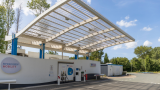
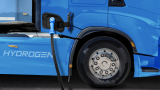
H2Accelerate is calling for future European funding to support hydrogen trucks and refueling stations together, including the next round of the Connecting Europe Facility’s Alternative Fuels Infrastructure Facility (CEF AFIF). The collaboration of Daimler Truck, Linde, Hyundai Hydrogen Mobility, TEAL Mobility, TotalEnergies and Volvo Group made the case in its recently published second policy paper.
The group argues that funding infrastructure alone doesn’t guarantee demand, and that many CEF AFIF-backed stations have run into deployment problems. Since 2021, the program has awarded about €400–450 million to hydrogen refueling projects, covering 275 planned stations. Meanwhile, European support for trucks has mostly gone to first-of-a-kind demonstrations.
The paper points to combined schemes in the Netherlands and Germany as examples. Since 2024, the Dutch SWiM program has awarded about €72 million over two rounds, supporting some 600 hydrogen vehicles and 15 new or expanded stations. Germany’s €220 million scheme, launched in January 2026, was more than twice oversubscribed, with applications for over 70 stations and 455 vehicles. Under SWiM, a station with a capacity of one tonne per day plus 30 vehicles received about €4.21 million on average. Funding the same project separately would take an estimated €8.84 million.
“One of the main challenges for hydrogen trucking roll-out is ensuring that vehicles and refuelling infrastructure are deployed in parallel,” said Nicolas Garnier, CEO of TEAL Mobility. “Station operators need confidence that there will be sufficient demand, while fleet operators need certainty that suitable refuelling infrastructure will be available.”
H2Accelerate recommends requiring joint consortia of station operators and vehicle users, giving enough notice of funding calls, allowing flexibility across vehicle classes and technologies, and setting clear deployment timelines.