Operational safety: The challenge that will define the future of service stations in Latin America
Ad
The service station industry in Latin America is undergoing a transformation driven by digitalization, new regulatory requirements, higher environmental standards and evolving mobility habits. However, one element must remain at the center of this transformation: operational safety.
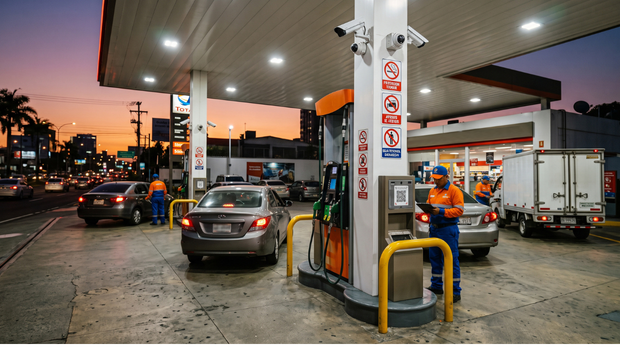
Across a region that is home to approximately 80,000 service stations, day-to-day operations involve storing, monitoring and dispensing fuels in environments where any failure can create risks for workers, customers, facilities and surrounding communities. For this reason, safety must be viewed not only as a regulatory obligation but also as a strategic factor for business continuity and competitiveness.
Preventing leaks, monitoring inventory, reducing operational risks, protecting workers and customers, and having access to real-time information all contribute to building more resilient service stations that are better prepared to meet the demands of a rapidly evolving energy industry. While each country has its own regulatory framework and technical requirements, the regional trend points toward increasingly stringent standards.
In this context, having infrastructure designed according to high international standards and technologies capable of anticipating risks is essential. That is why companies such as Gilbarco Veeder-Root, a global leader in fuel management and automation solutions for service stations, fleets and electric charging infrastructure, support service station operators across Latin America with technologies designed to strengthen safer, more efficient and more reliable operations.
Safety by design
Prevention begins inside the equipment itself. Gilbarco Veeder-Root dispensers incorporate sophisticated engineering designed to operate safely in environments where fuels and flammable vapors are present. Electrical and electronic components, connections, seals and wiring are developed to minimize ignition risks and meet the demanding requirements of these types of installations.
This is complemented by compliance with applicable international certifications and standards, which verify that equipment components have undergone rigorous safety testing and evaluation processes before entering operation.
When it comes to monitoring, Veeder-Root consoles feature versions and components designed to comply with international protection standards for potentially explosive atmospheres, strengthening the safety of systems installed at service stations. The combination of design, engineering and international certifications helps bring global safety standards to the diverse operational realities of Latin America.

Detecting leaks before they become emergencies
A fuel leak represents much more than product loss. It can result in operational disruptions, financial penalties, infrastructure damage, and risks to people and the environment. According to United Nations data, just four liters of gasoline can contaminate up to 2.8 million liters of water.
As a result, one of the industry's most significant technological advances has been the transition from reactive strategies to preventive operations based on continuous monitoring and early detection.
Gilbarco Veeder-Root systems allow operators to monitor critical infrastructure variables and identify anomalies that may signal operational problems. By integrating fuel dispensers with automatic tank gauging technologies such as TLS ATG systems, operators can monitor inventory levels, detect water intrusion and receive early alerts when abnormal conditions arise.
This capability provides operators with greater visibility and the ability to act before an anomaly develops into an incident, helping protect both business continuity and the surrounding environment.
Safety is also digital
The technological transformation of service stations is expanding the traditional concept of safety. Today's modern service station integrates dispensers, monitoring systems, automation platforms, inventory management, payment systems and digital applications. As connectivity increases, protecting the integrity of systems and data becomes just as important as protecting physical infrastructure.
In Mexico, for example, the publication of Annex 30 of the Official Gazette of the Federation (2024) demonstrates that cybersecurity is now a mandatory requirement for companies that manufacture, process, transport, store, distribute or market hydrocarbons and petroleum products.
For this reason, Gilbarco Veeder-Root solutions incorporate technologies designed to strengthen operational integrity throughout Mexico and the broader Latin American region, reducing opportunities for unauthorized manipulation while enabling more transparent and traceable operations.
Safe maintenance to protect the people who keep the industry running
Safety must also encompass technicians, operators and maintenance personnel. Gilbarco Veeder-Root equipment incorporates Health, Safety and Environment (HSE) principles, as well as protocols that allow technical interventions to be performed under controlled conditions, including energy source isolation procedures and work-area protection measures.
Preventive maintenance is equally important for avoiding failures, extending asset life cycles and reducing downtime.
This is another area where Artificial Intelligence is beginning to play a critical role. According to an analysis published by ONEXPO Magazine, AI can reduce operational losses by between 20% and 40% and improve service station efficiency by 15% to 25%.
For example, camera systems and machine vision technologies can help identify leaks, product losses, theft, downtime and traffic patterns. In terms of monitoring, AI-powered tools can detect between 30% and 60% more losses than traditional methods.
A regional standard for a transforming industry
Latin America is not a homogeneous market. Mexico, Colombia, Peru, Argentina, Chile, Brazil and other countries across the region each have different regulations, infrastructure conditions and levels of technological maturity. However, they all share a common challenge: modernizing service stations without compromising safety.
As stations become more connected, they also face new digital, operational and technological risks that require a far more comprehensive approach and higher standards for prevention, monitoring and control.
Artificial intelligence, data analytics, predictive maintenance and smart camera systems are changing the way these environments are protected. But technology alone does not guarantee a safer service station. The real challenge lies in integrating systems, protecting information, strengthening digital infrastructure and maintaining operations that are prepared to respond to both physical and cyber threats.
The service station of the future will inevitably be a smarter one. And that intelligence must serve a purpose that will never change: protecting people, safeguarding assets and ensuring operational continuity.
Related content