Shell survey finds EV experience improving as adoption stalls
Study shows rising driver confidence and cost benefits, but non-EV users remain cautious over charging access and practicality.
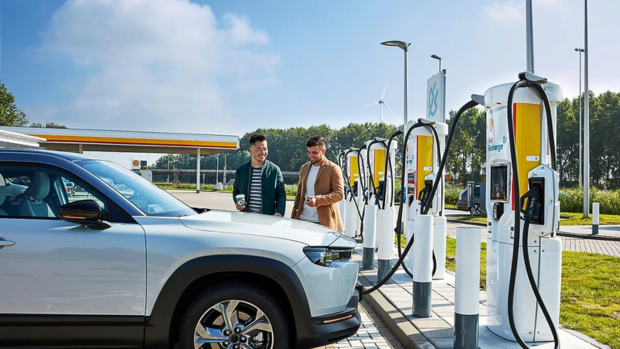
Shell’s latest global electric vehicle (EV) survey indicates that while the experience for EV drivers continues to improve, many consumers remain hesitant to switch due to cost and practical concerns. The research, based on over 8,800 responses across Europe, the United States, China and Singapore, highlights a growing divide between current EV users and those yet to adopt the technology.
Among existing EV drivers, confidence is rising. In Europe, 62% report reduced concern about running out of charge compared to a year earlier, while the figure reaches 74% in the United States. Perceptions of public charging reliability have also improved, particularly in the US and China. At the same time, cost savings are emerging as a leading motivation for adoption, cited by 61% of European respondents and 56% in China.
Despite these gains, adoption interest among non-EV drivers has stalled or declined in key markets. In Europe, 40% of respondents say they would consider an EV, while in the United States this figure has dropped to 27%. Concerns around charging access, convenience and overall cost continue to influence purchasing decisions.
“The research backs up what we see day to day in our business: not everyone is moving at the same pace,” said David Bunch, Executive Vice President, Shell Mobility & Convenience. “Many drivers are mixing EVs with traditional cars, or looking to hybrids as a stepping stone, and price plays a big role in those decisions.”
The findings point to a continued role for hybrid and conventional vehicles alongside EVs. Many respondents indicated interest in plug-in hybrids as an intermediate option, while lower awareness of alternative fuels such as renewable diesel suggests further education may be needed.
Overall, the results suggest that a mixed energy landscape is likely to persist, with multiple solutions required to meet evolving consumer needs and accelerate the transition to lower-emission transport.